filter_list Showing 16 results for "korean pavilion" close Clear
search
dashboard All 16 museum exhibitions 11person people 3article news 1rate_review review 1
date_range Range Today This Week This Month All
Subscribe

The Interview: Ei Arakawa-Nash

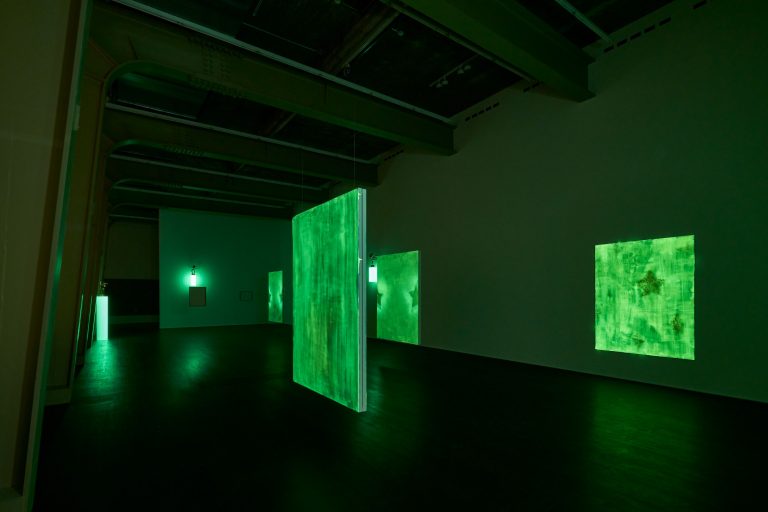
Ei Arakawa-Nash, a Japanese American performance artist, was selected to represent Japan at the 61st Venice Biennale, becoming the first non-Japanese national to do so in a solo presentation. This follows his first solo museum exhibition, "Paintings Are Popstars," at Tokyo's National Art Center in 2024, which was also the center's first solo show devoted to a performance artist. In an interview with ArtReview, Arakawa-Nash discusses his naturalization as a U.S. citizen, his complex relationship with national identity, and his upcoming Venice exhibition titled "Grass Babies, Moon Babies," cocurated by Lisa Horikawa and Takahashi Mizuki, which will explore themes of care and reparation using babies as a central motif.
ArtReview April & May 2026 Issue Out Now

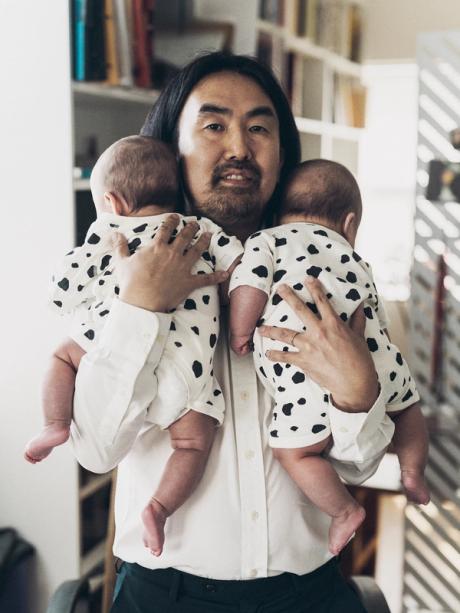
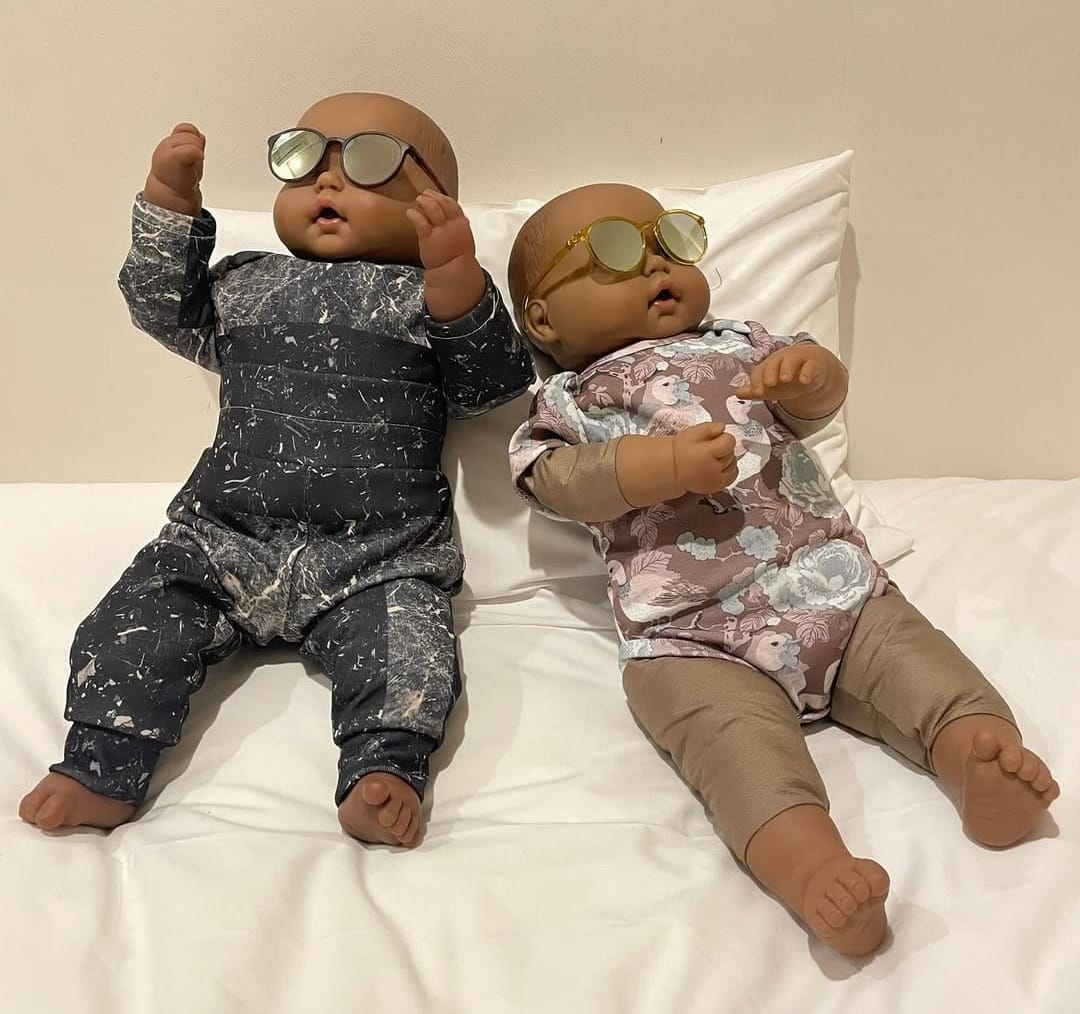
ArtReview's April & May 2026 issue explores boundaries and limitations in art, with a focus on the 61st Venice Biennale opening amid global conflicts. The cover features Japanese-American performance artist Ei Arakawa-Nash with his husband and twin babies, whose collaborative installation at the Japanese Pavilion incorporates the unpredictability of childcare. The issue includes coverage of controversial national pavilions (Russian, Israeli, American), profiles of artists representing Mongolia and Singapore, and features on Beverly Buchanan, Arthur Jafa, Richard Prince, and Zehra Doğan's report from Rojava. It also reviews the 82nd Whitney Biennial, the 25th Biennale of Sydney, and the 15th Shanghai Biennale.

Must-See National Pavilions at the 61st Venice Biennale

The 61st Venice Biennale features standout national pavilions from Japan, the Philippines, Timor-Leste, Singapore, and India. Japan presents Ei Arakawa-Nash's 'Grass Babies, Moon Babies,' an interactive exhibition with hand-sewn baby dolls and sound pieces exploring queer parenthood and collective care. The Philippines showcases Jon Cuyson's 'Sea of Love / Dagat ng Pag-ibig,' a solo show using 'mussel thinking' to highlight Filipino seafarers. Timor-Leste's 'Across Words' brings together three artists addressing ethnolinguistic diversity and cultural memory, while Singapore presents Amanda Heng's 'A Pause,' a feminist performance on vulnerability and resilience. India's pavilion features Ranjani Shettar's work, supported by Talwar Gallery.

Review: The Good, The Bad and The Venice Biennale

The article reviews the 2024 Venice Biennale, focusing on controversies over Russia's and Israel's participation. Protests erupted during opening week, leading the EU to cut funding and the International Jury to resign. As a result, awards like the Golden Lion and Silver Lion will be decided by public vote, with many pavilions and artists withdrawing in protest. The main exhibition, curated under the theme 'Minor Keys,' features standout works by Alfredo Jaar and Carrie Schneider, alongside national pavilions like Austria's provocative entry by Florentina Holzinger.

Monochrome Painting Master Ha Chong-Hyun to Hold Major Retrospective in the U.S.

Monochrome painting master Ha Chong-Hyun will have his first North American museum retrospective at the Asian Art Museum of San Francisco (AAM) from September 25, 2026, to January 25, 2027. The exhibition, titled "Ha Chong-Hyun: Retrospective," will feature about 50 works spanning over 60 years, including his early Art Informel experiments, his politically charged works, and his iconic "Conjunction" series created with his signature Back Pressure Technique.

KOO JEONG A “KANGSE X” at Hauser & Wirth, Zurich

Koo Jeong A presents "KANGSE X" at Hauser & Wirth in Zurich, an exhibition that extends from her previous show "ODORAMA CITIES" at the Korean Pavilion of the 60th Venice Biennale. The title derives from the Korean term "KANGSE," meaning spatial strength, and the show encompasses her multifaceted practice across drawing, painting, sculpture, installation, film, and animation, including her earlier work "MYSTERIOUSSS" (2017).

Mind the baby! Visitors to the Japanese Venice Biennale pavilion will be asked to look after dolls

Ei Arakawa-Nash, a Japanese-born artist who no longer holds Japanese citizenship, will represent Japan at the Venice Biennale with an exhibition titled "Grass Babies, Moon Babies." The pavilion will feature over 100 baby dolls that visitors are invited to adopt and carry, engaging in caregiving tasks such as changing a nappy. Each doll corresponds to a historically significant date tied to minority communities, linking intimate acts of care to broader historical narratives. The project also includes a collaboration with the Korean Pavilion, marking the first such partnership between the two national pavilions in Biennale history.

Drained, Drowning, and Decay: The Best National Pavilions at the Venice Biennale

The 2026 Venice Biennale is defined by themes of ruin and decay, with standout national pavilions exploring bodily, infrastructural, and archaeological collapse. The Slovenian Pavilion features the Nonument Group repurposing materials from past Biennales into a ruin of a mosque for Bosnian Muslim soldiers from World War I. Syria presents its first national pavilion since the Civil War, with Sara Shamma invoking Palmyra, destroyed by ISIS. Germany's pavilion, titled "Ruin," features works by Henrike Naumann (who died in February) and Sung Tieu, questioning the pavilion's fascist architecture and nationalist residue. The Austrian Pavilion, curated by Florentina Holzinger, offers a visceral performance titled "Sea World." The Biennale is also marked by the abrupt resignation of its five-member jury, who refused to consider nations charged with crimes against humanity, leading to awards being chosen by public vote. Additionally, the main exhibition "In Minor Keys" was affected by the death of its curator, Koyo Kouoh.

Several Venice Biennale pavilions shut in protest over inclusion of Israel

Several national pavilions at the 2026 Venice Biennale shut down during the final preview day in a strike organized by the Art Not Genocide Alliance (Anga) protesting Israel's inclusion due to its war in Gaza. Pavilions from Belgium, the Netherlands, Austria, Japan, Macedonia, and Korea closed entirely, while others like Britain, Spain, France, Egypt, Finland, and Luxembourg partially closed or reopened later. Artists in the main exhibition added Palestinian flags and posters reading "Palestine is the future of the world." The Israeli pavilion was closed for a private event, and earlier in the week Pussy Riot staged a protest at the Russian pavilion.

Goen Choi and Hyeree Ro on Representing South Korea at the 61st Venice Biennale

Goen Choi and Hyeree Ro are representing South Korea at the 61st Venice Biennale, which runs from 9 May to 22 November 2026. In an interview with ArtReview, Choi describes his sculptural installation "Meridian," featuring ruptured copper pipes that traverse the Korean Pavilion in the Giardini, exploring unseen infrastructures and unstable relations between fixed structures. Ro presents "Bearing," a membranelike waxed fabric installation with eight stations for mourning, remembering, and mending, inspired by Korean gardens and temples. Both artists respond to the Biennale's theme "In Minor Keys," emphasizing subtle forces, low vibrations, and contemplative spaces.

ArtReview Podcast | Episode 6: Hyeree Ro

ArtReview Podcast episode 6 features artist Hyeree Ro, who speaks with associate editor Jenny Wu about her practice, including her attraction to objects with ambiguous functions. Ro discusses her work *Niro* (2024), a skeletal car installation exploring her relationship with her late father, and her upcoming exhibition at the Korean pavilion for the 61st Venice Biennale. The episode also touches on gardens and maintaining friendships as artists, with references to the Soswaewon garden and Hua Hsu's memoir *Stay True*.

Hyeree Ro: What Bears

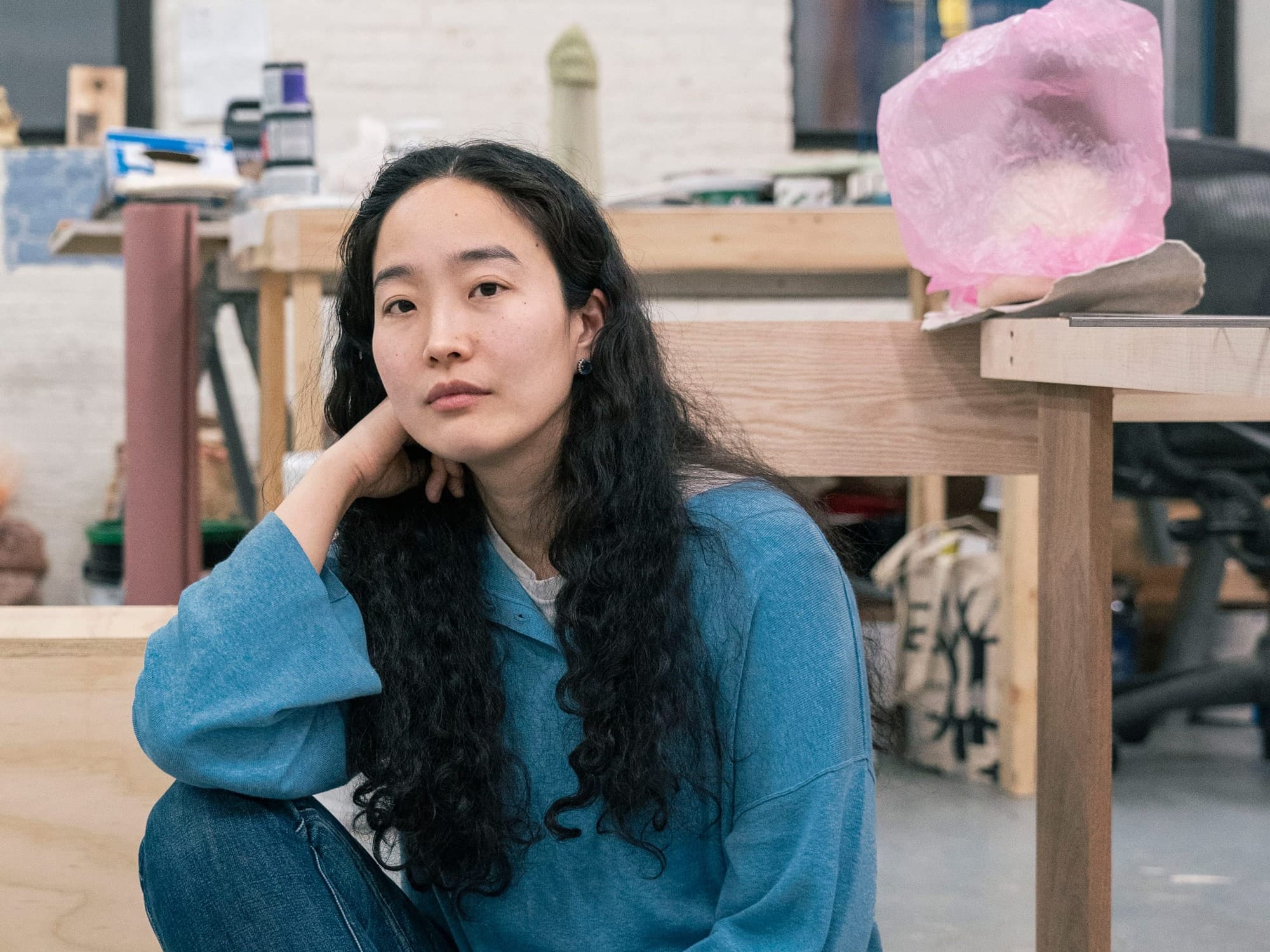
Hyeree Ro is preparing for the 2026 Venice Biennale, where she will present the work "Bearing (2026)" as part of the Korean Pavilion, titled "Liberation Space: Fortress/Nest." The article follows Ro in her temporary Brooklyn studio, where she works with salvaged objects and materials that migrate across multiple works over years—such as a sheet of organza purchased in 2023 that later appeared in "Niro (2024)" and "Carry (2025)" before being repurposed as the pavilion's fabric walls. Her practice is defined by a nomadic, accumulative material logic: objects enter without a fixed destination and gain meaning through repeated reuse.

Doosan Yonkang Foundation Backs Venice Korean Pavilion

The Doosan Yonkang Foundation has announced its sponsorship of the Korean Pavilion at the 61st Venice Biennale, which will take place from May 9 to November 22, 2026, at Giardini Park in Venice, Italy. The Korean Pavilion, titled "Liberation Space: Fortress and Nest," explores political events and historical transitions in Korean society from 1945 to the present, under the artistic direction of Choi Bitna. Participating artists include Noh Hyeri and Choi Goeun, along with fellows such as novelist Han Kang, farmer and activist Kim Huju, writer and singer Lee Lang, photographer Hwang Yeji, and artist Christian Nyampeta. Notably, Noh Hyeri and Choi Bitna are alumni of the foundation's support programs, Doosan Art Lab and Doosan Curator Workshop, respectively.

Doosan Yonkang Foundation Joins as Sponsor of Korean Pavilion at Venice International Art Exhibition

The Doosan Yonkang Foundation has joined as a sponsor of the Korean Pavilion at the 61st Venice International Art Exhibition, held at Giardini Park in Italy until November 22. The pavilion, themed "Haebang Space," explores political and social changes in Korean society since liberation in 1945. Artistic Director Choi Bitna oversees the exhibition, featuring artists Noh Hyeri and Choi Goeun, along with fellows Han Kang, Kim Hoojoo, Lee Rang, Hwang Yeji, and Christian Nyampeta. This marks the foundation's first sponsorship of the Korean Pavilion as part of its visual arts support program.

Doosan Yonkang Foundation Becomes First-Time Sponsor of Korean Pavilion at Venice Biennale

The Doosan Yonkang Foundation, the philanthropic arm of South Korean conglomerate Doosan, is sponsoring the Korean Pavilion at the 61st Venice Biennale for the first time. The pavilion, titled "Liberated Space: Fortress and Nest," runs from May 9 to November 22 at the Giardini park in Venice, and explores political events and historical transitions in Korean society from 1945 to the present. Participating artist Noh Hye-ri is an alumna of the foundation's Doosan Art LAB program, and artistic director Choi Binna serves as a supervisor of the Doosan Curator Workshop, highlighting the foundation's direct investment in nurturing artistic talent.

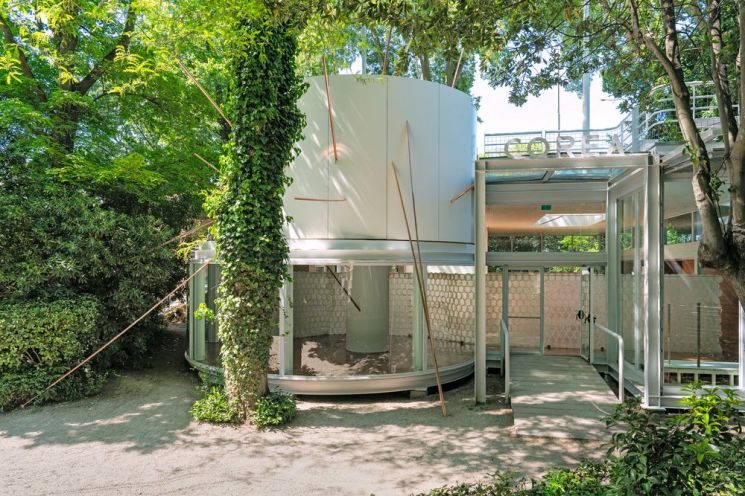
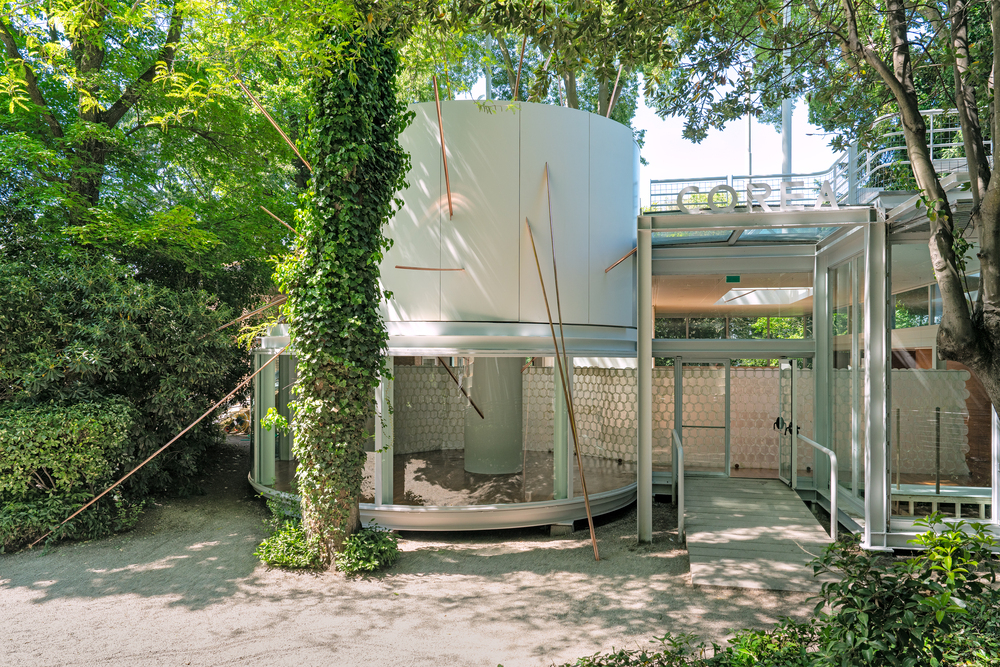
The Venice Biennale Korean Pavilion was built in 1995 as the 26th national pavilion in Giardini Cast..

The article reports on the upcoming 61st Venice Biennale in 2026, focusing on the Korean Pavilion's exhibition titled "Liberation Space: Fortress and Nest." The Korean Pavilion, built in 1995 as the 26th national pavilion in Giardini Castello Park, will present itself as a temporary monument exploring Korea's post-colonial history, specifically the liberation period (1945-1948) and the concept of sovereignty. Artistic director Choi Bit-na has curated the exhibition to address Korea's geopolitical context, viewing the pavilion's 1995 entry as a key moment of decolonization alongside the demolition of the Government-General building and the founding of the Gwangju Biennale.