
filter_list Showing 3 results for "maya train project" close Clear
dashboard All 3 article news 3
date_range Range Today This Week This Month All
Subscribe

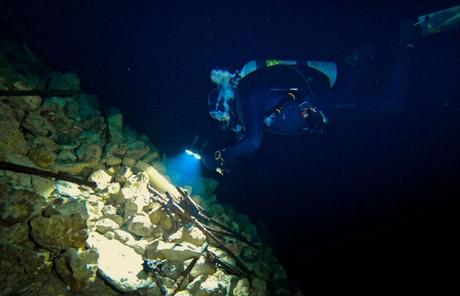
19th-century European weapons found in cenote in Mexico

Archaeologists from Mexico's National Institute of Anthropology and History (INAH) have discovered 153 Spanish and British muskets and rifles, along with an iron cannon, in the Síis Já cenote beneath the 16th-century former convent San Bernardino de Siena in Valladolid, Mexico. The weapons were likely discarded by the Yucatecan government during the early years of the Caste War of Yucatán (1847-1901) to prevent them from falling into Maya rebels' hands. The site also yielded Maya ceramic pieces and 18th-century Chinese porcelain, and INAH reported debris and pollution affecting the cenote.

maya train old man sculpture construction mexico 2713579

Archaeologists excavating for Mexico's Maya Train project in the Yucatan peninsula have uncovered a 2,000-year-old limestone sculpture of an elderly man, dating to the Preclassic period (2500 B.C.E.–200 C.E.). The 18-inch tall carving, found at the site of Sierra Papacal near Mérida, once marked the entrance of a west-facing ceremonial structure. The sculpture's flat nose, defined lips, and deep eye sockets symbolize wisdom and respect in Maya culture. It will be transferred to a laboratory for conservation and further study.

ancient limestone face carving discovered controversial maya train project excavation 1234761994

Archaeologists working on the controversial Maya Train project in Mexico's Yucatán Peninsula have discovered a 2,000-year-old limestone face carving. The 18-inch-tall sculpture, featuring deep-set eye sockets, a flat nose, and a cleft lip, was found in Sierra Papacal near Mérida during construction of the Mérida-Progreso Railway Bypass. The carving was attached to the foundation of an ovoid building with a west-facing entrance, suggesting it served as a ceremonial marker. Mexico's National Institute of Anthropology and History (INAH) is overseeing the excavation of 15 other nearby structures, and the artifact will be transported to a laboratory for conservation.