filter_list Showing 7 results for "medieval manuscripts" close Clear
search
dashboard All 7 museum exhibitions 5article culture 1article local 1
date_range Range Today This Week This Month All
Subscribe

illuminated medieval manuscripts to know 2710634

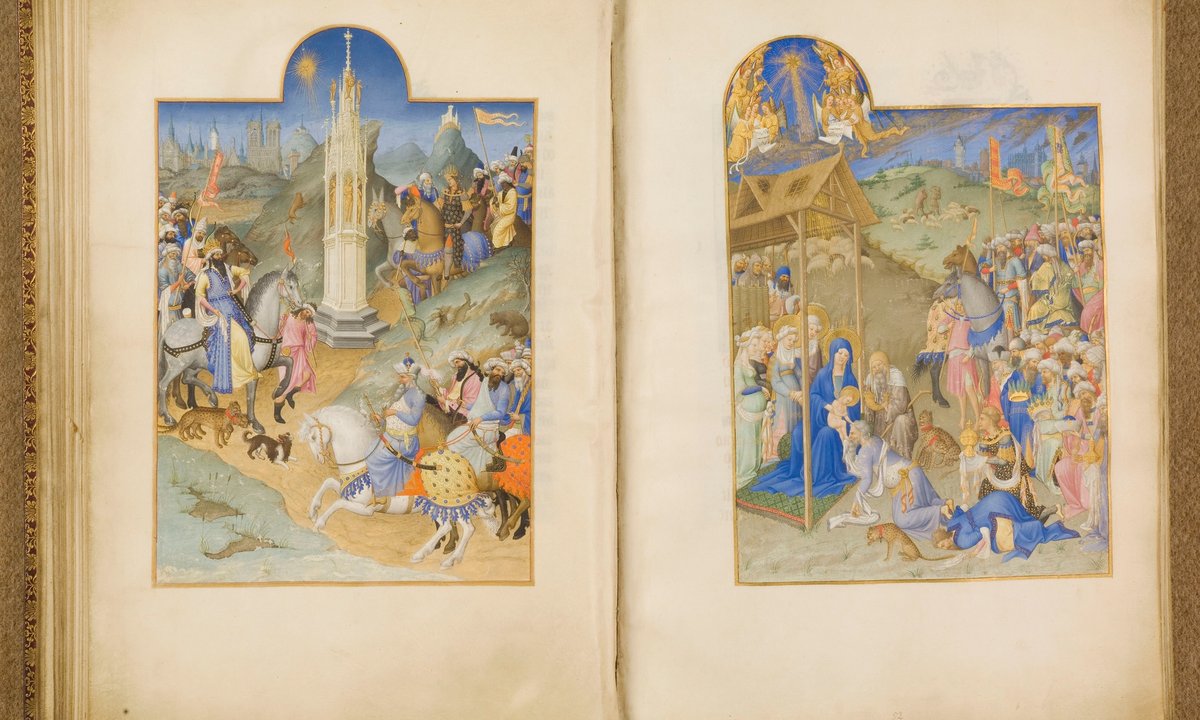
This article explores the history and significance of illuminated manuscripts, correcting the common misconception that they were exclusively produced by medieval European monks. It highlights five standout examples, including the Très Riches Heures du Duc de Berry, made for Jean I, Duke of Berry around 1411 by the Limbourg brothers, and the Book of Kells, created around 800 C.E. by monks of Iona Abbey. The article notes that illuminated manuscripts, defined by the decorative use of gold or silver, date back to the 4th century B.C.E. and span cultures from the Middle East to Africa and Mesoamerica, serving primarily as status symbols rather than reading material.

lough kinale book shrine medieval manuscripts national museum ireland 2659182

In 1986, divers recovered ancient fragments from a lake in Longford County, Ireland, which were later identified as the Lough Kinale Book Shrine, the largest and oldest book shrine in Ireland. After a 39-year conservation process at the National Museum of Ireland (NMI), the 9th-century oak and bronze container is now on public display. The shrine, featuring intricate metalwork, snake-head hinges, and a permanently sealed interior, was reconstructed using photogrammetry and 3D modeling. It is part of the NMI exhibition "Words on the Wave," which showcases over 100 early medieval artifacts, including manuscripts on loan from the Abbey Library of St. Gall in Switzerland.

In a new exhibition, the Getty Centre uncovers the mysterious world of medieval codes

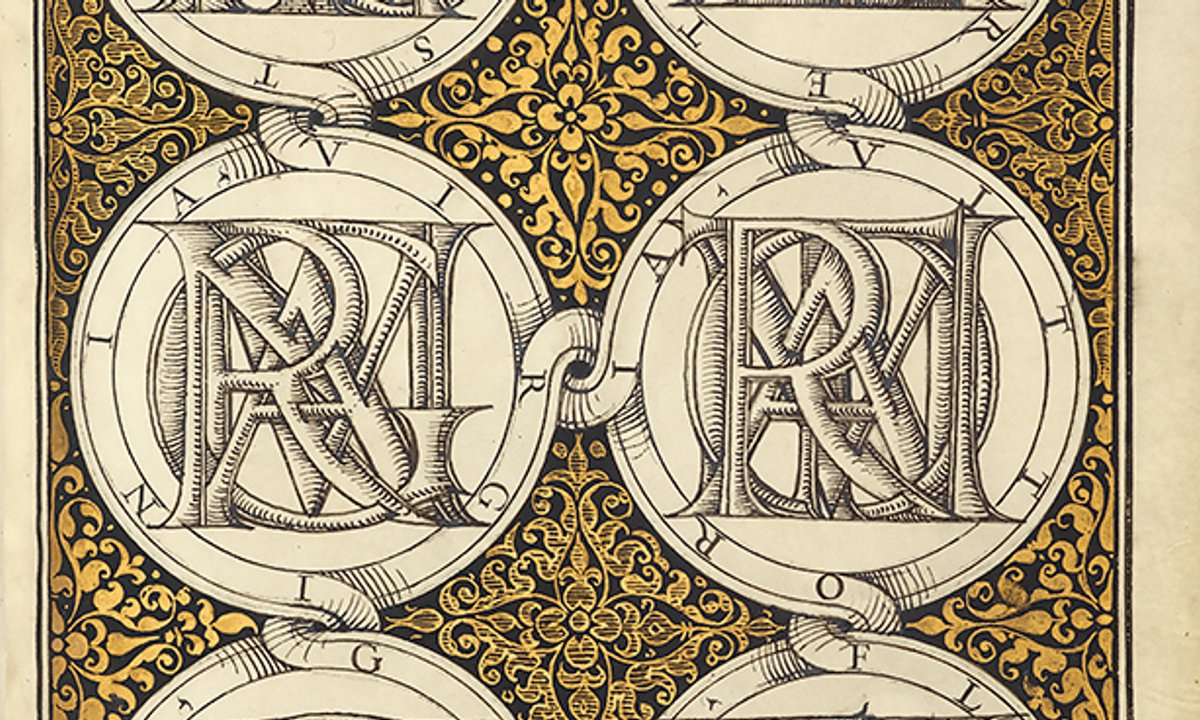
The Getty Center in Los Angeles has opened a new exhibition titled "Symbols and Signs: Decoding Medieval Manuscripts," which runs from May 20 to August 10. The show features illuminated manuscripts from the 9th to 17th centuries, including the Rothschild Pentateuch, a 700-year-old Hebrew manuscript with over 1,000 pages. Curator Orsolya Mednyánszky explains that the exhibition aims to demystify the codes—words, images, and schematic symbols—that medieval readers would have understood intuitively, pairing the manuscripts with modern photographs from the Getty’s collection to highlight parallels in visual communication.

cats medieval manuscripts walters art museum 2732418

The Walters Art Museum in Baltimore has opened an exhibition titled "Paws on Parchment," exploring the depiction of cats in medieval manuscripts from Europe, Asia, and the Islamic world. The show was inspired by a 15th-century Flemish manuscript that still bears the inky paw prints of a cat that walked across the pages while they were drying. Curator Lynley Anne Herbert assembled the exhibition after discovering the manuscript in the museum's collection, researching medieval poetry, bestiaries, and encyclopedic works to understand historical attitudes toward cats. The exhibition runs through February 22, 2026, and is the first of three shows dedicated to animals in art.

The Walters Art Museum Shines a Light On the Toxic History of Medieval Manuscripts

The Walters Art Museum in Baltimore has opened "If Books Could Kill," an exhibition exploring the toxic history of medieval manuscripts. The show reveals how pigments like white lead, red mercury, and arsenic were commonly used by scribes, artists, and bookbinders, exposing them to serious health risks. Co-curated by Dr. Lynley Anne Herbert and Dr. Annette S. Ortiz Miranda, the exhibition features 24 rarely displayed manuscripts from the museum's collection, including a Thai treatise on elephants with arsenic-based yellows and a 15th-century Armenian Gospel with vermillion pigments. It also includes a conservator-led video demonstrating how portable X-ray fluorescence (pXRF) is used to identify toxic materials.

Five art exhibitions to check out around Brookline this summer

Praise Shadows art gallery in Brookline's Coolidge Corner is among five venues offering free art exhibitions this summer. The gallery presents "Pigment Spells," a solo show by Boston-based artist and Boston University professor Lucy Kim, featuring resin casts of found objects covered in oil paint. Other exhibitions include David Weinberg's "Explorations" at Gallery 93 in the Brookline Senior Center, which combines photo montages with medieval manuscripts, and Gateway Arts' "Artists Assortment," a tribute to current and former artists with disabilities featuring celebrity portraits. The roundup also highlights the accessibility of these spaces, which welcome visitors without admission fees.

Très Riches Heures: Chantilly exhibition offers ‘once-in-a-lifetime opportunity’ to see famed medieval manuscript

The Condé Museum at the Château de Chantilly, north of Paris, has opened a special exhibition of the Très Riches Heures, the celebrated 15th-century illuminated manuscript. For the first time in decades, the public can view the 12 monthly calendar pages as independent works, detached from the manuscript after a painstaking conservation project. The exhibition, running until October, also features around 100 loaned medieval manuscripts, sculptures, and paintings to contextualize the manuscript's importance. The Très Riches Heures, commissioned by the Duc de Berry and begun by the Limbourg brothers around 1411, has been held at Chantilly since 1856 and is normally never lent out due to the conditions of the Duke d'Aumale's bequest.