filter_list Showing 9 results for "origami deer" close Clear
dashboard All 9 museum exhibitions 4article news 3article policy 1rate_review review 1
date_range Range Today This Week This Month All
Subscribe

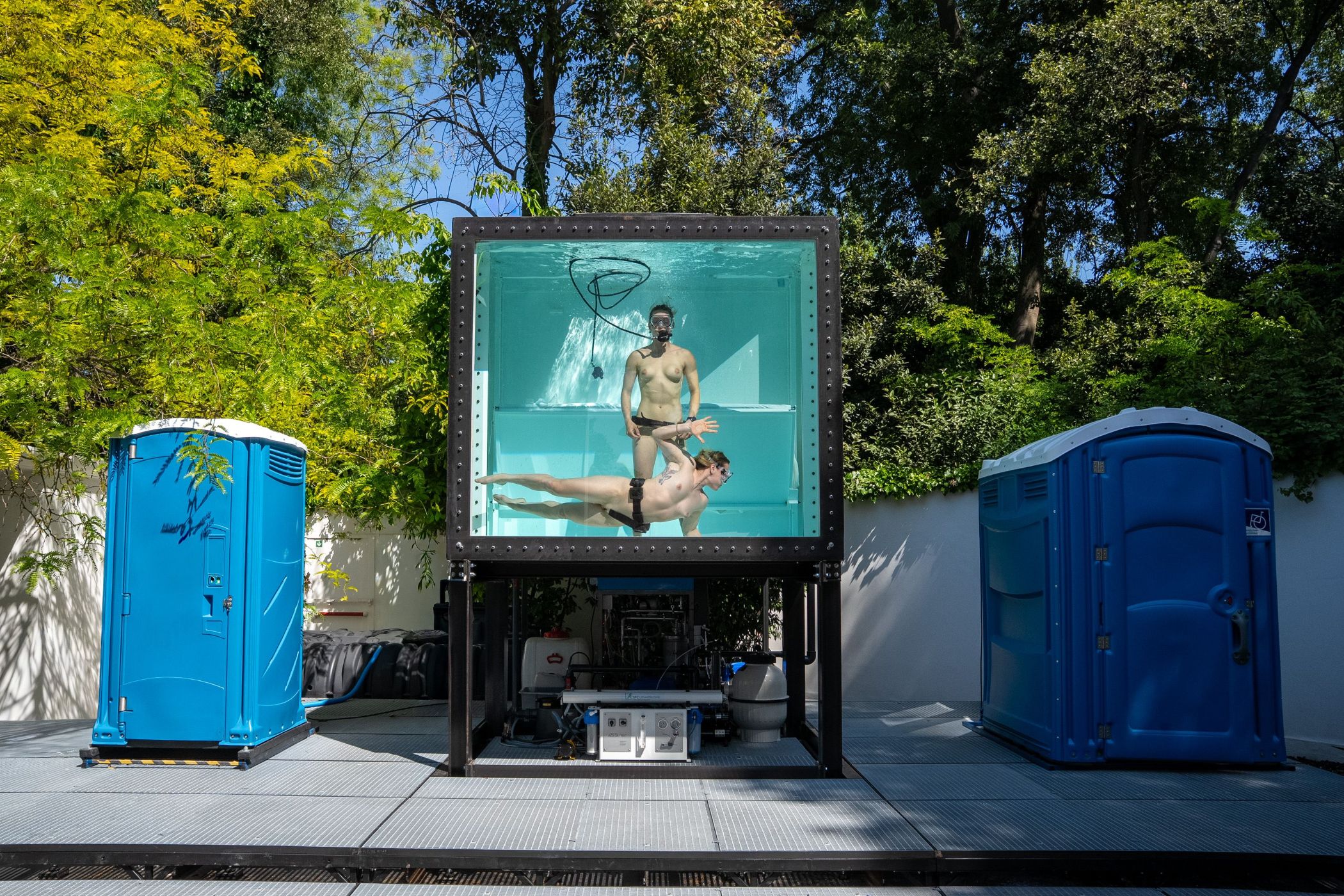
Naked jetskiers, giant bells and a celebrity seagull! Venice Biennale’s wildest moments – in pictures

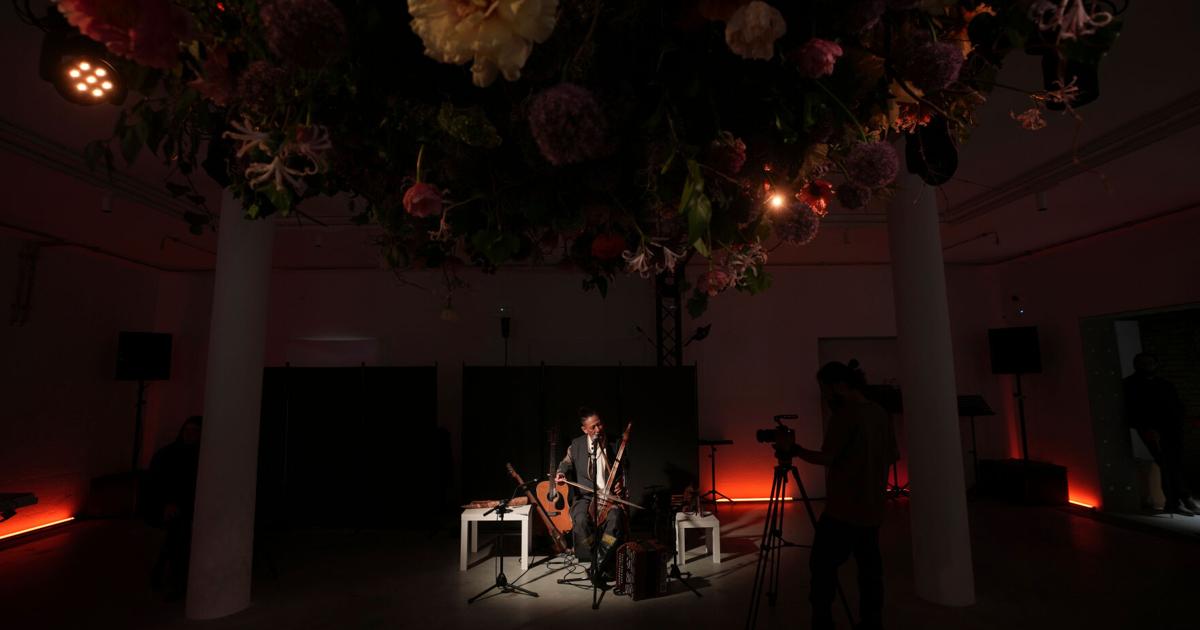
The Guardian presents a photo essay capturing the most eccentric and memorable moments from the 61st Venice Biennale, running until 22 November 2026. Photographer David Levene documents installations including a concrete 'Origami Deer' evacuated from war-torn Pokrovsk, Ukraine, by artist Zhanna Kadyrova; a seagull that became a minor celebrity after nesting outside the Polish pavilion; and the Holy See pavilion's immersive sound installation curated by Hans Ulrich Obrist and Ben Vickers. Other highlights include the Egyptian pavilion's touch-and-smell 'Silence Pavilion' and a Polish pavilion film featuring deaf and hearing singers.
A Time of Transition

During the preview week of the 61st Venice Biennale, escalating protests targeted the national pavilions of Israel and Russia, with demonstrations by Pussy Riot, ANGA (Art Not Genocide Alliance), and Baltic pavilions. A major protest on May 8 drew over 3,000 people in solidarity with Palestine, and 27 national pavilions—including Austria, the Netherlands, France, and Japan—staged a strike, the first at the Biennale since 1968. The Golden Lion jury resigned after declaring they would not consider countries under ICC investigation (Israel and Russia), and the Biennale administration replaced the prize with a visitors' award, from which half the artists in the main exhibition have withdrawn.

A True-to-Life Biennale

Hakim Bishara, editor-in-chief of Hyperallergic, reflects on the 61st Venice Biennale after returning to New York, describing it as historical, political, and thrilling. He counters critics who claimed the Biennale imploded due to boycotts and resignations, arguing it was more alive than ever. The late Koyo Kouoh's main exhibition "In Minor Keys" is praised for reflecting global woes and joys. The article also highlights a major strike by artists and cultural workers that disrupted the pre-opening, the first cultural strike in the Biennale's 131-year history, with 54 artists in the international exhibition and 22 national pavilion teams withdrawing from awards consideration in solidarity with the jury's resignation.

Venice Biennale 2026: What are the major trends that will mark the 99 national pavilions?

Biennale de Venise 2026 : quelles sont les grandes tendances qui vont marquer les 99 pavillons nationaux ?

The article previews the 2026 Venice Biennale, highlighting key trends across its 99 national pavilions. Major themes include the hybridization of theater, dance, and performance, particularly in pavilions from Austria, Luxembourg, Belgium, and Lithuania, where artists like Florentina Holzinger, Aline Bouvy, Miet Warlop, and Eglė Budvytytė use radical, body-centric works. Geopolitical engagement is also central, with the Ukrainian pavilion featuring Zhanna Kadyrova's work on resistance and the British pavilion exploring themes of exile and migration. Other notable pavilions include Spain's focus on imagery, a sound installation for the Vatican, a polyphonic piece for Romania, and a film on sign language song for Poland.

‘It has become a symbol of hope’: the epic journey of Ukraine’s origami deer to the Venice biennale

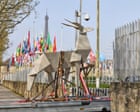
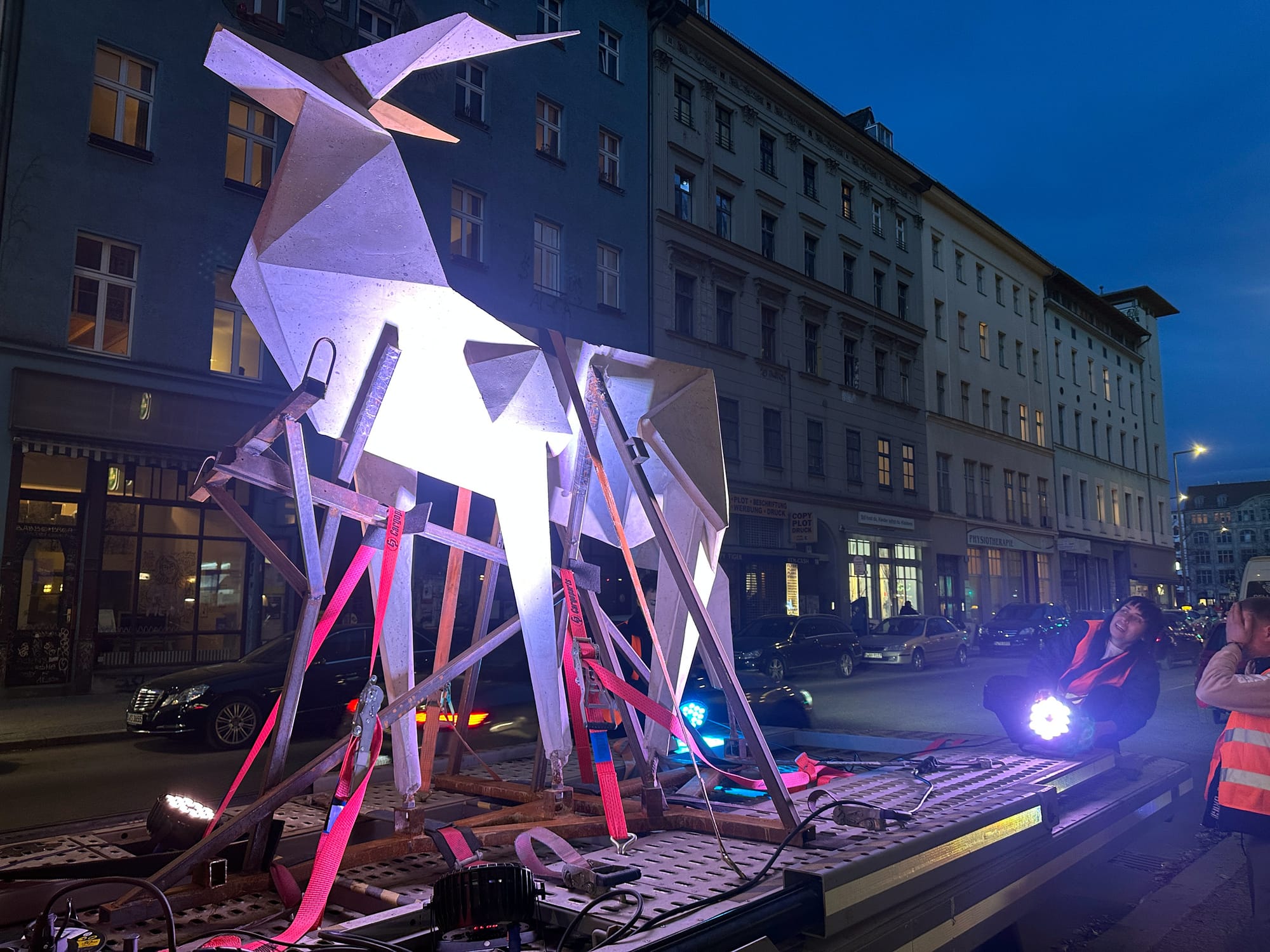
Ukrainian artist Zhanna Kadyrova's concrete origami deer sculpture, originally installed in Pokrovsk in 2018, has been evacuated from the war-torn Donetsk region and transported across Europe to become the centerpiece of Ukraine's national pavilion at the 2026 Venice Biennale. The sculpture, which replaced a Soviet fighter-bomber monument in a local park, was rescued in August 2024 by co-curator Leonid Marushchak amid intensifying Russian attacks, with the help of city authorities and museum staff.

The Ukrainian Pavilion’s Deer Seen Around the World

Zhanna Kadyrova's concrete sculpture "The Origami Deer" (2019) is prominently displayed at the entrance to the Giardini during the 61st Venice Biennale, part of her project "Security Guarantees" in the Ukrainian Pavilion. Originally installed in Pokrovsk, eastern Ukraine, the work was removed in 2024 as Russian forces advanced, then traveled through Vienna, Warsaw, Prague, Berlin, and Paris before reaching Venice—a journey mirroring the displacement of millions of Ukrainians. The sculpture, shaped like a deer and evoking folded paper, references the 1994 Budapest Memorandum, in which Russia, the UK, and US guaranteed Ukraine's security in exchange for its nuclear disarmament—guarantees that proved worthless after Russia's invasions.

Venice Biennale previews in chaos as war follows art into world's oldest exhibition

The Venice Biennale previewed its 61st edition in chaos on Tuesday, marked by the unprecedented resignation of its jury over the participation of Israel and Russia. Ukrainian artists displayed a statue of an origami deer from the war-torn eastern front, while Russian pavilion participants danced to house music and Palestinians marched wearing the names of artists killed in Gaza. The jury had stated it would not award prizes to countries under International Criminal Court investigation, singling out Russia and Israel, and its resignation has thrown the exhibition's structure into question.

Venice Biennale previews in chaos, overshadowed by Israeli and Russian participation

The Venice Biennale previews have descended into chaos, with the event overshadowed by controversies surrounding Israeli and Russian participation. Protests and disruptions have marked the lead-up to the prestigious international art exhibition, as demonstrators voice opposition to the inclusion of Israel amid the Gaza conflict and Russia's ongoing war in Ukraine. The situation has created a tense atmosphere, drawing significant media attention and complicating the Biennale's usual celebratory preview period.

Funding Feud Over Russia's Return To The Venice Biennale

Russia is set to return to the Venice Biennale with its national pavilion for the first time since its 2022 full-scale invasion of Ukraine. This has sparked a funding feud, with the European Commission threatening to withhold a €2 million grant from the event if Russia's exhibit proceeds, a move criticized by Italian Deputy Prime Minister Matteo Salvini.