filter_list Showing 7 results for "otto dix" close Clear
dashboard All 7 museum exhibitions 4candle obituary 2article culture 1
date_range Range Today This Week This Month All
Subscribe

Georg Baselitz obituary

Georg Baselitz, the German painter and sculptor known for his provocative, expressionistic works and his iconic upside-down paintings, has died at the age of 88. The article traces his life from his childhood in war-torn Germany, through his early career as a rebellious artist in divided Berlin, to his rise as an international art star. It highlights his 1961 manifesto poster "Pandemonium I," his rejection of American abstraction, and his controversial 1963 exhibition that was raided by police for its explicit content.
Niklaus Stoecklin at Hauser & Wirth, Basel

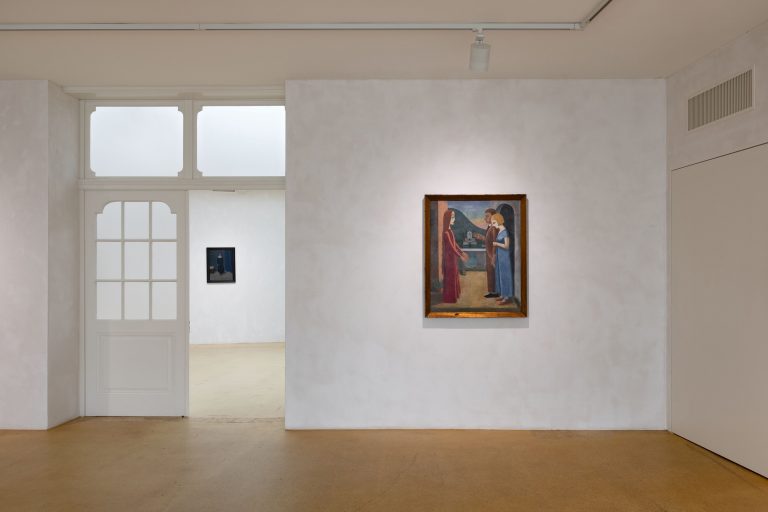
Hauser & Wirth Basel is presenting a focused exhibition of works by Swiss artist Niklaus Stoecklin (1896–1982), featuring paintings and drawings spanning from the 1920s to the 1970s. The show includes several rarely seen pieces, highlighting Stoecklin's distinctive approach to depicting life—people, animals, trees, stones, and space—as he described it.

Georg Baselitz (1938-2026)

Georg Baselitz, born Hans-Georg Kern in 1938, has died at age 88. The German painter and sculptor, who changed his name in 1961, built a career on aesthetic dissent. Expelled from art school in East Berlin, he first gained notoriety with a 1963 exhibition at Galerie Werner and Katz in Berlin, where two works were seized for obscenity. His signature gesture—inverting his images, beginning with "Der Wald auf dem Kopf" in 1969—became his most recognizable trademark, shifting focus from subject to the act of painting itself. Baselitz also produced significant sculptures, often carved with a chainsaw and axe, and his work was the subject of major retrospectives at the Centre Pompidou (2021-2022) and the Musée d'Art Moderne de Paris (2011-2012).

How much Berlin fits on 230 square meters?

Wie viel Berlin passt auf 230 Quadratmeter?

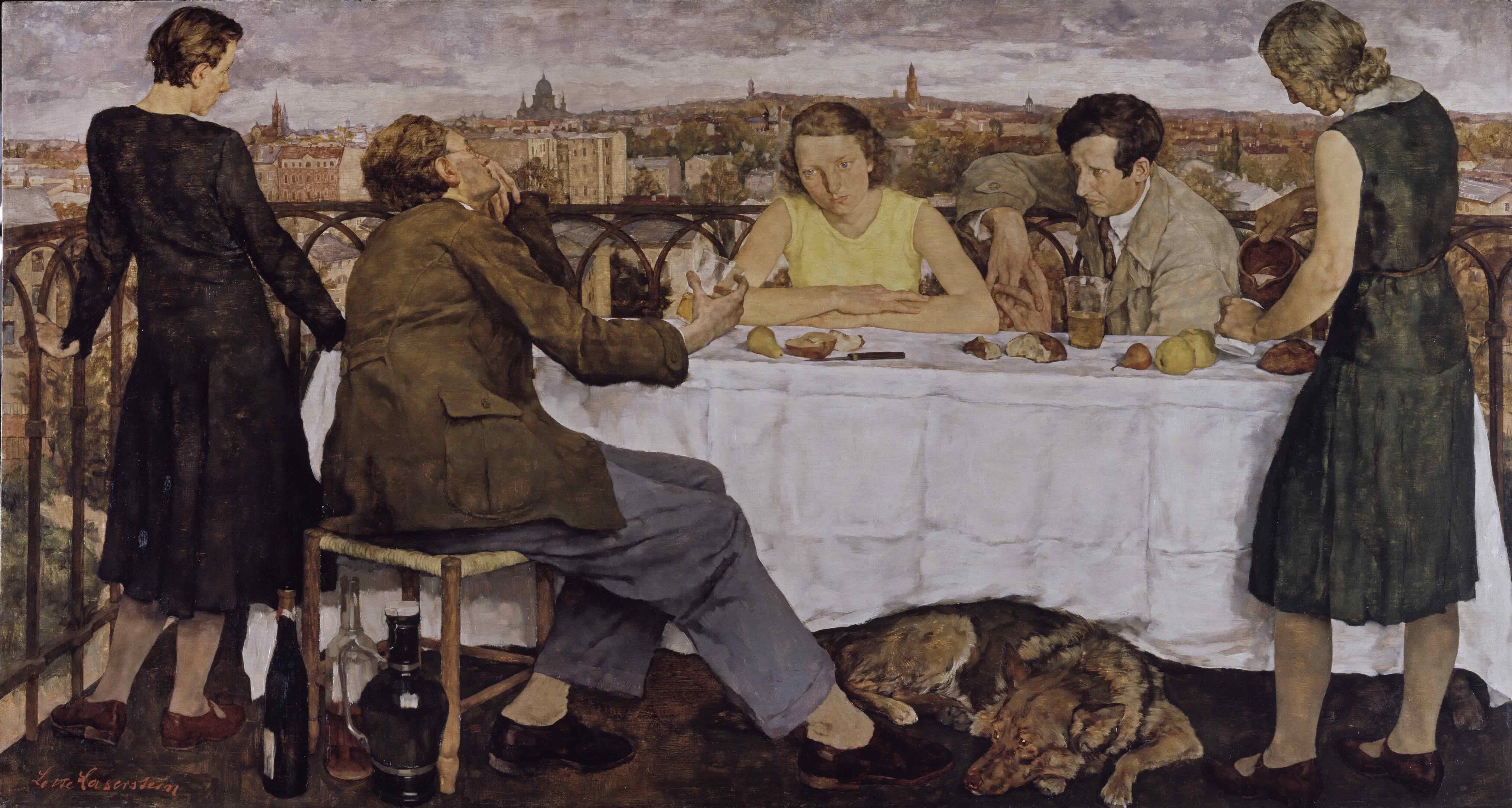
The Neue Nationalgalerie in Berlin has opened a compact exhibition titled "Ruin und Rausch: Berlin 1910–1930," featuring 35 works across just 230 square meters in a side cabinet of the lower floor. The show uses paintings, sculptures, film clips, and audio poems to tell the story of Berlin between World War I and the Nazi takeover, contrasting themes of excess and poverty, emancipation and extremism. It is structured in three chapters: "Berlin im Taumel" (Berlin in Frenzy), "Schatten der Großstadt" (Shadows of the Big City), and "Die Urbane Frau" (The Urban Woman), with works by artists such as Ernst Ludwig Kirchner, Otto Dix, and Otto Nagel.

In conversation with Mia curator Tom Rassieur: 1940s Germany, modern art and its mirrors today

The Minneapolis Institute of Art has opened a major exhibition, 'Modern Art and Politics in Germany 1910-1945: Masterworks from the Neue Nationalgalerie, Berlin.' The show, curated by Tom Rassieur, presents a chronological journey through German art from the Expressionist era through the World Wars, featuring key works by artists like Ernst Ludwig Kirchner, Vassily Kandinsky, and Franz Marc. It highlights groups like Der Blaue Reiter and uses deliberate pairings, such as portraits of Jewish art dealers by Otto Dix and Lovis Corinth, to explore themes of societal tension, propaganda, and identity.

Arles Drawing Festival: What Not to Miss at This Fourth Edition

Festival du dessin d’Arles : ce qu’il ne faut surtout pas rater pour cette quatrième édition

The fourth edition of the Arles Drawing Festival has opened, featuring over forty exhibitions across the city. The highlights include two major private drawing collections being publicly presented: Marin Karmitz's collection, displayed at the Sainte-Anne church under the title "Et la vie continue…", and the Collezione Ramo from Milan, showcased at the Museon Arlaten chapel as part of a focus on Italian art.

This unpublished comic tries to tell us what the Biennale of the future will be like

Questo fumetto inedito prova raccontarci come sarà la Biennale del futuro

Hurricane (Ivan Manuppelli), a leading figure in Italian underground comics, creates an original comic titled "Biennale 2126" for Artribune, imagining what the Venice Biennale might look like in the future. In an accompanying interview, he discusses his satirical approach, the enduring relevance of underground comics, and the importance of critiquing power through art.