filter_list Showing 4 results for "painting conservation" close Clear
dashboard All 4 article news 4
date_range Range Today This Week This Month All
Subscribe

jackson pollock manganese blue 1234752350

A scientific paper published in PNAS reveals that Jackson Pollock's 1948 masterpiece *Number 1A* contains an extinct variety of manganese blue paint. Using Raman spectroscopy, researchers from Stanford University, City College of New York, and MoMA's conservation department identified the synthetic pigment, which was popular in the 20th century but phased out in the 1990s due to environmental concerns.
Dresden museum wins Tefaf award for Rubens restoration

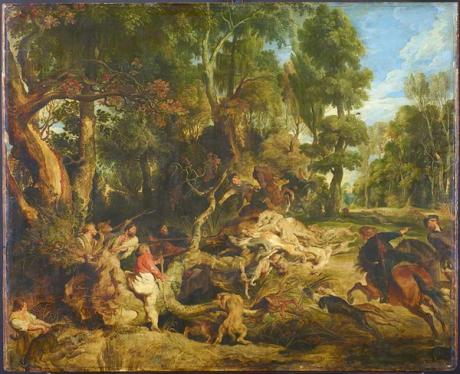
The Gemäldegalerie Alte Meister in Dresden has received the Tefaf Museum Restoration Fund award for its ongoing restoration of Peter Paul Rubens's 17th-century painting 'The Boar Hunt'. The project involves removing discolored 19th-century varnish and undoing damaging 19th-century stabilization attempts that caused cracks in the wooden panel, aiming to reveal the work's original dynamism and palette.

ai art restoration conservation mit 2656171

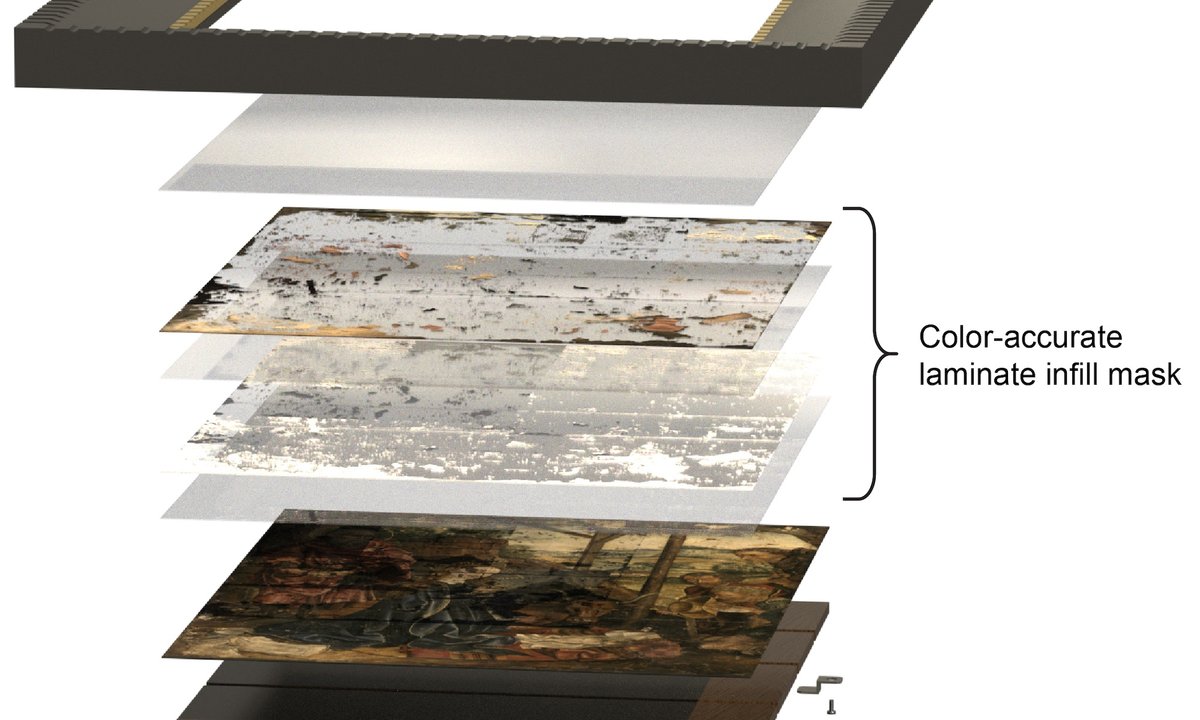
MIT mechanical engineering student Alex Kachkine has developed a new AI technique that could dramatically speed up the restoration of aged or damaged paintings. The method uses a high-resolution scan of the artwork, an AI algorithm to identify cracks and missing patches, and a digitally printed polymer film—called a "digital mask"—that is overlaid onto the painting and sealed with varnish. The mask can be removed without trace using conservators' solvents. Kachkine tested the process on a 15th-century oil-on-panel painting by the Master of the Prado Adoration of the Magi, where the AI identified 5,612 damaged sections and the restoration took just 3.5 hours—66 times faster than conventional hand inpainting.

Mechanical engineer develops AI-generated digital masks to restore damaged paintings

Alex Kachkine, a mechanical engineer and PhD student at MIT, has developed AI-generated digital masks to restore damaged paintings. The system uses a removable, precision-printed polymer film with clear and painted areas, applied over the artwork like a custom graphic wrap. Kachkine tested the technique on a late-15th-century oil-on-panel painting attributed to the Master of the Prado Adoration of the Magi, using generative AI to reconstruct 5,612 areas of loss, including an obliterated infant Jesus. The masks are produced in hours and are physically separated from the paint surface by a conservation-grade varnish.