
filter_list Showing 6 results for "restitution claim" close Clear
search
dashboard All 6 gavel restitution 4museum exhibitions 1article policy 1
date_range Range Today This Week This Month All
Subscribe

France Passes Landmark Restitution Law for Looted Art

France has passed a landmark restitution law for looted art, marking a significant shift in the country's approach to addressing Nazi-era confiscations and colonial-era acquisitions. The legislation establishes a legal framework for returning artworks and cultural objects to their rightful owners or heirs, streamlining a process that previously required case-by-case parliamentary approval. This law is expected to accelerate the return of thousands of items held in French museums and public collections.


Orsay inaugure une salle destinée aux œuvres « MNR »

The Musée d'Orsay in Paris has opened a new dedicated gallery, Room 10b, to display works from its MNR (Musées nationaux Récupération) collection—artworks looted or acquired under dubious circumstances during the Nazi era. The room features detailed labels and educational texts, with some works shown verso to reveal provenance labels. The initiative is funded by the American Friends of the Musée d'Orsay and the Musée de l'Orangerie with €1 million over four years, and includes a fake Monet, a Degas subject to a restitution claim, a Rodin sculpture, and a debated Cézanne. The museum's provenance research team, led by Inès Rotermund-Reynard, collaborates with the French Ministry of Culture's M2RS mission.

A Lucas Cranach the Elder Masterpiece Once Hung in Hitler’s Munich Apartment

A Lucas Cranach the Elder painting, *Cupid complaining to Venus* (1526–27), once hung in Adolf Hitler's Munich apartment, according to a report by the Art Newspaper. The work was identified in a 1940s photograph published in a 1978 furniture catalog and later in a 2023 article by art historian Birgit Schwarz, who confirmed Hitler's ownership via a 2006 discovery of an album at the Library of Congress. After World War II, American journalist Patricia Lochridge took the painting from a warehouse in Berchtesgaden and smuggled it to the US. The National Gallery in London acquired it in 1963 from A. Silberman Galleries, which falsely claimed it came from the 1909 auction buyer's heir; it had actually been purchased from Lochridge.

David Nahmad maintains that his Modigliani was not looted by the Nazis

David Nahmad is continuing his legal battle to prove that his Modigliani painting, *Seated Man with a Cane* (1918), was not looted by the Nazis from the Jewish dealer Oscar Stettiner. Despite a recent New York ruling against him, Nahmad’s lawyers have filed a motion to review the case based on new eyewitness testimony. Two witnesses claim the painting they saw in the Van der Klip family—which bought the Nazi-looted work in 1944—is completely different from Nahmad’s painting, lacking a seated man or a cane. Nahmad’s legal team also cites a 1946 French bailiff report and a recent catalogue raisonné by Marc Restellini to argue that Mondex, the restitution firm working for Stettiner’s heirs, misidentified the work.

Nahmad Seeks to Reopen Modigliani Restitution Case With New Witnesses

David Nahmad's lawyers are asking a New York court to reconsider its April 3 decision in the restitution case over Amedeo Modigliani's *Seated Man with a Cane* (1918), which awarded the painting to the estate of dealer Oscar Stettiner. They cite new eyewitness testimony from Frédéric Allain, who recalls a different Modigliani—smaller, darker, and without a seated man or cane—hidden by the Van der Klip family in Paris during World War II, suggesting the wrong painting may have been the focus of the case. The filing also references a 1946 report describing the missing work as a self-portrait and a new catalogue raisonné by Marc Restellini that finds no link between the painting and Stettiner. Mondex, representing Stettiner's heirs, rejects the claims, asserting that *Seated Man with a Cane* bears Stettiner's name and was in the family's possession from 1944 to 1996.

La loi sur les restitutions des biens culturels pillés pendant la colonisation définitivement adoptée

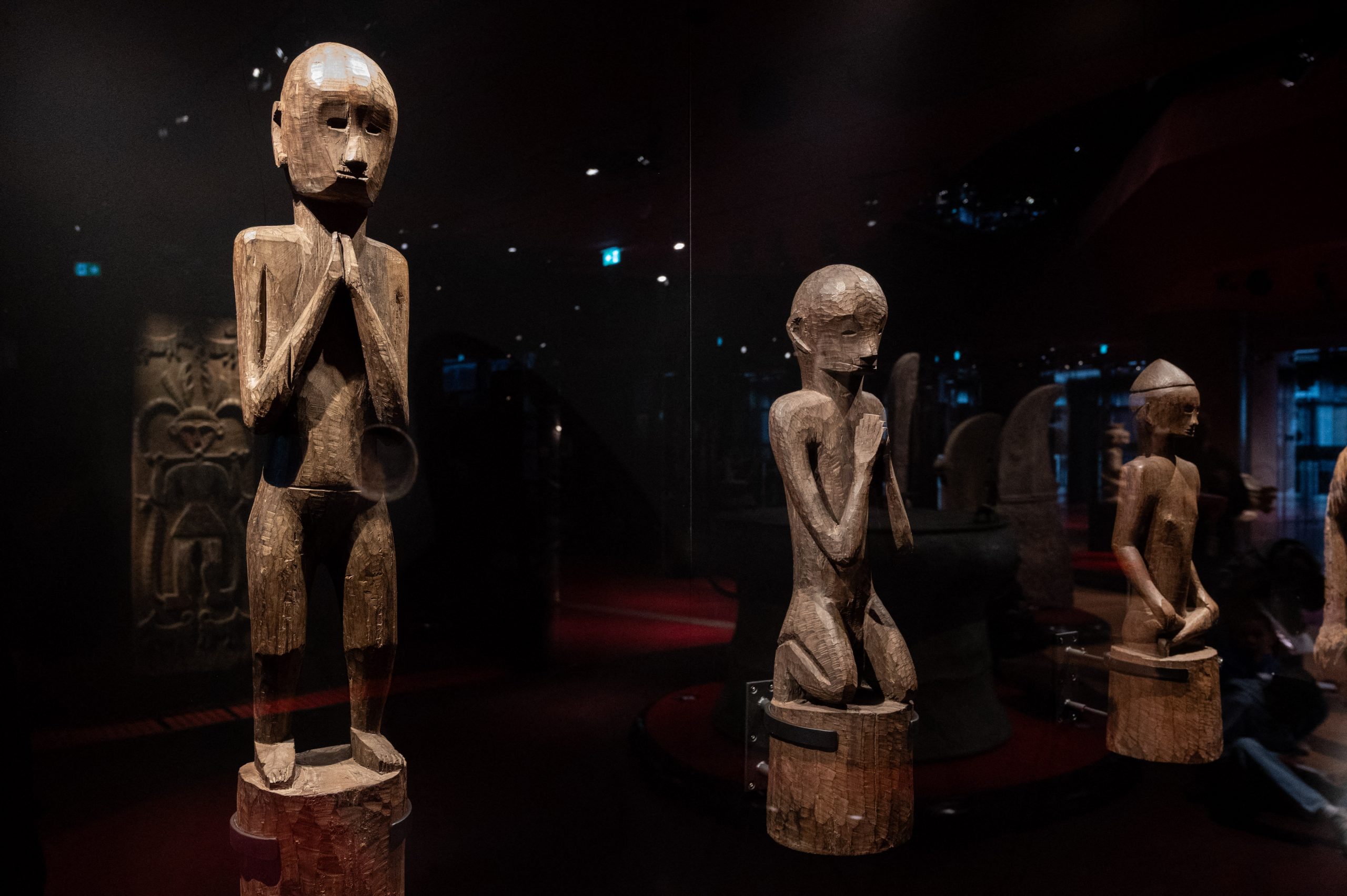
The French Parliament has definitively adopted a permanent law on the restitution of cultural property looted during colonization, replacing the previous case-by-case legislative approach. The Senate unanimously approved the final text on May 7, 2026, following agreement in a joint committee on April 30, and the National Assembly had approved it the day before. The law creates a general derogation from the principle of inalienability of public collections, establishing a bilateral scientific committee to examine provenance, with final decisions made by decree of the Council of State. Key amendments from the National Assembly—including binding parliamentary votes on restitution and conditions on conservation and public access—were removed by the joint committee to avoid perceptions of neocolonial tutelage.