
filter_list Showing 5 results for "restitution policy" close Clear
dashboard All 5 gavel restitution 3article policy 2
date_range Range Today This Week This Month All
Subscribe

How the State Supports Provenance Research

Comment l’État soutient la recherche de provenance

The French Ministry of Culture has created two specialized missions to assist museums in researching the provenance of their collections, addressing looted artworks, human remains, colonial acquisitions, and illicit trafficking. The Mission for Research and Restitution of Looted Cultural Property (M2RS), established in 2019, focuses on Nazi-era spoliations (1933-1945) with a budget of €220,000 annually, while the newer Mission "Provenance," launched in 2024 under curator Catherine Chevillot, covers human remains, colonial-era objects, and illicit goods with a €450,000 budget. These missions provide expertise, funding, and coordination with institutions like the Commission for the Restitution of Property and Compensation of Victims of Anti-Semitic Spoliation (CIVS), though most museums still only initiate provenance checks during acquisitions or donations.
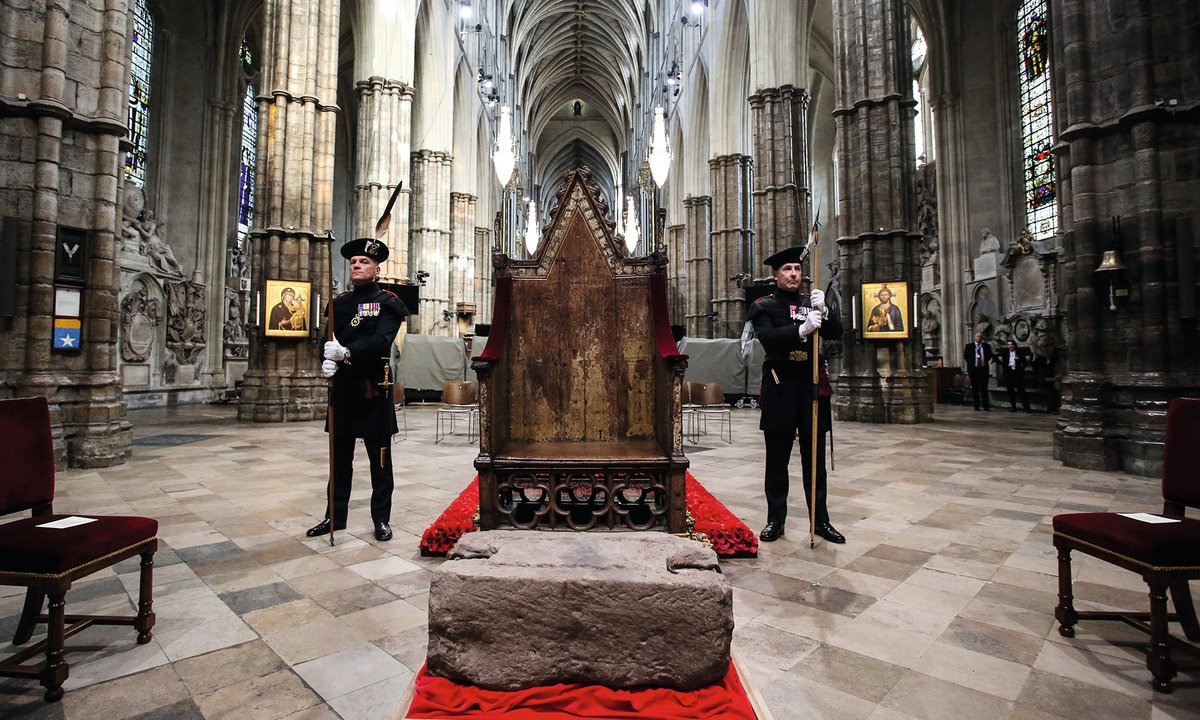
UK Heritage Department feared ‘mass restitutions’ when Stone of Scone was returned to Scotland

Newly released UK government files reveal that in 1996, the Department of National Heritage strongly opposed Prime Minister John Major's decision to return the 13th-century Stone of Scone to Scotland. The department's cultural property unit head, Lynn Gates, warned that the return would set a 'precedent to mass restitution,' triggering claims from Greece for the Parthenon Marbles, Egypt for the Rosetta Stone and Sphinx's Beard fragment, and Nigeria for the Benin Bronzes, with fears of further demands from Ethiopia, India, Pakistan, and other nations. The internal memo criticized Major for failing to consult the department before agreeing to the transfer from Westminster Abbey.

France Passes Law Easing Process of Returning Looted Art

France has passed a new law that simplifies the process of returning looted art and cultural artifacts to their countries of origin. The legislation, championed by President Emmanuel Macron, is seen as a major step in addressing colonial-era acquisitions, particularly for African artworks held in French museums. Experts describe the law as a seismic shift in restitution policy, enabling faster and more systematic returns without requiring individual parliamentary approvals for each item.

Dutch Panel Designs Plan to Deal With ‘Orphaned’ Nazi-Looted Art

A Dutch advisory panel has recommended the creation of a new independent Jewish foundation to manage a vast collection of artworks looted by the Nazis that remain unclaimed. The collection, known as the NK collection, consists of over 3,000 objects currently held by the Dutch state, but whose original owners or heirs have not been identified.

L’offre de formation se développe

French art training institutions are expanding their curricula to include provenance research, responding to a 2022 government report that identified gaps in conservator education. The Institut national du patrimoine (INP) now offers seminars on Nazi-era spoliation (1933-1945) and has added a five-day provenance research module for external competition students since 2024-2025. Paris-Nanterre University launched a master's-level diploma in 2022 covering legal, historical, and methodological aspects of provenance research. The École du Louvre now offers a specialized master's in "sensitive goods and provenance research" addressing spoliated works, human remains, colonial acquisitions, and illicit trafficking, while also integrating provenance methodology into its general curriculum from master's level one.