
filter_list Showing 4 results for "ukraine war" close Clear
dashboard All 4 article local 1article news 1article policy 1rate_review review 1
date_range Range Today This Week This Month All
Subscribe

La Biennale de Venise s’ouvre dans un climat houleux

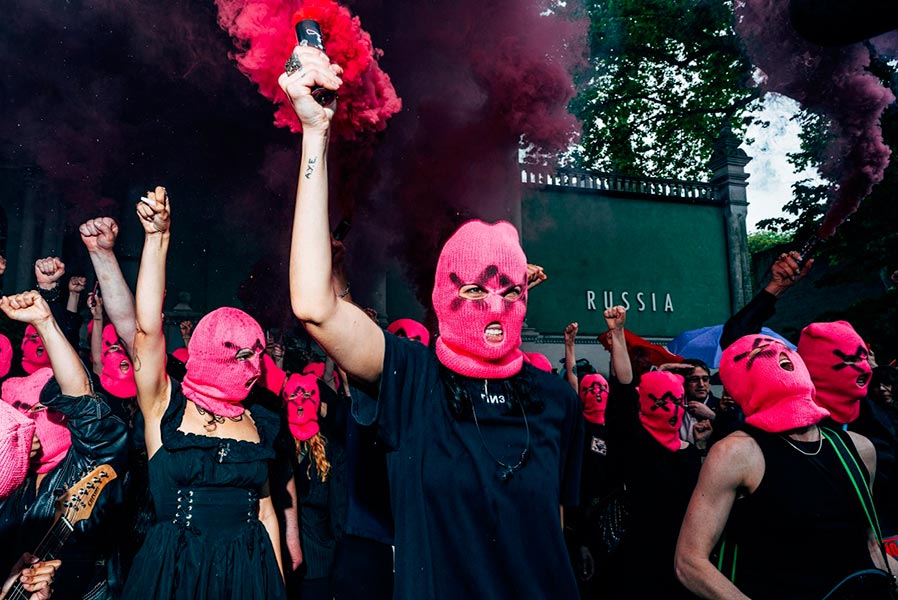
The 61st Venice Biennale opened amid intense controversy after its president, Pietrangelo Buttafuoco, announced the return of the Russian pavilion, which had been absent since the start of the Ukraine war. The European Commission suspended its €2 million subsidy for the 2028 edition, and the entire Biennale jury resigned on April 30. Buttafuoco later declared the Russian pavilion would remain closed, but protests erupted during the pre-opening days (May 6–8), drawing 28,000 professionals. Pussy Riot members, Femen activists, and the Free Nations League staged demonstrations, while the Israeli pavilion remained open despite a letter signed by nearly 200 artists calling for its exclusion.
The Ukrainian Pavilion’s Deer Seen Around the World

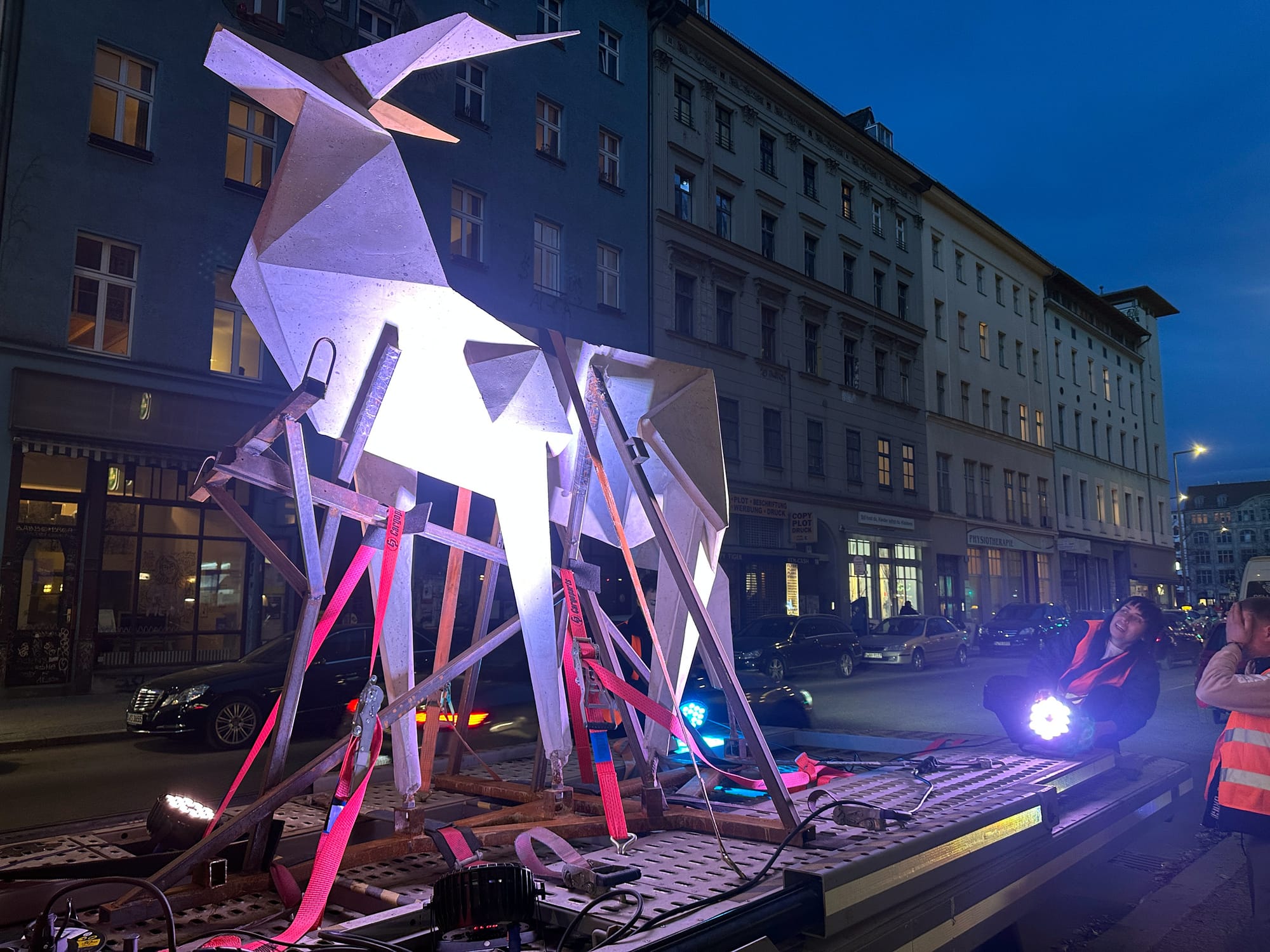
Zhanna Kadyrova's concrete sculpture "The Origami Deer" (2019) is prominently displayed at the entrance to the Giardini during the 61st Venice Biennale, part of her project "Security Guarantees" in the Ukrainian Pavilion. Originally installed in Pokrovsk, eastern Ukraine, the work was removed in 2024 as Russian forces advanced, then traveled through Vienna, Warsaw, Prague, Berlin, and Paris before reaching Venice—a journey mirroring the displacement of millions of Ukrainians. The sculpture, shaped like a deer and evoking folded paper, references the 1994 Budapest Memorandum, in which Russia, the UK, and US guaranteed Ukraine's security in exchange for its nuclear disarmament—guarantees that proved worthless after Russia's invasions.

The Mykolaiv Regional Art Museum has shown how it operates during the war

The Mykolaiv Regional Art Museum in Ukraine has adapted to wartime conditions by evacuating part of its collection and packing remaining exhibits with available materials. A research tour offered a behind-the-scenes look at these efforts, as reported by NikVesti. The MyART platform is creating a digital collection of Mykolaiv's cultural heritage, involving the art museum, local history museum, naval museum, central library, observatory, and shipyard museum. The museum, founded in 1914 by Prince Mykola Hedroits, now operates from a building on Velyka Morska Street built in 1904, and staff continue to research its founder's history.

EU sanctions Mikhail Piotrovsky, director of the Hermitage

L’UE sanctionne Mikhaïl Piotrovski, directeur de l’Ermitage

The European Union has added Mikhail Piotrovsky, the 81-year-old director of the State Hermitage Museum in St. Petersburg, to its sanctions list as part of the 20th package of measures against Russia. Brussels accuses him of publicly supporting the war in Ukraine and of conducting archaeological excavations by the museum in occupied Crimea. His assets in the EU are frozen and he is banned from entering European territory.