
filter_list Showing 3 results for "wheel of fortune" close Clear
search
dashboard All 3 museum exhibitions 3
date_range Range Today This Week This Month All
Subscribe

art new york gallery guide spring

Cultured's spring gallery guide for New York highlights a curated selection of exhibitions across the city, with standout shows including Carol Bove's sculptural installation at the Solomon R. Guggenheim Museum, Joan Semmel's retrospective at the Jewish Museum, Jessi Reaves's furniture-based works at the American Academy of Arts and Letters, and the group show "Afterlives: Contemporary Art in the Byzantine Crypt" at the Metropolitan Museum. The guide also notes exhibitions by Paul Chan, Nicola Tyson, Doron Langberg, and Yuval Pudik that are closing soon, and extends coverage to shows in Philadelphia and Warsaw.
Biennale de Venise 2026 : les saturnales éblouissantes d’Yto Barrada pour le pavillon français

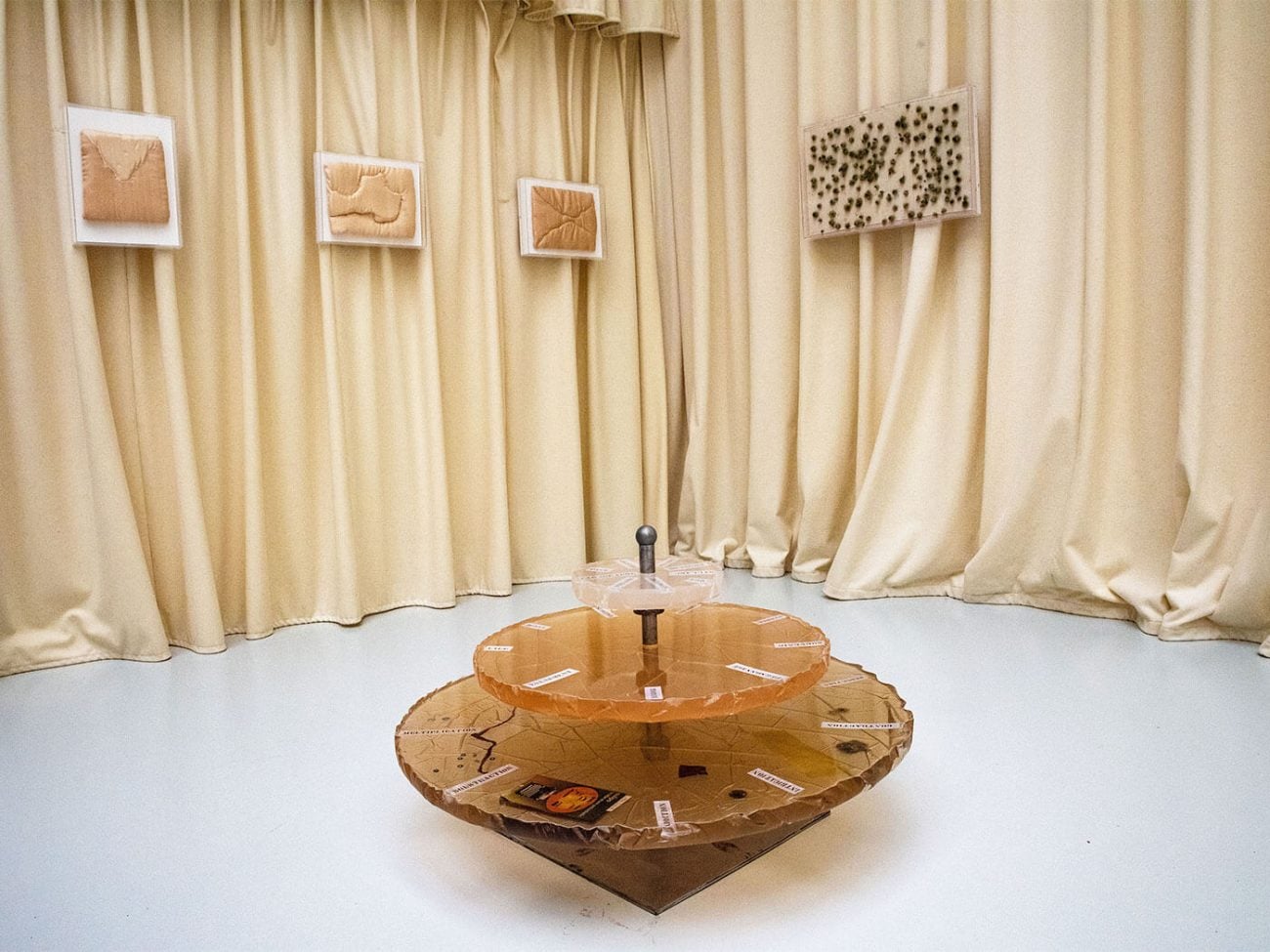
Yto Barrada has been selected to represent France at the 61st Venice Biennale in 2026 with her exhibition "Comme Saturne" (Like Saturn) in the French Pavilion. The installation features rebellious stage curtains hiding wasp nests and a copper daguerreotype plate of a planet, a large rock, a Wheel of Fortune, and a nostalgic vanitas arrangement around a missing mirror frame. Curated by Myriam Ben Salah, the show explores textile and natural dyeing, with three cabinets addressing the transmission of know-how, migration of plants and people, postcolonial history, and Enlightenment imperialism. A central room displays 70 pieces forming a symmetrical frieze of red natural dyes, while a black monochrome patchwork highlights the difficulty of achieving black in dyeing. Barrada is the fifth woman to represent France at the Biennale.

“Conspiracies” Aby Warburg Institute / London by Frank Wasser

The exhibition “Conspiracies” at the Warburg Institute in London, curated by Larne Abse Gogarty, brings together works by Hannah Black, Caspar Heinemann, Sam Keogh, and Shenece Oretha alongside panels from Aby Warburg’s Bilderatlas Mnemosyne. Through sculpture, drawing, collage, installation, and sound, the show resists the idea that conspiracy can be solved by exposure or critique, instead constructing unstable relations between historical images, speculative narratives, and material processes. Key works include Heinemann’s drawings reimagining Ted Kaczynski as “Theodora” and Keogh’s large-scale collage referencing medieval tapestries and surveillance systems.