
arrow_back Back to all stories

person Véronique Pierron

newspaper Le Journal des Arts article 7 articles

Jeanne Roussel : « La culture ne protège pas du vote extrémiste. Mais elle peut aider »

Jeanne Roussel, the newly elected mayor of Villers-Cotterêts since March 2026, discusses the complex relationship between culture and far-right voting in her town. Despite the presence of the Cité internationale de la langue française, a flagship cultural project of Emmanuel Macron, the far-right nearly won again in local elections. Roussel acknowledges that culture does not automatically protect against extremist votes, but it can help. She outlines plans to improve local cultural infrastructure, including a neglected cinema, library, and the small Alexandre Dumas museum, and to foster better coordination between the Cité and local institutions.

La Caverne du Pont-Neuf, qui paie vraiment ?

French artist JR has realized a long-held dream to pay homage to Christo and Jeanne-Claude by transforming the Pont-Neuf in Paris into "La Caverne du Pont-Neuf," forty years after Christo's iconic 1985 wrapping of the same bridge. JR claims to follow Christo's economic model of funding the project entirely through the sale of his own artworks, with no public money. However, a detailed investigation reveals a more complex reality: JR's preparatory drawings and lithographs sell for far less than Christo's (€1,500–€4,000 versus €50,000–€300,000), and the total sales from his works and an exhibition at Perrotin cover only part of the estimated €10 million budget. The project relies heavily on corporate patrons—Snap, Bloomberg Connects, Paris Aéroport, Salesforce, and La Samaritaine—whose contributions are framed as sponsorships with commercial or technological benefits, not pure philanthropy.

Sylvie Retailleau : « Pendant cinq ans, tout a été remis en jeu »

Sylvie Retailleau, former French Minister of Higher Education and current president of Universcience since January 2026, details the tense negotiations between the Grand Palais and the Palais de la découverte. She reveals that the Palais de la découverte nearly disappeared during the Grand Palais renovation, but will reopen in March 2027. Universcience ceded a 1,200 m² gallery to the Grand Palais as a financial contribution (worth about €30 million over ten years) and is lending another 350 m² gallery until June 2030 for Centre Pompidou exhibitions during its renovation. In exchange, Universcience gains full control over the programming of the Palais des enfants.

Sylvie Retailleau explains how she saved the Palais de la Découverte

Sylvie Retailleau explique comment elle a sauvé le Palais de la Découverte

Sylvie Retailleau, a physicist, former president of Paris-Saclay University, and former Minister of Higher Education, has been president of Universcience since January 2026. In an interview, she explains how the Palais de la Découverte, housed within the Grand Palais, nearly disappeared during the Grand Palais renovation. Intense debates over whether to dedicate the renovated space entirely to classical culture threatened the science museum. Retailleau negotiated a compromise: the Palais de la Découverte ceded one gallery (1,200 m²) to the Grand Palais for about €30 million in revenue over ten years and is lending another gallery (350 m²) until June 2030 for Centre Pompidou exhibitions. In return, Universcience gains full control of the programming for the Palais des Enfants. The Palais de la Découverte is set to reopen in March 2027.

In Giverny, Monet does not benefit everyone

À Giverny, Monet ne profite pas à tout le monde

The article examines the economic paradox of Giverny, the French village where Claude Monet lived and painted. While Monet's gardens attract nearly one million visitors annually—with ticket sales estimated at €9-10 million—the village itself, with a population of just 430 and an annual budget of €600,000, sees almost none of that revenue. Visitors flood in for half-day trips, queue for hours to see the gardens, and leave by evening, spending little in local shops. The gardens, run by the Académie des beaux-arts, are tax-exempt and operate as a closed economic loop, with their boutique and restaurant generating income that stays within the institution.

Les jardins de Monet à l’épreuve du surtourisme

Claude Monet's gardens in Giverny, France, which were recreated in 1980 after being abandoned in the 1950s, are now suffering from severe overtourism. The site, which attracted 70,000 visitors in its first year, is expected to exceed one million visitors in 2026, the centenary of Monet's death. Crowds are so dense that visitors report feeling unable to experience any emotion, and gardeners spend hours each morning repairing damage from trampling. The gardens have become a kind of industrial product, with 15,000 plants propagated each season to replace those destroyed.

Cultural Cities at the Heart of New Municipal Conquests

Villes culturelles, au cœur des nouvelles conquêtes municipales

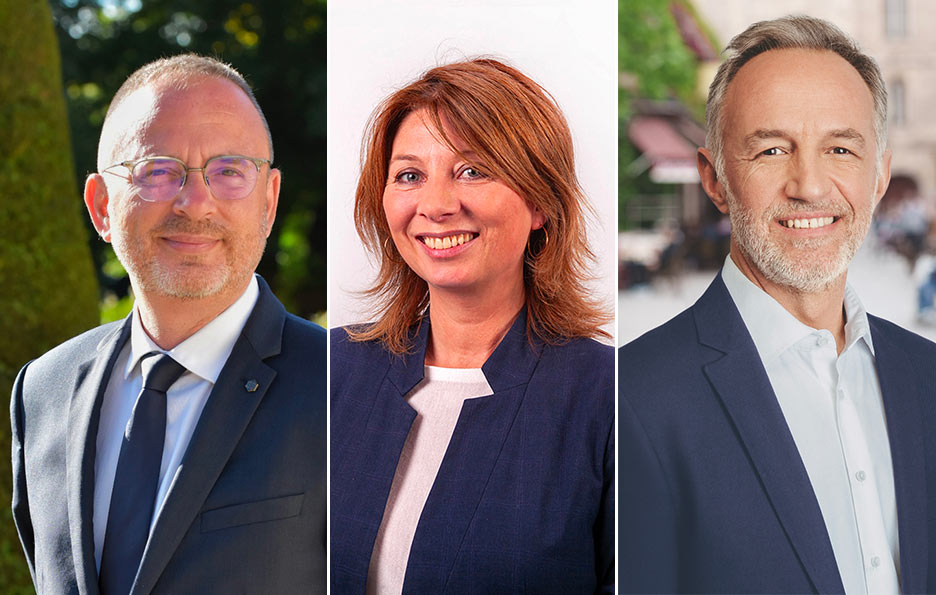
Municipal elections across France have resulted in a wave of new and re-elected mayors, many of whom campaigned on strong cultural platforms. Key victories include Emmanuel Grégoire in Paris, Catherine Trautmann in Strasbourg, Grégory Doucet in Lyon, Yann Galut in Bourges, and Arnaud Deslandes in Lille, each outlining specific cultural visions ranging from continuity and private-public partnerships to fostering urban and street culture.