
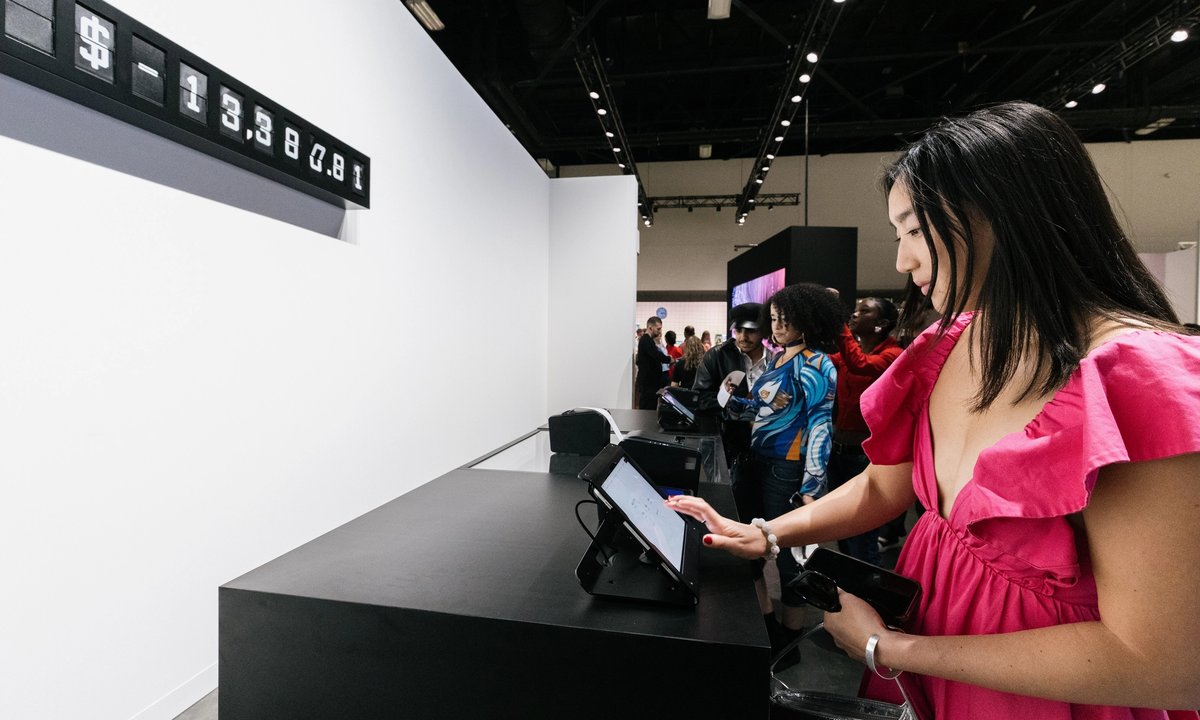
Art Basel Miami Beach (ABMB) saw strong sales and a cautiously optimistic mood, with Pace gallery reporting nearly $5 million in sales including a $1.1 million Sam Gilliam painting. The fair debuted a new digital art section, Zero 10, where a Beeple installation of robotic dogs excreting NFTs sold out within five hours for $1 million total, and generative art from Larva Labs sold for up to $45,000 each. However, the opening day crowd was thinner than in past years, and about 20 galleries did not return, replaced by a record 48 new exhibitors. Dealers noted a slower, quieter pace, with buyers more cautious than during the indulgent pre-pandemic era.
This edition of ABMB matters because it signals a pivotal shift in the art market: traditional buyers are shrinking, and Art Basel is actively courting tech wealth and digital-native collectors through initiatives like Zero 10. The fair's own survey shows digital art spending among high-net-worth individuals jumped from 3% to 13% year-over-year, matching sculpture allocations. At the same time, galleries are leaning into historical works to serve existing clients, reflecting a dual strategy of embracing new technology while relying on established art-historical values. The success or failure of Zero 10 could reshape how major art fairs integrate digital art and attract a new generation of collectors.