
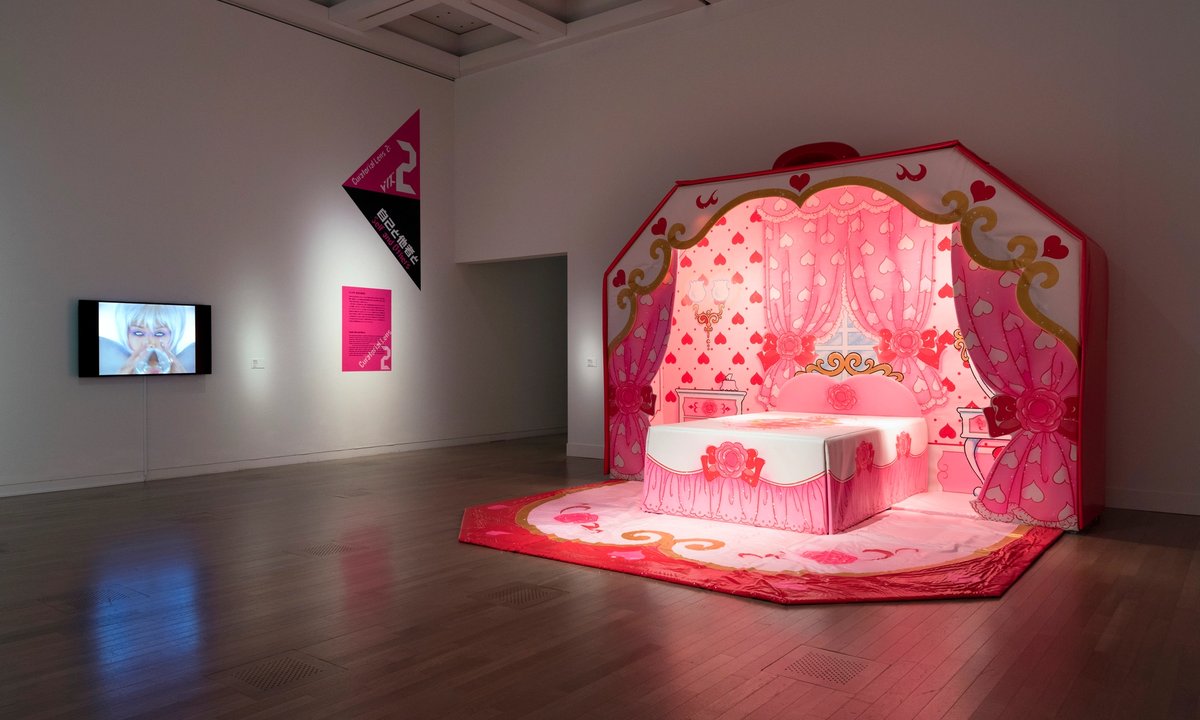
The exhibition 'Prism of the Real: Making Art in Japan 1989-2010' at the National Art Center, Tokyo (NACT), explores Japanese contemporary art from the late Shōwa era through the Heisei era, a period of economic turmoil and social change. Curated by Doryun Chong, Isabella Tam, Kamiya Yukie, and Jihye Yun, the show originated from a friendship between Osaka Eriko and Suhanya Raffel, who collaborated on the 1999 Asia-Pacific Triennial. It features works by artists like Joseph Beuys, Nam June Paik, Lee Bul, Tsuyoshi Ozawa, Gimhongsok, Chen Xiaoxiong, and Navin Rawanchaikul, tracing Japan's artistic exchanges with Asia and the world, and addressing themes of gender, immigration, and national identity.
This exhibition matters because it provides a comprehensive survey of a transformative period in Japanese art, highlighting how the country's artists navigated economic instability and global influences to reshape contemporary art. It also underscores the growing collaboration between major Asian institutions—M+ museum in Hong Kong and NACT—reflecting a shift in the region's cultural power dynamics. By examining Japan's role as both colonizer and colonized, and its interactions with neighboring countries, the show offers critical insights into the broader history of Asian contemporary art and its global impact.