
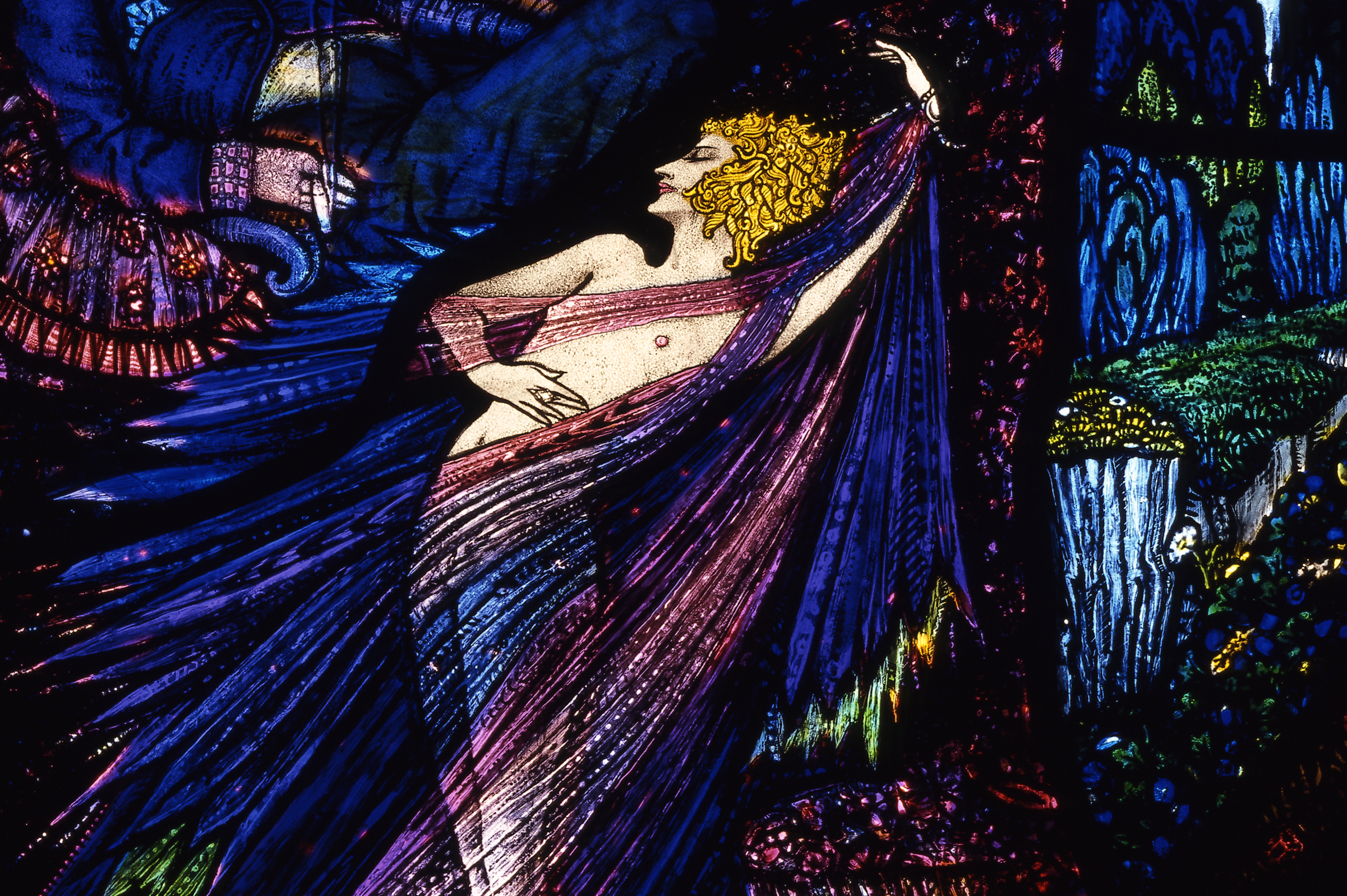
The Wolfsonian FIU in Miami Beach is exhibiting "Harry Clarke and the Geneva Window," showcasing a luminous stained glass window created by Irish artist Harry Clarke (1891–1931) for the League of Nations building in Geneva. Commissioned by the Irish Free State in 1926, the window was completed in 1930 but ultimately rejected by the Irish government due to its controversial content, including depictions of drunkenness, nudity, and Protestant writers. The exhibition juxtaposes the window with late 19th and early 20th-century Irish decorative artworks and explores Clarke's life, his premature death from tuberculosis at age 41, and the political and cultural turmoil of post-independence Ireland.
This exhibition matters because it revisits a pivotal moment in Irish cultural history, highlighting the tension between artistic expression and the conservative, Catholic nationalism of the newly independent Irish Free State. The Geneva Window, which celebrated modern Irish literature—including figures like James Joyce and W.B. Yeats—was deemed too provocative for its time, reflecting the country's struggle to define its identity. By contextualizing the window within the Celtic Revival and the Irish Literary Revival, the show underscores how art can become a flashpoint for national debates about religion, politics, and freedom of expression.