
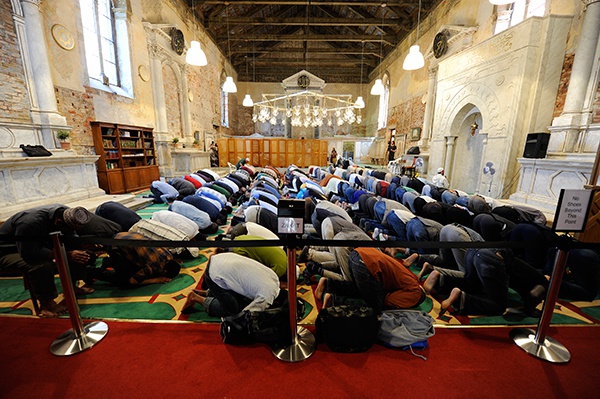
Authorities in Venice have shut down the working mosque installed by Swiss artist Christoph Büchel in the city center as part of his presentation for the Icelandic Pavilion at the 2015 Venice Biennale. The closure followed an evaluation by a public safety committee, citing overcrowding at Friday prayers that exceeded the legal limit of 90 people, as well as concerns about the building's location near a pedestrian bridge and the difficulty of providing security amid terrorist threats. The mosque, housed in the former Catholic church of Santa Maria dell’Abbazia della Misericordia, had been open for barely two weeks before the City Council of Venice withdrew authorization.
This incident matters because it highlights the tension between artistic freedom and public safety regulations, as well as the political and religious sensitivities surrounding contemporary art in a historic city like Venice. The project—the first mosque in Venice's historic center—had already faced opposition from Catholic authorities and city officials who claimed they were not properly consulted. The closure raises questions about the limits of institutional support for provocative art and the power of local authorities to override biennale participation, potentially setting a precedent for future politically or religiously charged works at major international exhibitions.