
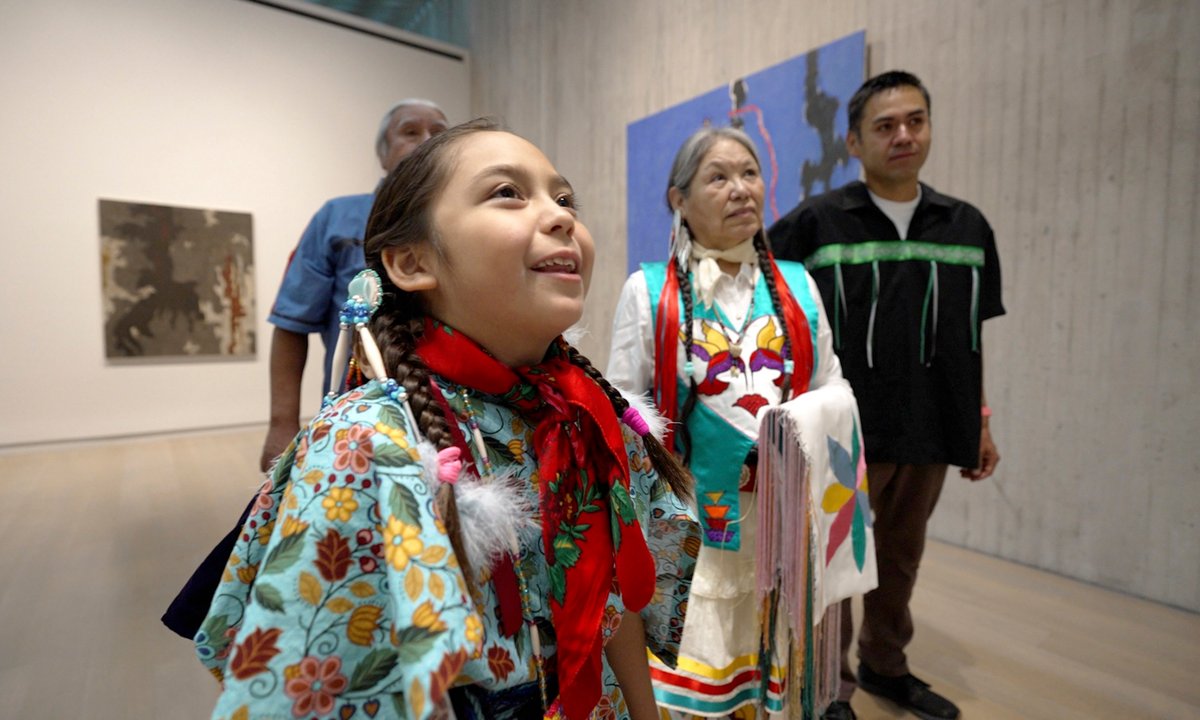
The Clyfford Still Museum in Denver has handed curatorial authority to 100 children from the Confederated Tribes of the Colville Reservation for the exhibition "Tell Clyfford I Said ‘Hi’" (on view until May 10, 2026). The show features works by Clyfford Still, who in 1936 traveled to the Colville Reservation with colleague Worth Griffin to document tribal members and landscapes. The museum collaborated with tribal youth from three schools—Nespelem School, Nespelem Head Start, and Hearts Gathered Montessori—who selected artworks from facsimiles of Still’s paintings and photographs, drawing connections between his abstract works and their own cultural experiences, such as a student noting that a painting resembled a pow wow blanket.
This exhibition matters because it demonstrates how museums can meaningfully engage with Indigenous communities by ceding curatorial authority, especially amid a federal backlash against diversity, equity, and inclusion initiatives. By centering the perspectives of tribal youth, the museum not only honors the historical significance of Still’s documentation of the Colville people but also models a collaborative approach that prioritizes community agency and intergenerational knowledge. The project challenges traditional museum hierarchies and offers a replicable framework for institutions seeking to build trust and relevance with underrepresented groups.