
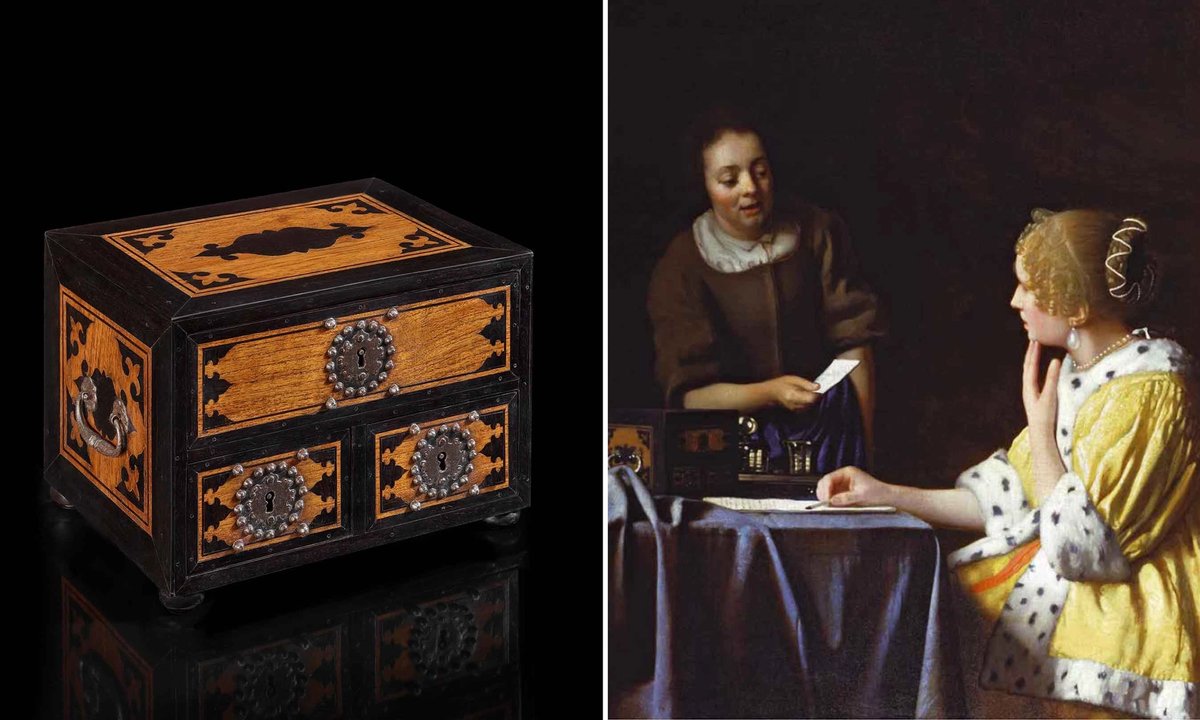
New research by curator Alexandra van Dongen of Rotterdam’s Boijmans Van Beuningen Museum reveals that a rare Indo-Portuguese jewellery casket depicted in two Johannes Vermeer paintings—Mistress and Maid and A Lady Writing (both 1664-67)—is a real, surviving object. Van Dongen tracked down the sole known example in the Távora Sequeira Pinto collection in Porto, with help from Amsterdam dealer Dickie Zebregs. Her findings, published in the book De tastbare wereld van Johannes Vermeer, suggest the casket likely belonged to Vermeer’s patron Maria de Knuijt, a wealthy Dutch East India Company shareholder who may have asked the artist to include it in her paintings.
This discovery matters because it deepens understanding of Vermeer’s working methods and his relationship with patrons. The accurate depiction of expensive, imported objects—including a Japanese lacquer box in Woman with a Pearl Necklace—indicates Vermeer had access to such items through wealthy supporters, not personal means. The research also highlights the global trade networks of 17th-century Holland, showing how Asian luxury goods entered Dutch homes and art. By tracing these objects, Van Dongen adds tangible context to Vermeer’s famously enigmatic interiors, linking his precise realism to specific historical artifacts and patronage networks.