
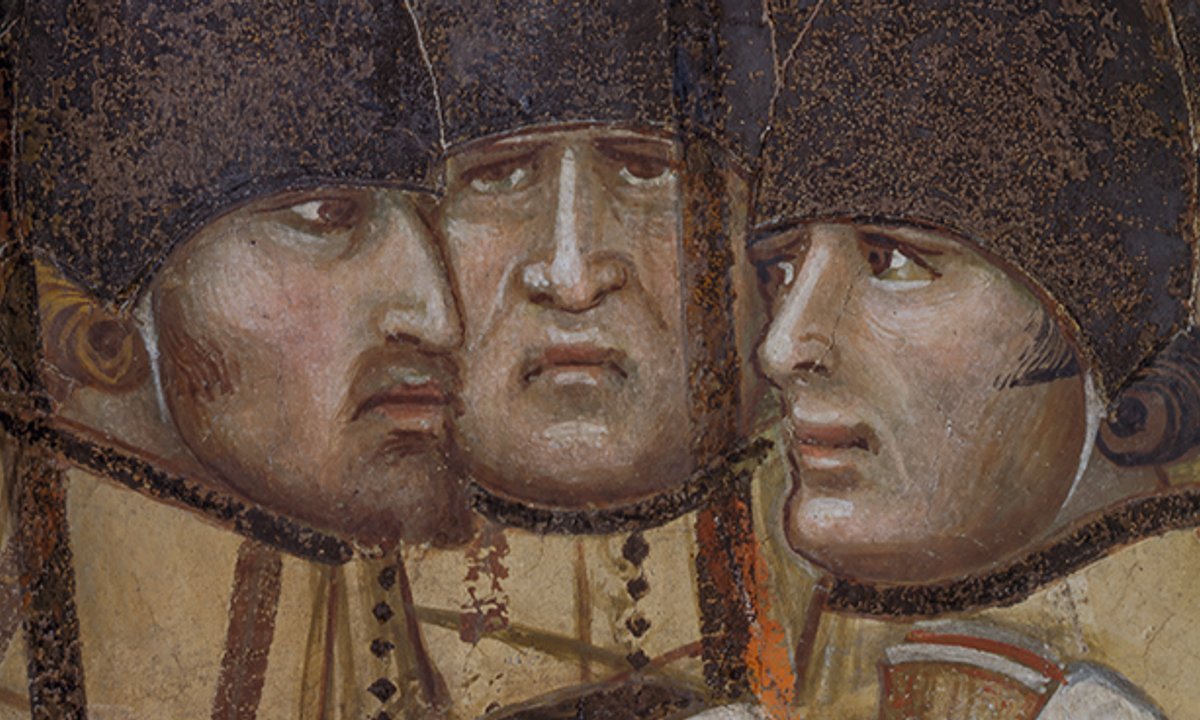
The article examines Ambrogio Lorenzetti's frescoes "Good and Bad Government" (1338-1339) in Siena's Sala dei Nove, arguing that the painter embedded a subtle critique of the ruling oligarchy. Jules Lubbock, a professor emeritus at the University of Essex, reinterprets the murals as a warning against repressive one-party rule, challenging the traditional view of Siena under the Nine as a golden age of good governance.
This matters because it reframes a canonical masterpiece of early Italian painting as a work of political dissent, revealing how pre-modern artists could speak truth to power within the constraints of commission. The article also situates Lorenzetti within the broader Sienese tradition of skeptical, psychologically nuanced art, offering fresh insight into the relationship between art, politics, and moral ambiguity in the 14th century.