
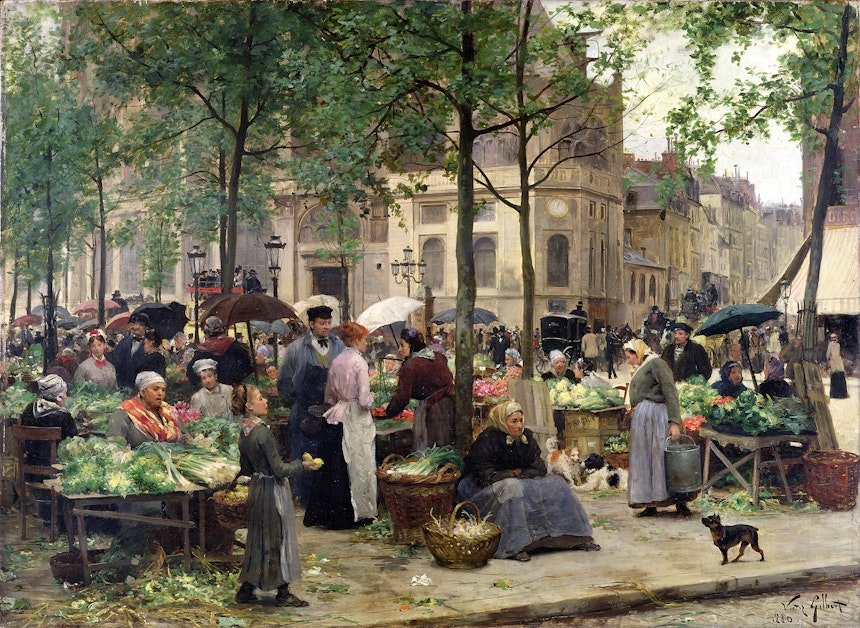
The Seattle Art Museum has opened a new exhibition titled "Farm to Table: Food and Identity in the Age of Impressionism," featuring over 50 works by Impressionist artists such as Claude Monet and Paul Gauguin. The show explores how late 19th-century France, emerging from the Franco-Prussian War and social upheaval, turned to food imagery in art as a symbol of national pride and resilience. Curator Theresa Papanikolas highlights scenes of farmers, food workers, and markets like Les Halles, which also depict class interactions. The exhibition includes a dining table installation with prompt cards to encourage conversation, and Seattle is the final stop on its national tour, running through Jan. 18, 2026.
The exhibition matters because it connects art history with cultural identity, showing how visual art can reflect and shape a nation's relationship with food during times of crisis. By focusing on Impressionist works that celebrate everyday life and food production, the show offers a fresh lens on a familiar artistic movement, linking historical context to contemporary conversations about food, class, and community. It also demonstrates how museums can use art to engage audiences in broader social themes, making it relevant beyond the art world.