
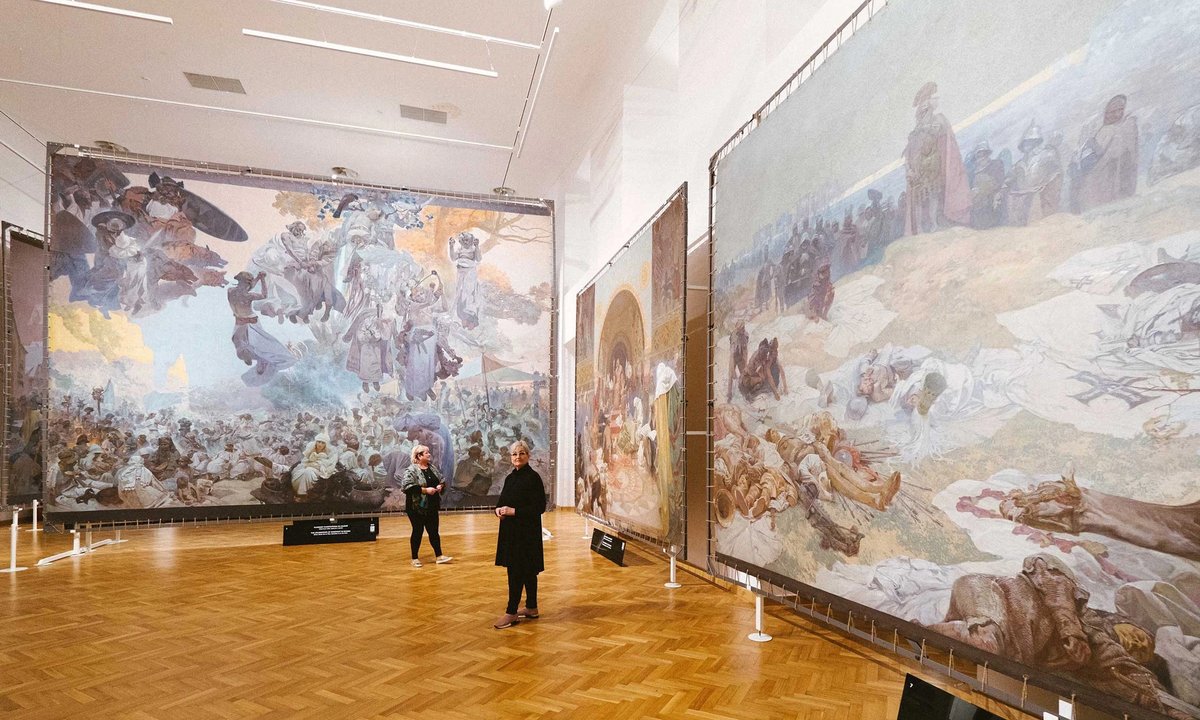
Alphonse Mucha’s monumental 20-painting series *Slav Epic*, completed in 1928, has never received the permanent exhibition space in Prague that the artist demanded when he donated the work to the city. For decades the series has been displayed in Moravský Krumlov, and its current loan there was recently extended to 2031. Plans to install the Epic in a vaulted underground space designed by Thomas Heatherwick as part of Crestyl’s Savarin development have stalled due to permitting delays, though Crestyl now expects construction to begin in 2025 and open in 2029. Meanwhile, legal disputes persist: John Mucha (the artist’s grandson) had threatened to revoke the city’s ownership, and another granddaughter, Jarmila Mucha Plocková, has challenged the proposed location as unworthy.
This saga matters because it highlights the tension between an artist’s legacy and a city’s institutional responsibilities. The *Slav Epic* is a landmark of Czech national identity and Art Nouveau, yet its lack of a permanent home has left it vulnerable to political and commercial negotiations. The outcome will set a precedent for how governments honor conditional donations of major artworks, and whether private developers can fill gaps left by public institutions. The case also underscores the fragility of cultural heritage when family trusts, municipal councils, and real-estate interests collide.