
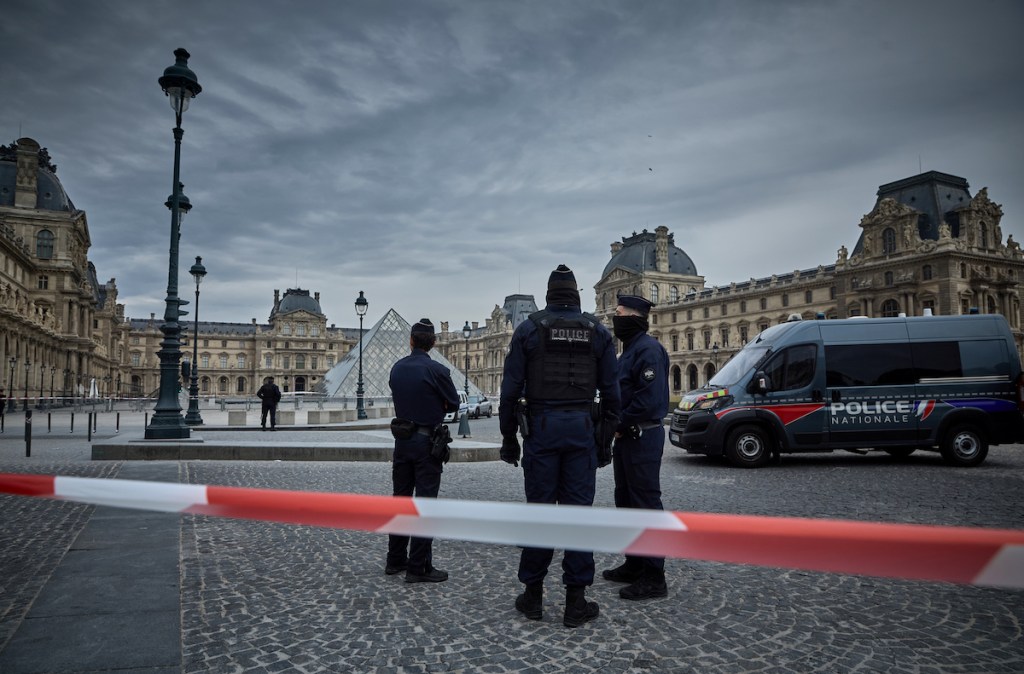
Nine jewels stolen from the Louvre are valued at $102 million, according to Paris prosecutor Laure Beccuau, contradicting earlier French claims that they were of “incalculable” value. The stolen items include a diadem worn by Queen Marie-Amélie and Queen Hortense, an emerald necklace of Empress Marie-Louise, and a diadem once held by Empress Eugénie, the latter containing nearly 2,000 diamonds. One crown belonging to Empress Eugénie was recovered after being dropped by the thieves, but the rest remain missing. The robbers entered through windows using small chainsaws and exited in under eight minutes. The Louvre has been closed since the heist, and cultural minister Rachida Dati defended the museum’s security systems before the National Assembly, calling the theft “a wound for all of us.”
The heist matters because it targets the Louvre, the world’s largest museum and a symbol of French cultural patrimony, raising urgent questions about security at major institutions. The incident has captured public and political attention, with leaked audits suggesting security cameras were not functioning. The case also highlights the tension between the monetary and cultural value of museum objects, as the prosecutor warned that disassembling the jewels would drastically reduce their worth. The theft echoes the 1911 theft of the Mona Lisa, underscoring the enduring vulnerability of even the most protected collections.