
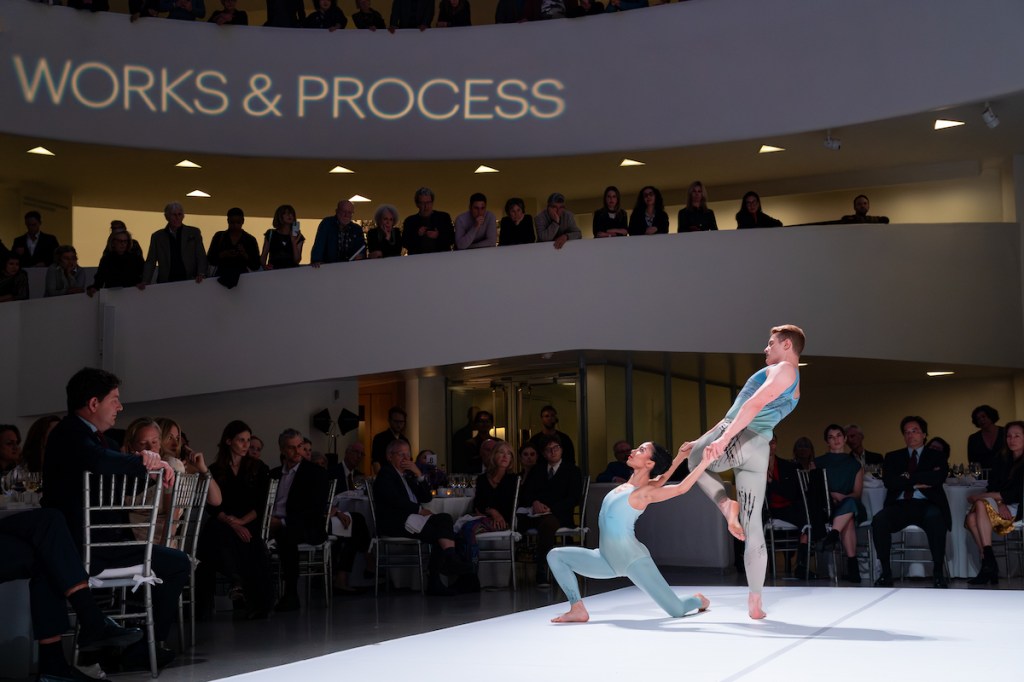
A gala performance at the Guggenheim Museum in New York marked what would have been Robert Rauschenberg's 100th birthday, featuring dancers performing Paul Taylor's 'Tracer' (1962), for which Rauschenberg created costumes and sets—including a spinning bicycle wheel that served as a portal to the exhibition above. The show, 'Robert Rauschenberg: Life Can’t Be Stopped,' opened in one of the museum's tower galleries and runs through May 3, presenting select works from the Guggenheim's collections and loans from the artist's foundation, including major pieces like 'Barge' (1962–63), the largest silkscreen painting Rauschenberg made in the early 1960s, back in New York for the first time in nearly 25 years.
The exhibition matters because it celebrates Rauschenberg's centenary with a focused presentation that highlights his interdisciplinary practice, particularly his deep connections to dance and performance. By pairing the exhibition with performances by Paul Taylor, Trisha Brown, and John Cage, the Guggenheim underscores Rauschenberg's role as a collaborator who blurred boundaries between visual art, choreography, and music, reinforcing his enduring influence on contemporary art and performance.