
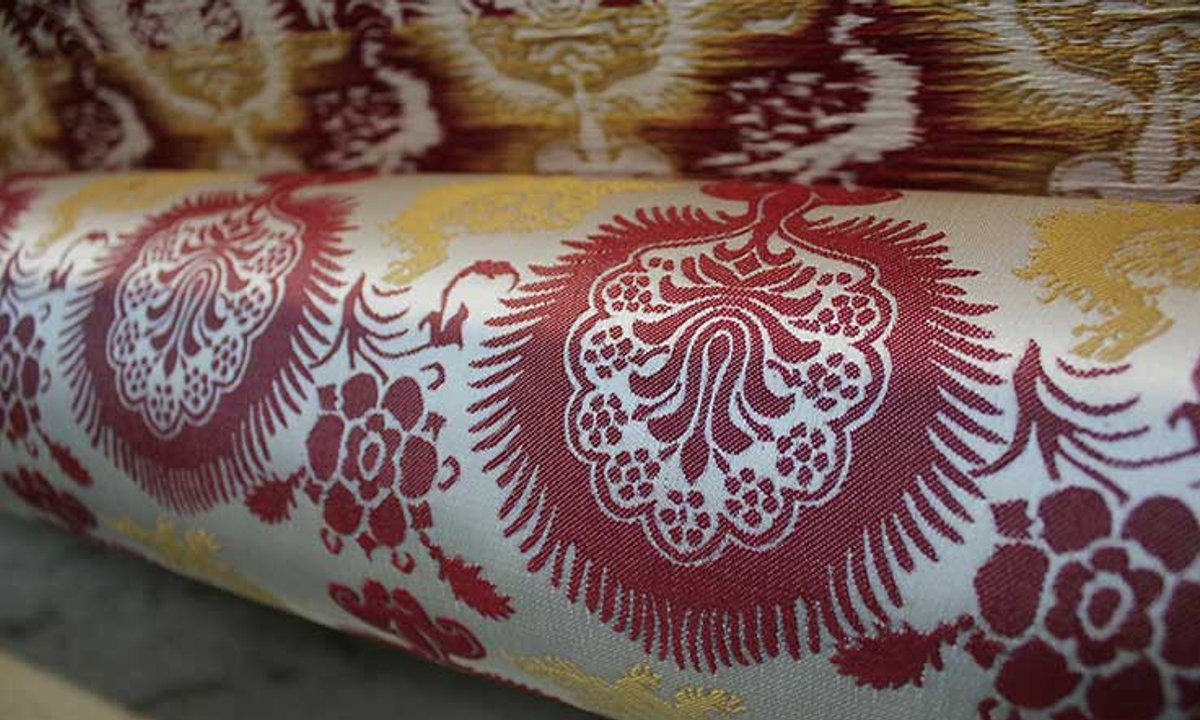
Tiny silk fragments from a ceremonial robe buried with Norwich Bishop Walter Lyhert nearly 550 years ago have been recreated into a sumptuous red and purple fabric. The fragments, discovered in 1899 during building works at Norwich Cathedral, were on long-term loan to Norwich Castle. As part of the £23m redevelopment of the Norman keep at Norwich Castle Museum and Art Gallery, project assistant curator Agata Gomolka led a collaboration with Norwich Cathedral, Gainsborough Silk Weaving in Suffolk, and Norwich’s Costume and Textile Association. Researchers used high-resolution photographs, chemical fiber testing, and dye analysis at the British Museum and KIK-IRPA in Brussels to reconstruct the original patterns, which include monograms, floral motifs, and phoenixes. The recreated fabric is now on display at Norwich Castle, with a limited amount available for purchase.
This project matters because it brings to life a rare example of 15th-century ecclesiastical silk vestments, offering new insights into medieval textile production and trade routes. The recreation reveals design influences from Chinese to Islamic art, as noted by scholars at a 2023 conference on Silk Road textiles. By making the fabric available for liturgical use at Norwich Cathedral, the project also reconnects the material with its original sacred context, bridging centuries of history and demonstrating how modern conservation techniques can revive lost craftsmanship.