
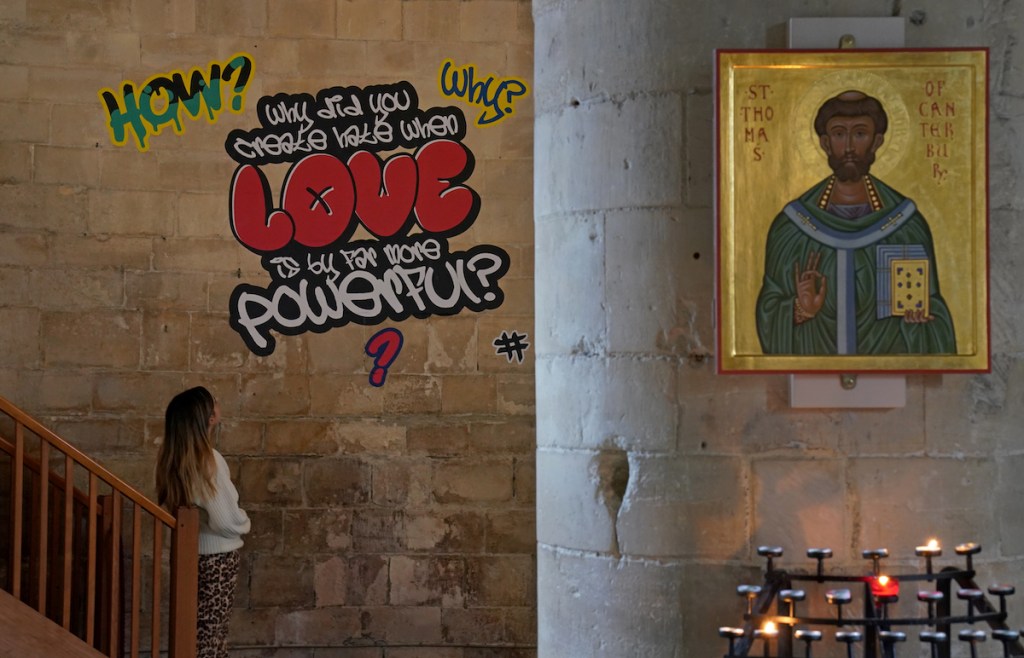
Artist Alex Vellis responded to criticism from conservative figures including Elon Musk and US Vice President JD Vance over a graffiti-style art installation at Canterbury Cathedral. The work, part of a presentation titled “HEAR US,” features questions posed to God, such as “What is the architecture of heaven?” and “Why are you indifferent to suffering?” Created through workshops with marginalized communities—including the Punjabi, black and brown diaspora, neurodivergent individuals, and the LGBTQIA+ population—the installation uses spray-paint-like lettering but was not actually painted onto the historic building. Vance called the work “really ugly,” while Musk accused it of being “anti-Western propaganda.” Vellis responded on Instagram with a crude remark and the hashtag #freepalestine.
The controversy matters because it highlights ongoing culture-war battles over the role of contemporary art in sacred or historic spaces, and how social media amplifies political reactions to public art. The involvement of high-profile figures like Musk and Vance, combined with the cathedral setting, has drawn international attention to questions of free expression, institutional inclusion, and the boundaries of protest art. The incident also reflects broader tensions around identity, religion, and public funding of the arts in the UK and beyond.