
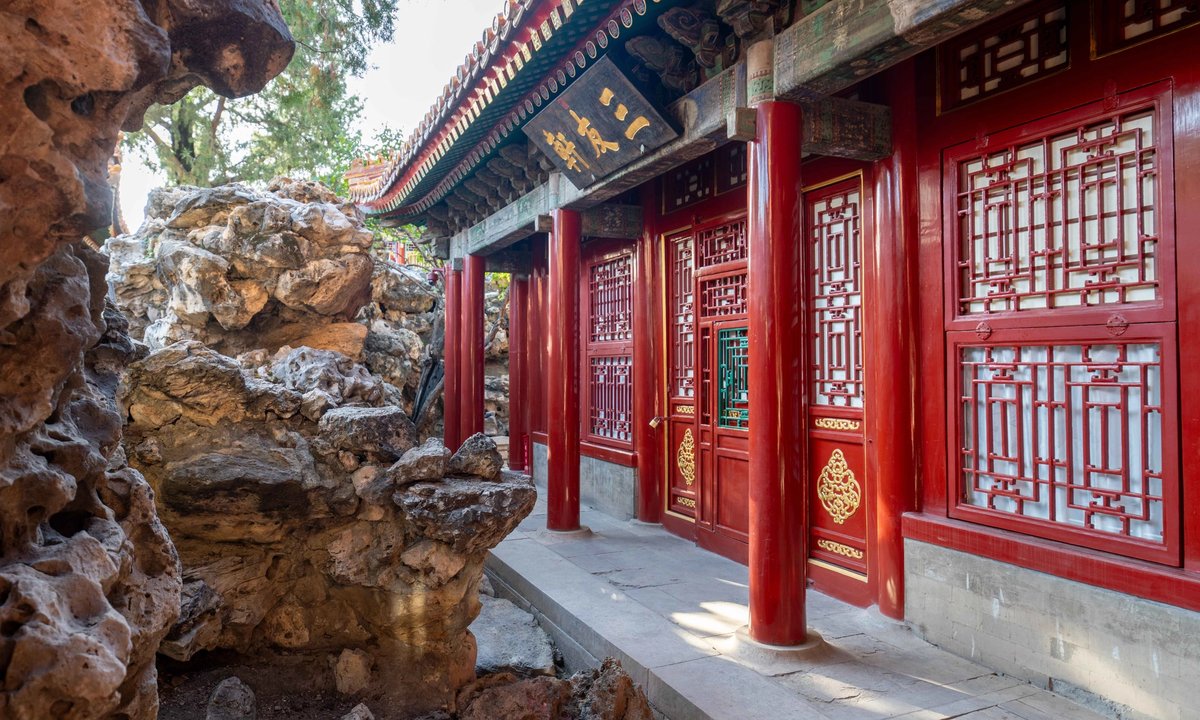
The Qianlong Garden in Beijing's Palace Museum (Forbidden City) has reopened to the public after a 25-year, $20 million conservation project in partnership with the World Monuments Fund (WMF). The 1.6-hectare garden, built between 1771 and 1776, features 27 buildings across four courtyards with elaborate decorations including rare silk trompe l'oeil murals, jade inlays, and bamboo thread marquetry. Restoration began in 2002 with the Juanqinzhai pavilion and later focused on structures such as Fuwangge, Zhuxiangguan, and Yucuixuan. The project also involved recreating traditional materials and techniques that had fallen out of practice.
The reopening matters because the Qianlong Garden is an exceptional example of 18th-century Chinese imperial design that incorporates European aesthetic influences, and it had been largely closed off during the 20th century, leaving its original furnishings and decorative arts untouched. The conservation project is one of WMF's longest-running partnerships and its first major initiative in China, and it has spawned the Craft programme, which has trained over 75 professional conservators in combining modern conservation science with traditional Chinese craftsmanship. The garden's restoration sets a model for future preservation work at the Palace Museum and highlights the importance of international collaboration in cultural heritage conservation.