
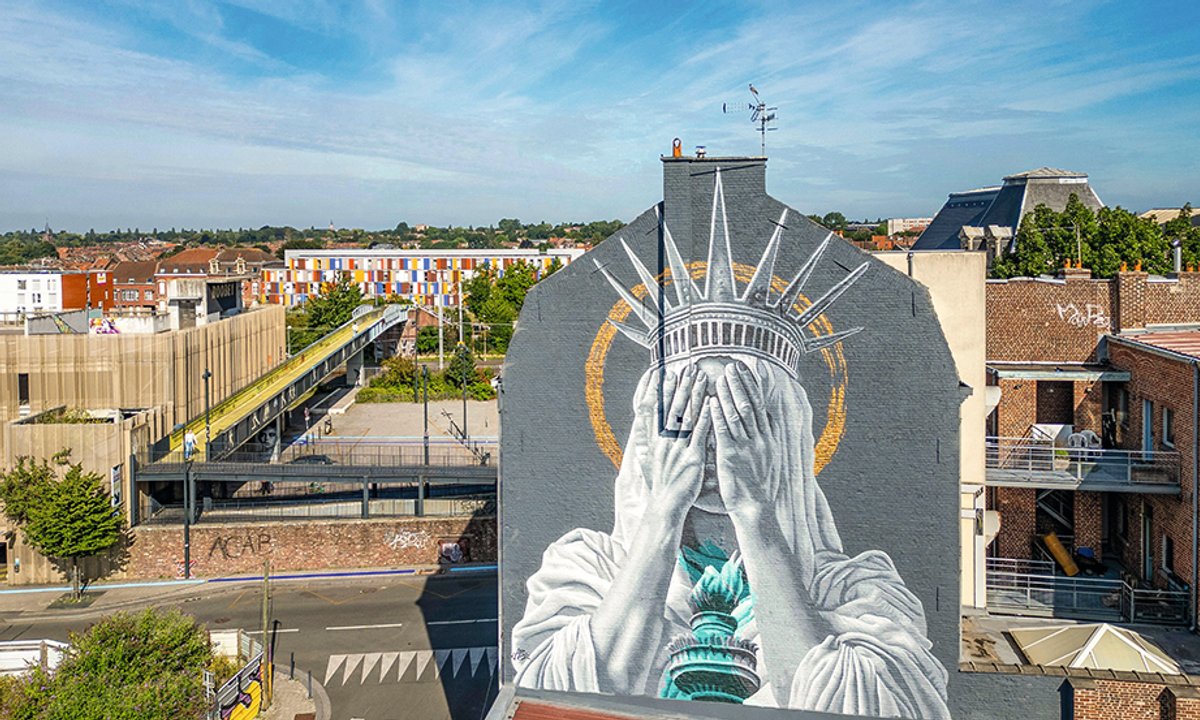
The article examines the growing threat of censorship in the visual arts, focusing on two key incidents. In the US, the Trump administration pressured the Smithsonian Institution to review its holdings for content that contradicts "American exceptionalism," leading artist Amy Sherald to withdraw her entire solo exhibition from the National Portrait Gallery after the museum considered removing her painting *Trans Forming Liberty* (2024), which depicts a transgender person as the Statue of Liberty. Meanwhile, in France, Dutch street artist Judith de Leeuw unveiled a monumental mural in Roubaix showing the Statue of Liberty covering its eyes in shame, protesting global migrant injustice, which went viral online.
These contrasting cases matter because they highlight the vulnerability of state-funded cultural institutions to political pressure and the different strategies artists use to respond. Sherald's self-censorship—pulling her show rather than allowing a single work to be removed—raises urgent questions about where politically engaged, truth-telling art can be shown when official institutions bow to autocratic populism. De Leeuw's independent street mural, created outside the museum system, suggests an alternative path for political art that bypasses institutional gatekeeping. The article ultimately asks whether the established art world can still support work that challenges power, or if truly political art must now operate entirely outside it.