
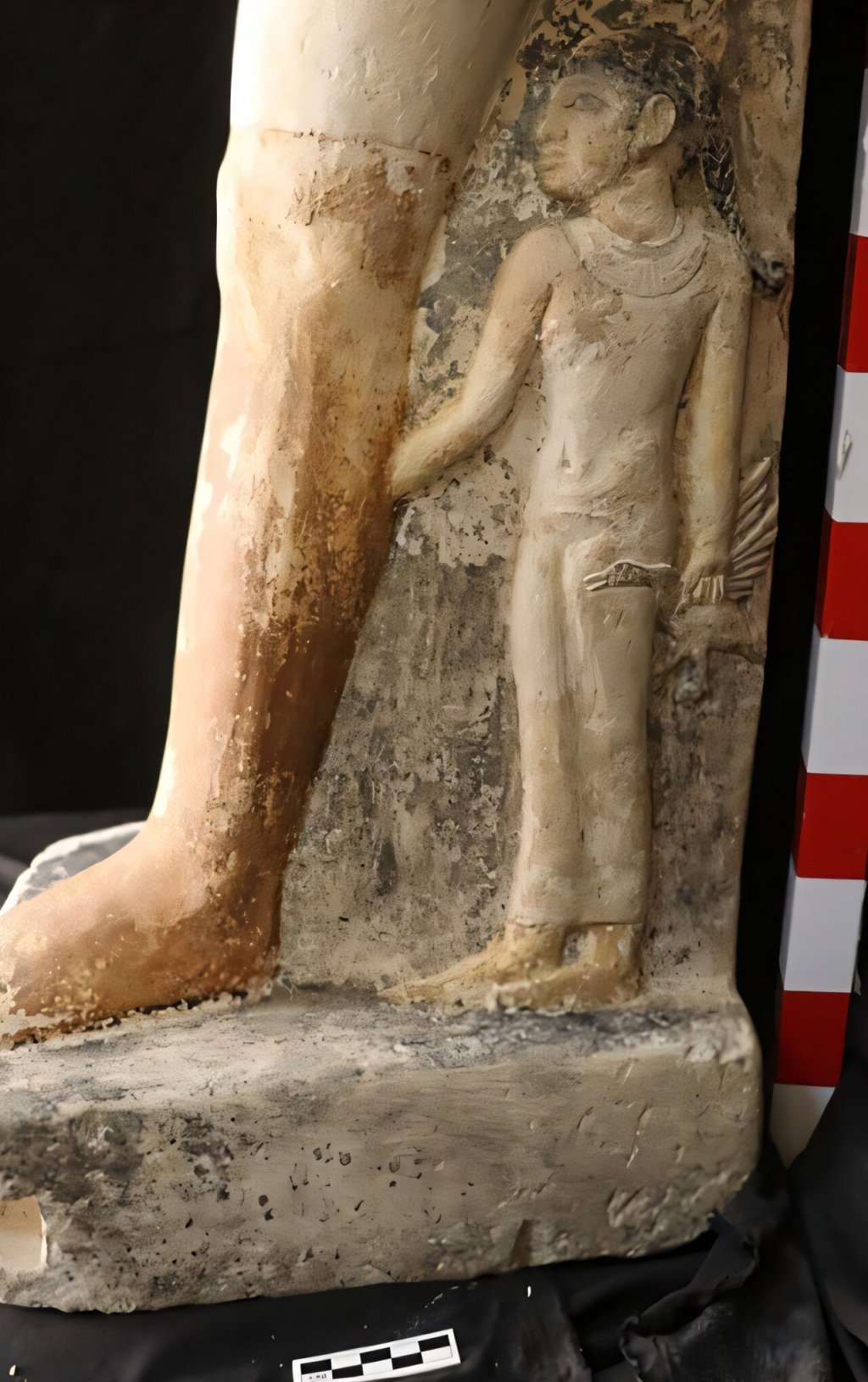
Archaeologists working at the Gisr el-Mudir enclosure in Saqqara, Egypt, discovered a limestone statue left behind by grave robbers in 2021, though the find was only detailed earlier this year by Zahi Hawass and Sarah Abdoh in the Journal of Egyptian Archaeology. The statue depicts a nobleman, his wife, and their young daughter, with the daughter carved in bas-relief rather than fully in the round—a stylistic departure from typical Old Kingdom family statuary.
The statue is significant because it represents the only known example of artistic experimentation in family statuary from Egypt’s Old Kingdom, offering new insights into ancient Egyptian art, family dynamics, and burial practices. Its survival despite grave robbing underscores the ongoing importance of archaeological work at Saqqara for understanding early Egyptian civilization.