
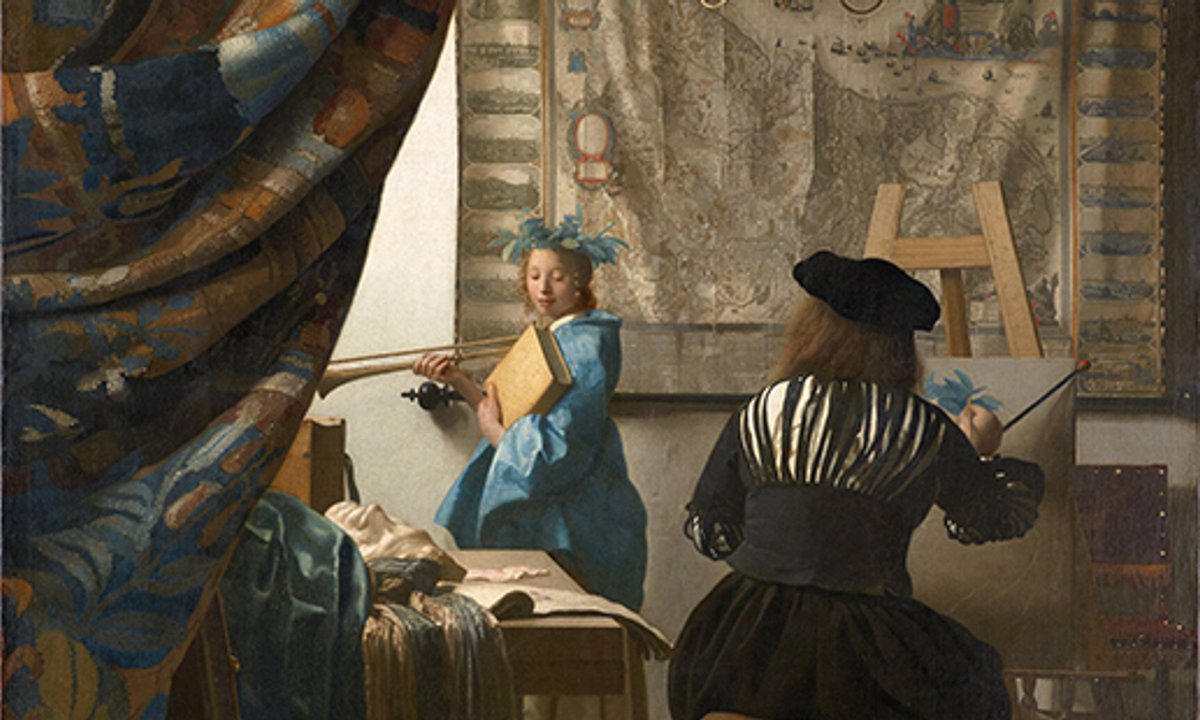
Paul Taylor, a curator at London’s Warburg Institute specializing in 17th-century Dutch art, argues that Vermeer’s celebrated painting *The Art of Painting* (1666-68), housed at Vienna’s Kunsthistorisches Museum, may not be the work referenced in a 1676 legal document by the artist’s widow, Catharina. Taylor tracked 25 period descriptions of “de schilderconst” (the art of painting) and found they all depict allegorical personifications of painting, not studio scenes like Vermeer’s composition. He believes the document refers to a now-lost Vermeer that could still resurface.
This matters because it challenges a long-held assumption about Vermeer’s most famous work, potentially rewriting the history of his oeuvre and the meaning of *The Art of Painting*. If Taylor is correct, the painting’s status as Vermeer’s personal showcase and its connection to his widow’s bankruptcy would be undermined, and the art world would face the tantalizing possibility of a lost Vermeer emerging. The debate also highlights how historical terminology can mislead modern interpretations of iconic artworks.