
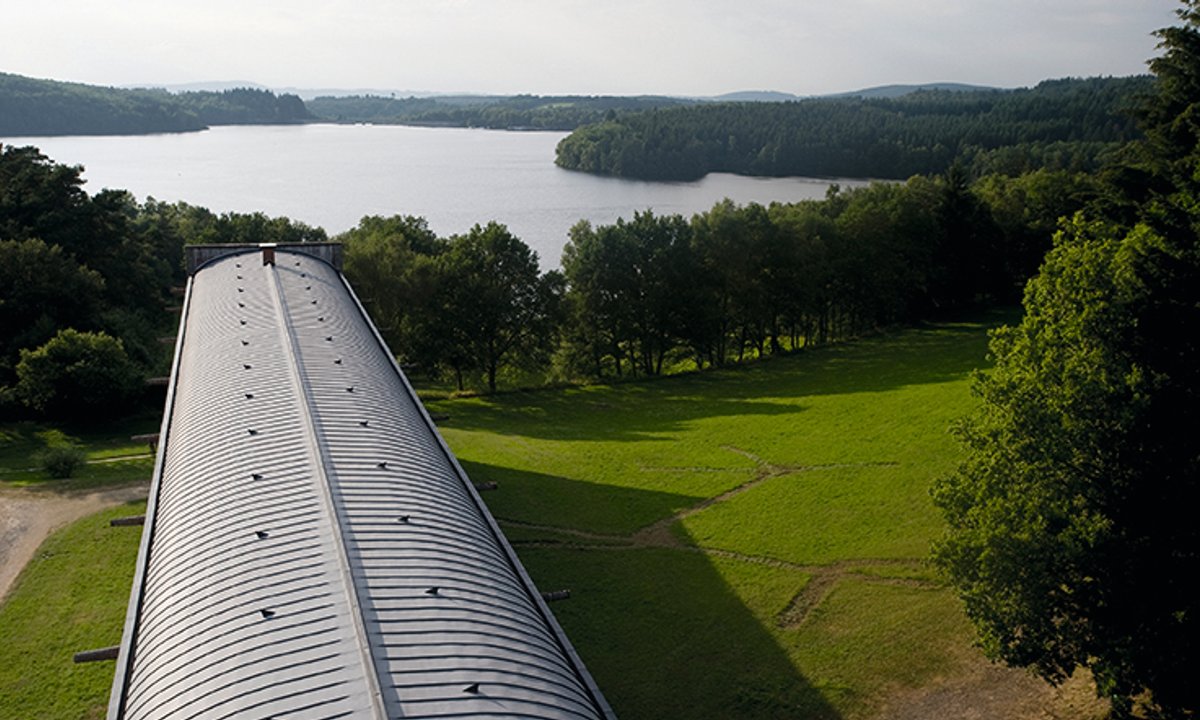
The Centre International d’Art et du Paysage—Île de Vassivière (CIAPV), a rural French arts centre on a forested island in Nouvelle-Aquitaine, is tackling its carbon footprint after a government-mandated analysis revealed that 95% of its emissions come from visitors driving to the remote site. Executive director Alexandra McIntosh is drawing on the island's manmade landscape—shaped by hydroelectric damming, agriculture, and logging—to implement ecological initiatives, including rewilding open fields, creating a self-managing test forest with botanist Francis Hallé, and planting pollinating flowers to boost biodiversity.
This matters because CIAPV exemplifies a growing challenge for internationally focused rural arts institutions: balancing global programming with climate responsibility. By using the island's history of human intervention as a guide for sustainable practices, the centre offers a model for mitigating visitor-related emissions without restricting artistic freedom or access. Its approach—combining ecological restoration with carbon reduction—could inspire similar venues worldwide to rethink their environmental impact while maintaining cultural relevance.