
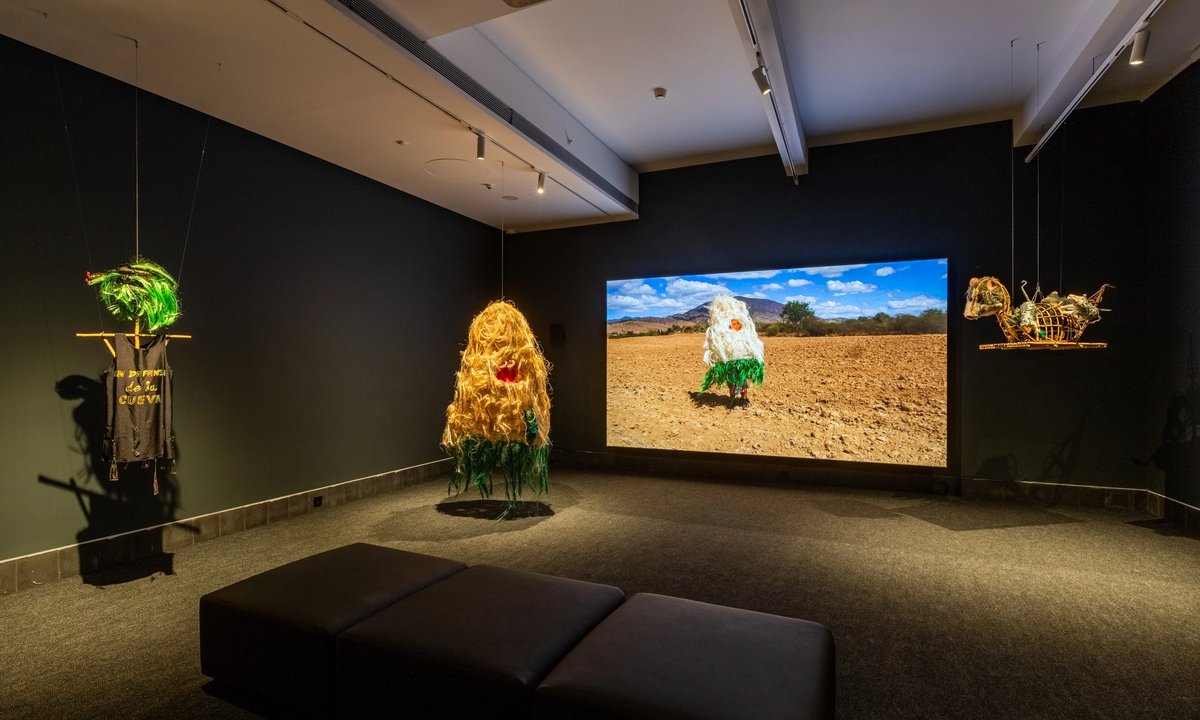
The 18th Istanbul Biennial, titled "The Three-Legged Cat," has opened after a turbulent period of reorganization. Curated by Christine Tohmé, the biennial unfolds over three years instead of the usual two, featuring 47 artists—only six from Turkey, with many from the Middle East. The exhibition spans eight venues, including a former cone factory and a French orphanage, and includes works such as Naomi Rincón-Gallardo's video installation on opossum resilience and Khalil Rabah's site-specific intervention with oil barrels and saplings. The biennial's budget was raised from €2m to €6.5m, mostly funded by Koç Holdings, following controversy over the initial appointment of curator Defne Ayas, which was rejected by the Istanbul Foundation for Culture and Arts (IKSV), leading to Tohmé's eventual selection.
This edition matters because it represents a bid for stability by IKSV after a rocky reorganization, while also addressing pressing geopolitical issues. Curator Tohmé spoke of genocidal violence without explicitly naming Gaza, yet the conflict there looms large, with artists like Sohail Salem and Mona Benyamin creating works directly responding to Palestinian suffering. The biennial's emphasis on futurity over futility, playfulness, and cautious optimism offers a counterpoint to despair, while works like Akram Zaatari's homoerotic wrestling paintings challenge censorship in Turkey. The show's extended timeline and open-call process signal a shift toward transparency and resilience in the face of political and institutional turmoil.