
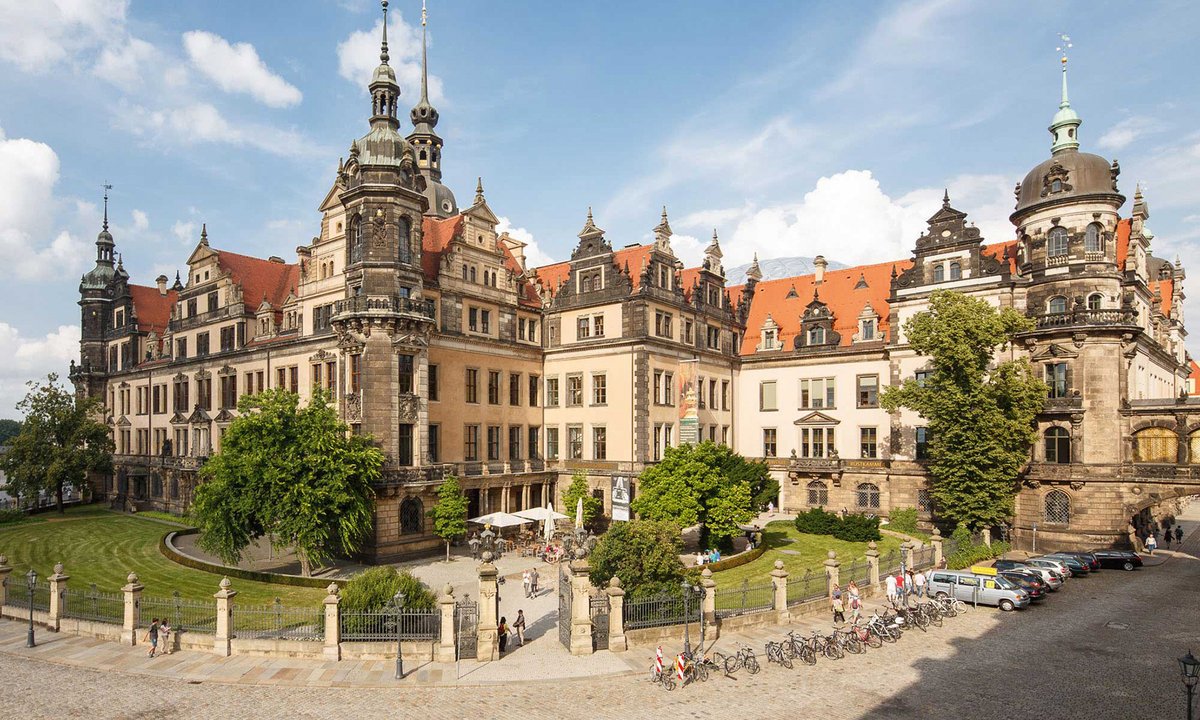
The decades-long reconstruction of Dresden's Royal Palace (Residenzschloss), a project costing €400 million, is nearing completion after beginning in 1985. The palace, which was reduced to a burnt-out shell by Allied bombing in February 1945 and remained a ruin through much of East Germany's history, will see its final phases unfold from autumn 2024 through 2027. These include a new installation in the former picture galleries, the rebuilt Schlosskapelle (palace chapel) opening in November, a Rüstkammer installation in the ballroom in early 2026, the completion of the Grosser Schlosshof courtyard in 2027, and a new exhibit in the Gothic Hall chronicling the palace's history. The palace now houses major collections of the Staatliche Kunstsammlungen Dresden (SKD), including the Grünes Gewölbe, Kupferstich-Kabinett, and Rüstkammer.
This reconstruction matters because it represents a remarkable cultural and political achievement, rooted in an overlooked aspect of East Germany's final decades—a wellspring of Saxon patriotism that saved the palace from demolition and led to an ambitious, interpretive restoration of lost Baroque and Renaissance elements. The project, overseen by the Free State of Saxony and SKD general director Bernd Ebert, is not a simple reconstruction but a 'restaging' of historical spaces, reviving features like the 16th-century chapel ceiling and courtyard frescoes that had been invisible for centuries. Its completion will solidify Dresden's Royal Palace as a premier exhibition venue and a symbol of cultural resilience, blending historical authenticity with contemporary curatorial vision.