
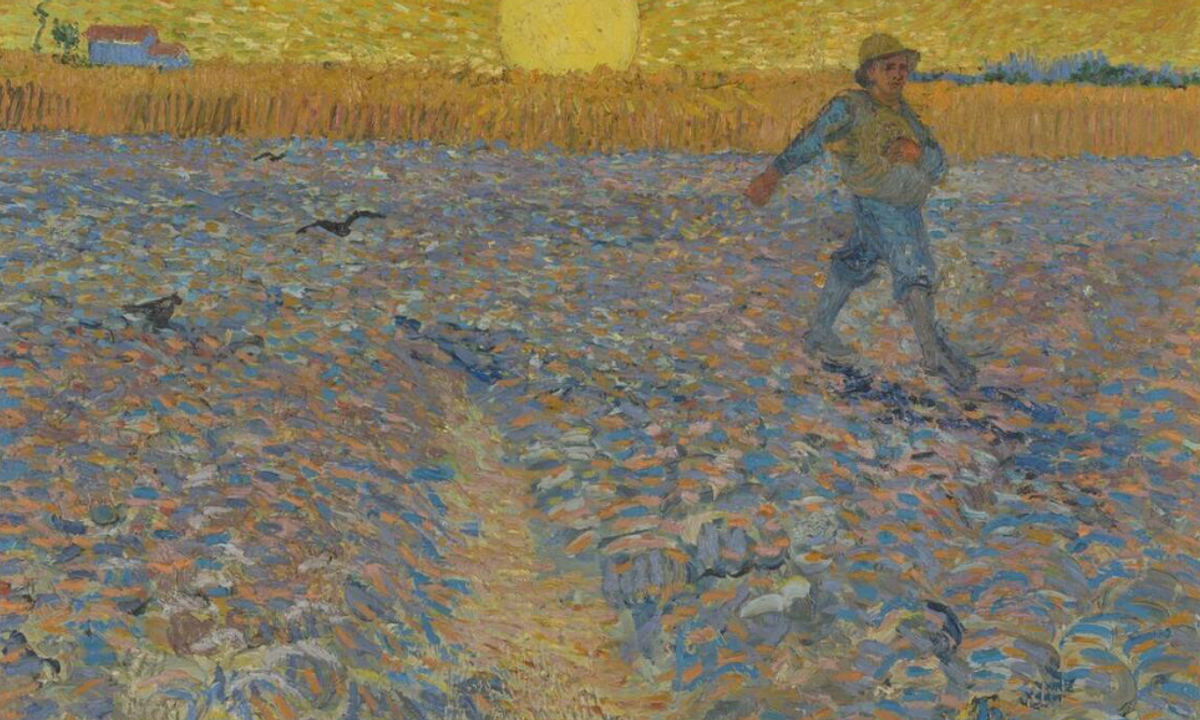
The National Gallery in London opens 'Radical Harmony: Helene Kröller-Müller’s Neo-Impressionists' tomorrow, running until 8 February 2026. The exhibition features works by Van Gogh’s Parisian colleagues, including Georges Seurat and Paul Signac, and highlights Van Gogh’s brief experimentation with Neo-Impressionist dot-like technique. A key work on display is Van Gogh's 'The Sower' (June 1888), which also recently received a papal mention by Pope Leo XIV, who referenced the painting in his first general audience at the Vatican, interpreting its sun as a symbol of God.
The exhibition matters because it sheds light on a lesser-known phase of Van Gogh’s career—his short-lived but influential engagement with Neo-Impressionism after moving to Paris in 1886. By juxtaposing Van Gogh’s 'The Sower' with works by Seurat and Signac, the show explores how Van Gogh adapted pointillist techniques while ultimately rejecting their rigidity. The papal reference adds a layer of cultural significance, linking art history to contemporary spiritual discourse, and underscores the enduring power of Van Gogh’s imagery beyond the art world.