
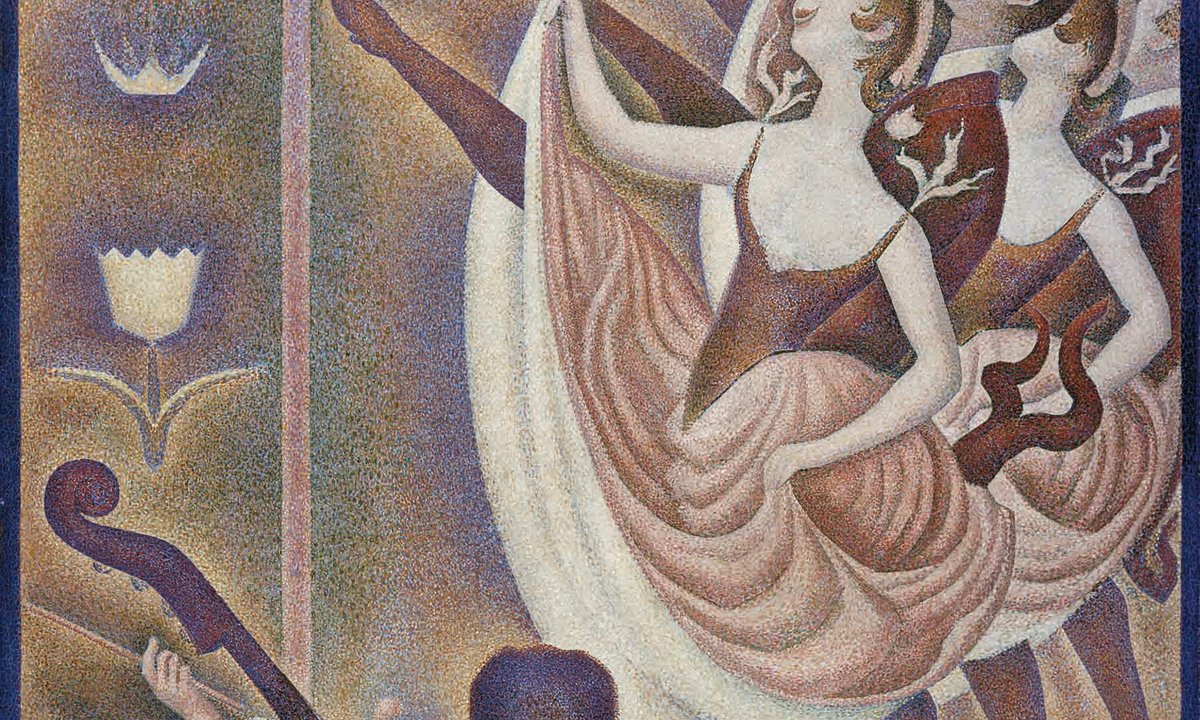
The National Gallery in London is presenting 'Radical Harmony: Helene Kröller-Müller’s Neo-Impressionists,' an exhibition that brings together 58 works from the Kröller-Müller Museum in the Netherlands. The show centers on Georges Seurat’s 'Le Chahut' (1889-90) and features artists such as Paul Signac, Anna Boch, Jan Toorop, and Théo Van Rysselberghe, highlighting the movement's radical, dot-based pointillist technique and its ties to anarchism. Co-curator Julien Domercq frames Neo-Impressionism as the first international Modern art movement, a precursor to abstraction and Fauvism.
This exhibition matters because it challenges the long-held view of Neo-Impressionism as a minor footnote to Impressionism, repositioning it as a pivotal force in the development of modern art. By showcasing the collection of Helene Kröller-Müller, who dedicated decades to assembling works that emphasize the movement's spiritual and formal innovations, the show underscores how Neo-Impressionism pushed painting toward abstraction and away from pure representation. It offers a timely reassessment of a movement often overshadowed by its more famous predecessors.