
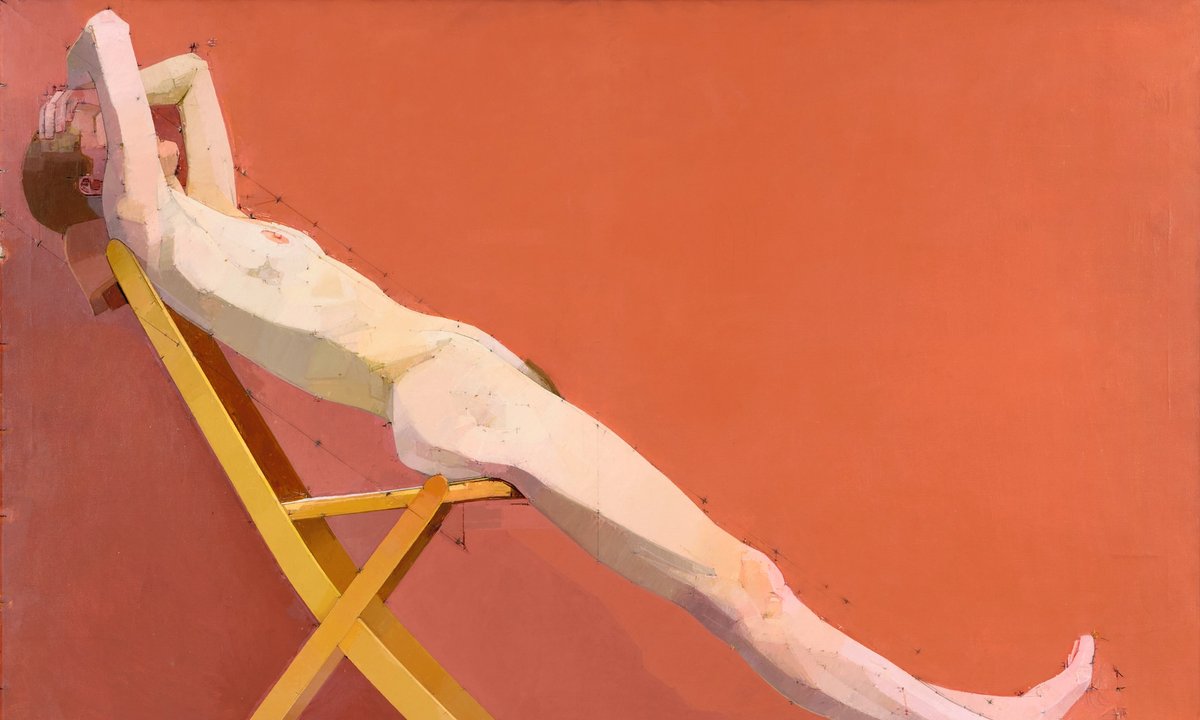
Andrew Lambirth's new book, *The Uglow Papers*, takes an unconventional approach to the monograph on British painter Euan Uglow (1932-2000). Instead of a traditional narrative, Lambirth compiles around 30 personal memoirs, papers, and contributions from friends, students, and colleagues—gathered through interviews, phone calls, emails, and letters. These firsthand accounts, paired with a concise introduction and a glossary of names, offer intimate recollections of Uglow's rigorous studio practice, his teaching methods, and his social life, including details about his Sunday night open houses and shared meals. The book also traces Uglow's artistic development from his studies at Camberwell School of Arts and Crafts and the Slade School of Fine Art, through his mentorship under William Coldstream, to his own distinctive geometric and emotionally charged works like *The Diagonal* (1971-77) and *Pyramid* (1993-96).
This book matters because it provides a deeply personal, multi-voiced portrait of an artist whose exacting approach to painting—rooted in disciplined measurement and geometry—has often been overshadowed by more flamboyant contemporaries. By letting those who knew Uglow speak directly, Lambirth preserves a living history of his teaching legacy, particularly through his influential "F-Studio" at the Slade, and offers fresh insights into the man behind the meticulous canvases. For scholars, collectors, and fans of British figurative painting, this monograph enriches the understanding of Uglow's work and his enduring influence on generations of students.