
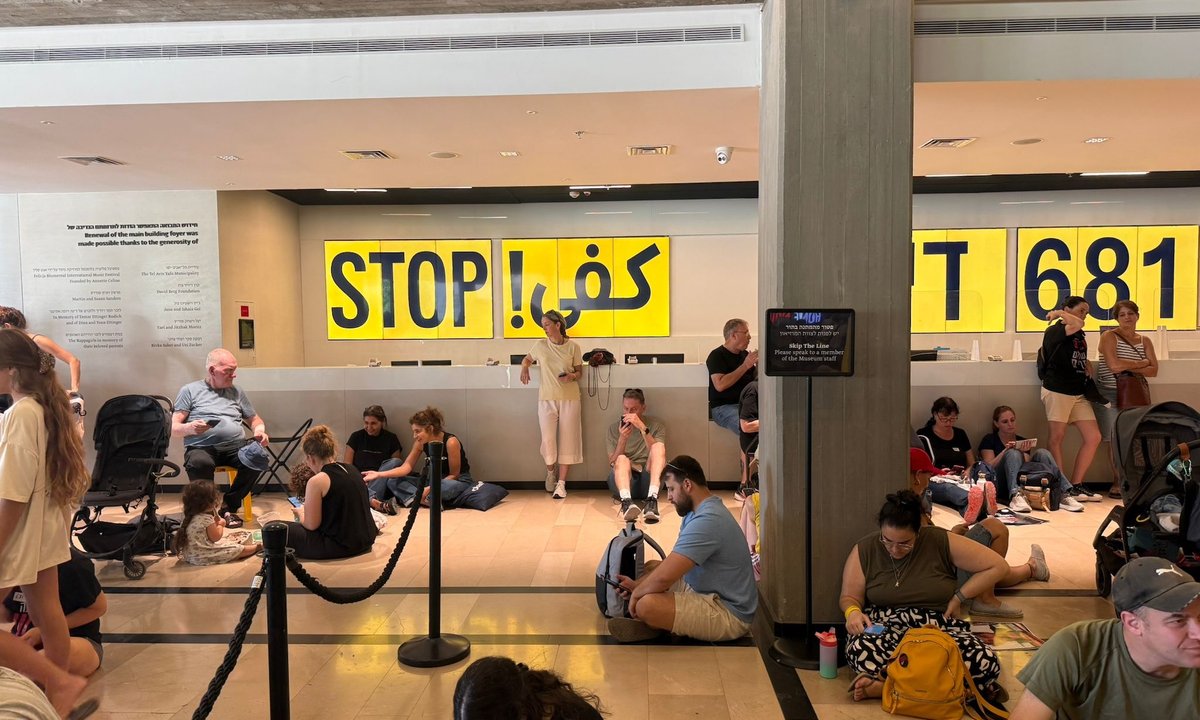
On 17 August, a nationwide strike and protests swept across Israel, with organizers estimating 2.5 million participants demanding a hostage deal and an end to the war in Gaza. Israeli art spaces and workers joined the action: the Tel Aviv Museum of Art closed operationally but opened its lobby to protesters and projected Michal Rovner's video work *Signaling (2024)* on its façade; the Israel Museum illuminated its Shrine of the Book in yellow; the Bezalel Academy of Arts and Design and Shenkar College also struck, while the Mishkan Museum of Art ceased activities in solidarity.
This matters because it marks an unprecedented mobilization of Israel's cultural institutions in a political protest, blurring the line between art spaces and activism. Museums and art schools—typically seen as neutral or apolitical—explicitly aligned with a mass movement, using their platforms (projections, social media, physical spaces) to amplify calls for hostage return and ceasefire. The involvement of major museums like the Tel Aviv Museum of Art and the Israel Museum signals a significant shift in how cultural institutions engage with national crises, potentially influencing public discourse and the role of art in political protest.