
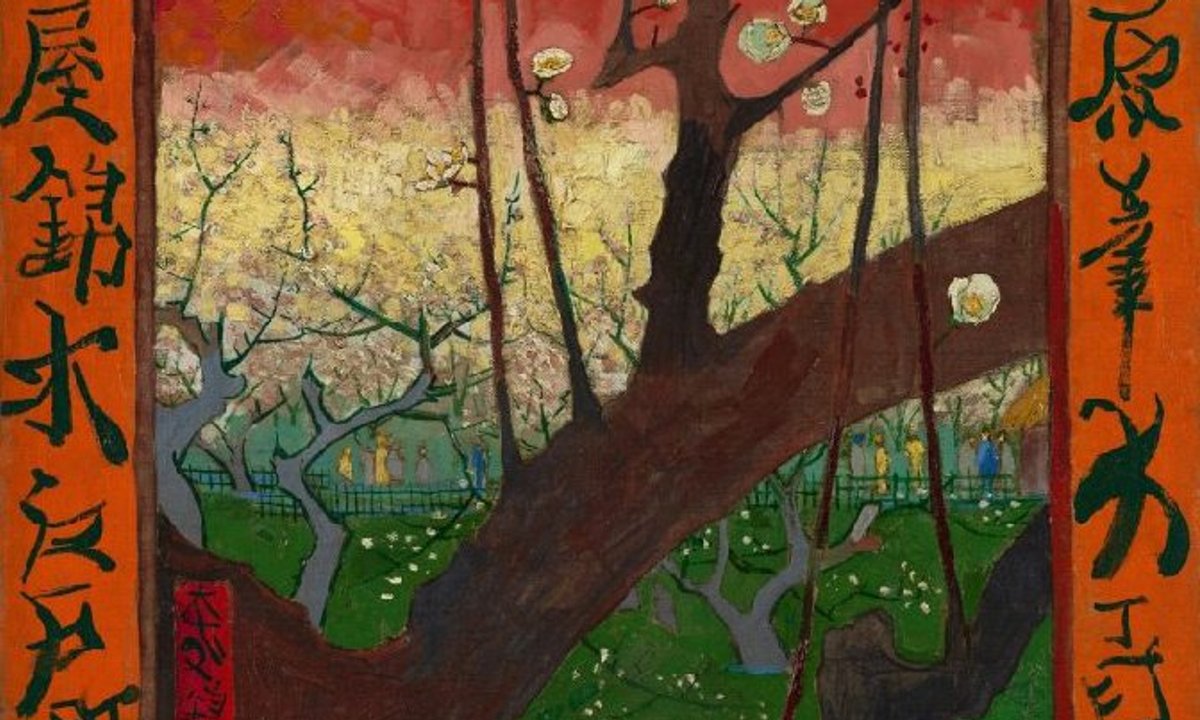
The British Museum's exhibition "Hiroshige: Artist of the Open Road" (through September 7) showcases over 100 prints by the Japanese master Utagawa Hiroshige, including rare loans that highlight his influence on European avant-garde artists. A key display is Vincent van Gogh's own copy of Hiroshige's "The Plum Garden at Kameido" (1857), on loan from the Van Gogh Museum in Amsterdam, along with Van Gogh's squared-up tracing used for his painting. New research by British Museum senior scientist Capucine Korenberg reveals a short pencil line on the print that confirms Van Gogh used this exact copy as a guide for his tracing and subsequent painting.
The exhibition matters because it not only celebrates Hiroshige's legacy as one of the 19th century's greatest Japanese artists but also illuminates a pivotal moment of cross-cultural exchange that shaped modern Western art. Van Gogh's direct copying and adaptation of Hiroshige's compositions—adding Japanese characters to emphasize the inspiration—demonstrates how Japanese ukiyo-e prints transformed the work of Post-Impressionist painters. The scientific confirmation of Van Gogh's working method adds a fresh layer of art-historical insight, while the rarity of the loan (this print has been lent only once before, in 2002) underscores the significance of the exhibition for understanding the birth of Japonism in European art.