
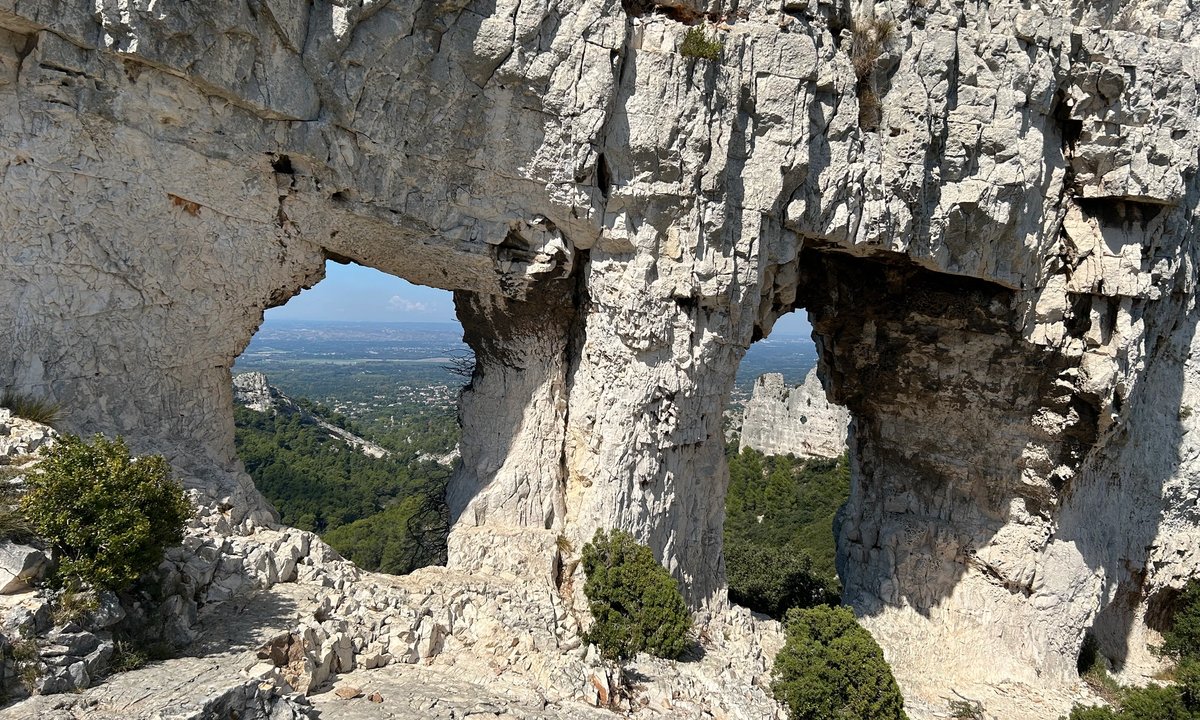
Martin Bailey, a leading Van Gogh specialist, reveals that the distinctive rock formation known as Le Rocher des Deux Trous (The Rock of the Two Holes), which appears in two of Vincent van Gogh's paintings—The Olive Trees (June 1889) and Mountains at Saint-Rémy (July 1889)—is a real geological feature near the asylum in Saint-Rémy-de-Provence, not a figment of the artist's imagination. The two paintings, held by the Museum of Modern Art and the Solomon R. Guggenheim Museum in New York, were recently displayed together at London's National Gallery exhibition Van Gogh: Poets & Lovers (14 September 2024–19 January 2025), offering a rare chance to compare them. Bailey traces the history of the formation, noting that an anonymous 17th-century artist also depicted it, and describes a walking route from the former asylum to the site.
This matters because it corrects a long-standing misconception that Van Gogh's inclusion of the skull-like rock formation was a symptom of his mental instability, instead grounding his work in the actual Provençal landscape. By confirming the topographical accuracy of the paintings, Bailey reinforces Van Gogh's reputation as a keen observer of nature, even during his most turbulent period. The article also highlights the ongoing scholarly interest in Van Gogh's life and work, and the value of museum collaborations—like the National Gallery exhibition—in deepening public understanding of art history.