
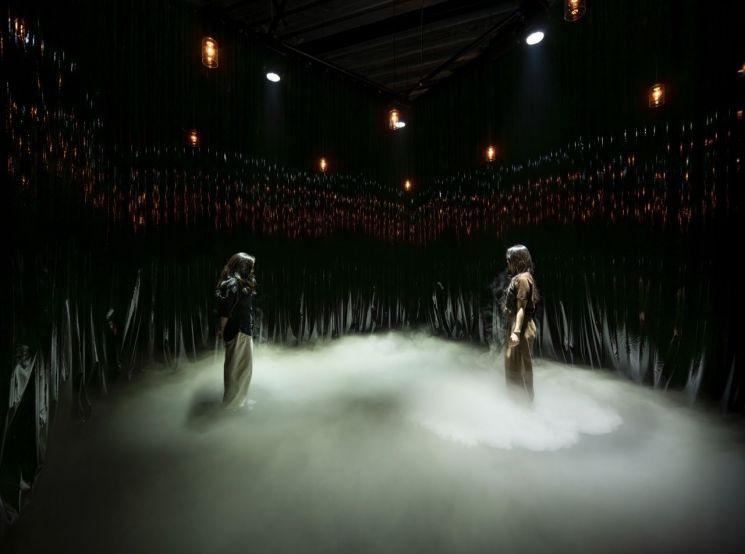
Leeum Museum of Art in Seoul is presenting "Into Other Spaces: Synesthetic Environments by Women Artists 1956-1976," a major exhibition opening May 5 that reconstructs immersive environmental artworks by 11 women artists from Asia, the Americas, and Europe. The show features full-scale recreations of works that were often dismantled or lost, including Jeong Gangja's "Muchejeon" (1970), which was shut down by authorities after just days. Curators Andrea Lissoni and Marina Pugliese used archival materials, photographs, and direct consultations with artists or their estates to piece together these ephemeral pieces.
The exhibition matters because it addresses a double erasure in art history: women artists whose works were marginalized both by gender bias and by the inherently temporary nature of environmental and installation art. By reconstructing these synesthetic environments—which engaged sight, sound, touch, and smell—the show challenges traditional art historical narratives that prioritize painting, sculpture, and male artists. It also raises fundamental questions about how art can be preserved and valued when it cannot be sold, hung on a wall, or easily documented.