
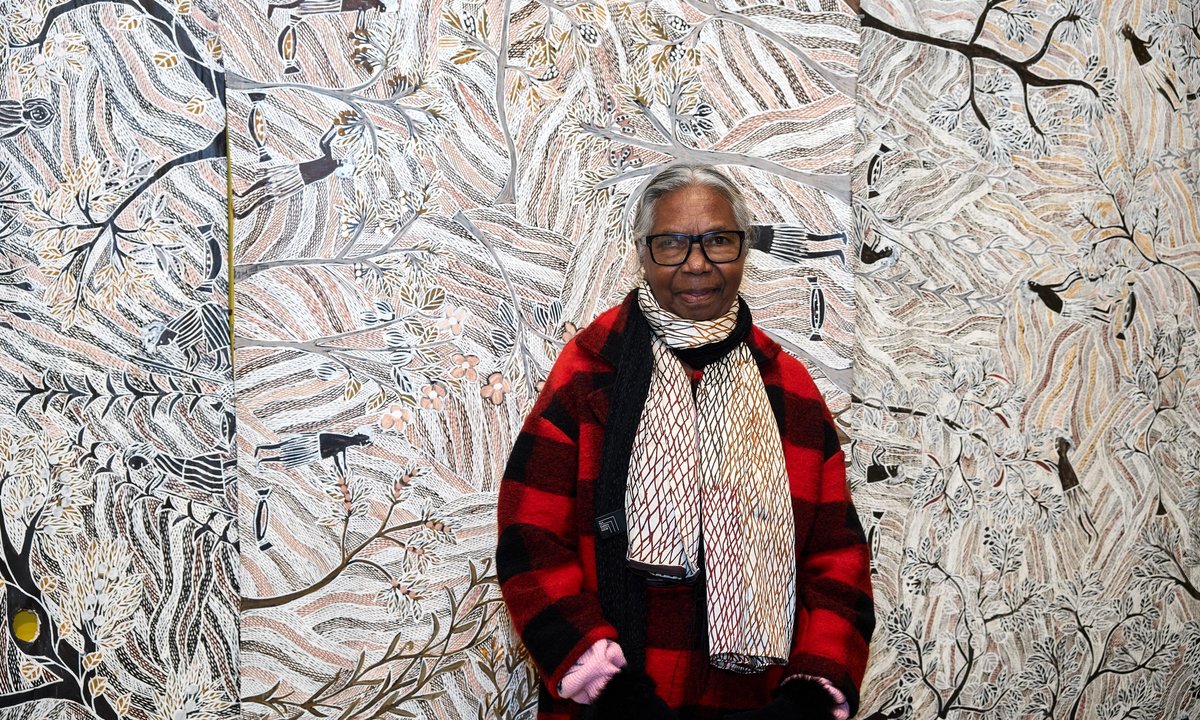
A new exhibition at the Art Gallery of New South Wales (AGNSW) in Sydney, titled 'Yolŋu power: the art of Yirrkala', showcases the work of 90 Yolŋu artists from the remote community of Yirrkala in Australia's Northern Territory. The exhibition highlights how the community's art centre, Buku-Larrŋgay Mulka, has produced sacred clan designs known as miny'tji for eight decades, and how these patterns were used as legal and political documents to assert land and sea rights. Key moments include the 1963 Yirrkala Bark Petition, the Saltwater Project (1996) initiated by artist Djambawa Marawili, and the subsequent 2008 High Court ruling recognizing Indigenous ownership of the intertidal zone under the Land Rights Act.
This exhibition matters because it demonstrates the profound role of visual art as a tool of soft power and legal evidence in Indigenous land rights struggles. By presenting sacred designs as 'documents' to parliament and the High Court, Yolŋu artists have successfully used their cultural heritage to secure legal recognition of ancestral ownership. The show also underscores the ongoing vitality of Yirrkala as a globally acclaimed art community, with new works asserting contemporary identity while honoring millennia-old traditions. It reframes art not merely as aesthetic object but as a living, political instrument for sovereignty and cultural survival.