
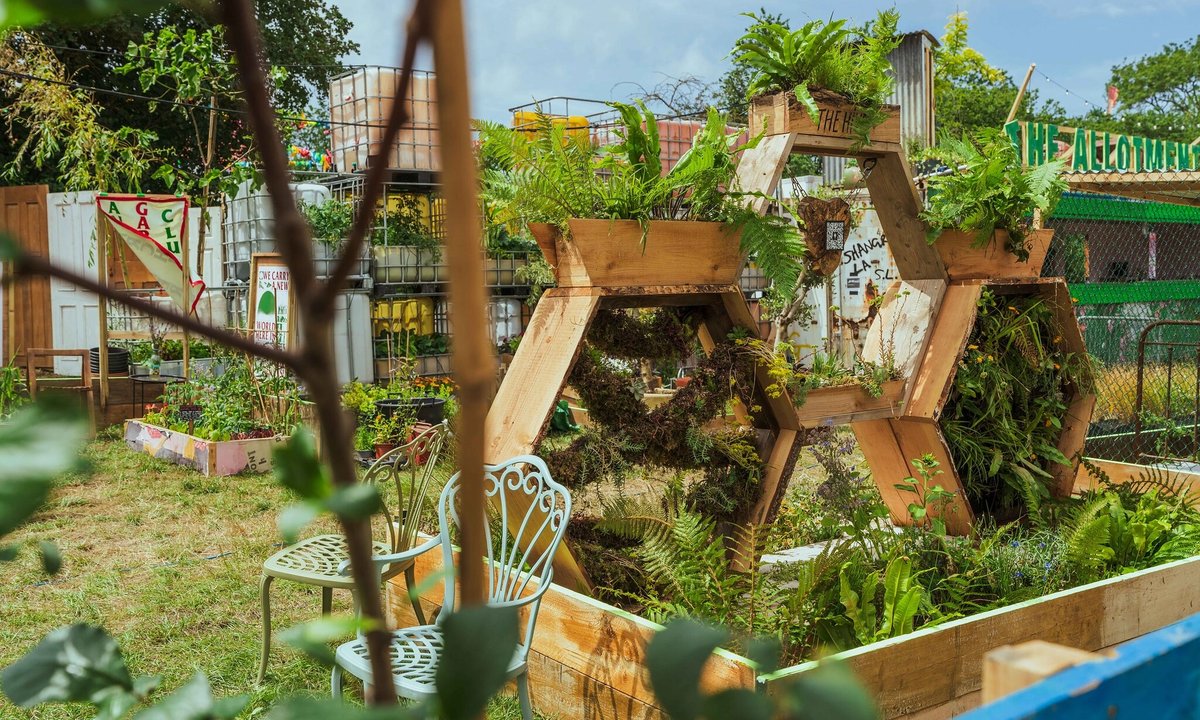
Glastonbury festival has concluded, and cleanup efforts are underway to address the estimated 4,000 tents left behind, alongside other waste. However, the Shangri-La stage offered a different vision: instead of traditional art installations, it featured allotments, plants, and seeds for festival-goers under the banner of "The Wilding." Creative director Kaye Dunnings led a reset focused on nature, community, and sustainability, with works like Sonic Bloom (a collaboration with charity Sounds Right) and Coral Manton's crop-circle-inspired installation Field Work. Shangri-La also purchased a nearby plot to tend plants for reuse in future festivals, aiming for a sustainable exhibition model.
This matters because it reimagines large-scale festivals as platforms for environmental activism and practical solutions to planetary crises. By replacing disposable art with living, reusable elements and encouraging attendees to grow plants, the initiative challenges the waste-heavy culture of major events. It also highlights how art can foster collective joy and ecological awareness, potentially influencing other festivals to adopt more sustainable practices.