
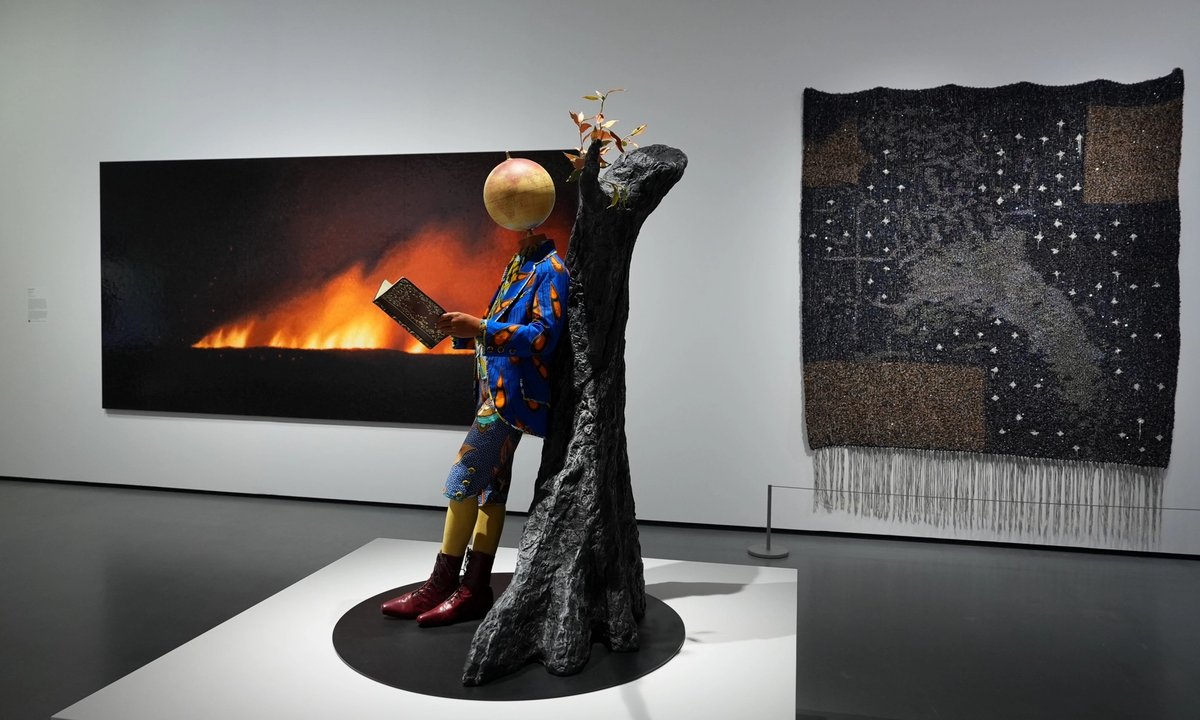
The Baltimore Museum of Art has opened "Black Earth Rising," an exhibition organized by British curator and writer Ekow Eshun. The show brings together thirteen African diasporic, Latin American, and Indigenous artists—including Frank Bowling, Jaune Quick-to-See Smith, Yinka Shonibare, Wangechi Mutu, Alejandro Piñeiro Bello, Firelei Baez, and Tyler Mitchell—to explore the connections between race, colonialism, and the climate crisis. Eshun also authored an accompanying book that pivots environmental debates away from a Eurocentric viewpoint, emphasizing that the Global South bears the brunt of climate change despite being least responsible for it. The exhibition critiques the term "Anthropocene" and instead promotes the concept of the "Plantationocene," which traces environmental destruction back to 15th-century European colonization and the plantation system.
This exhibition matters because it reframes the climate crisis as a legacy of colonial violence and racial injustice, challenging mainstream environmental narratives centered on the Global North. By centering artists of color and Indigenous perspectives, "Black Earth Rising" insists that racial justice and climate justice are inseparable. It also introduces the "Plantationocene" as a more historically accurate framework for understanding ecological breakdown, linking centuries of land clearing, deforestation, and forced migration to today's global inequalities. The show underscores how art can serve as a powerful tool for rethinking history and power in the face of environmental catastrophe.