
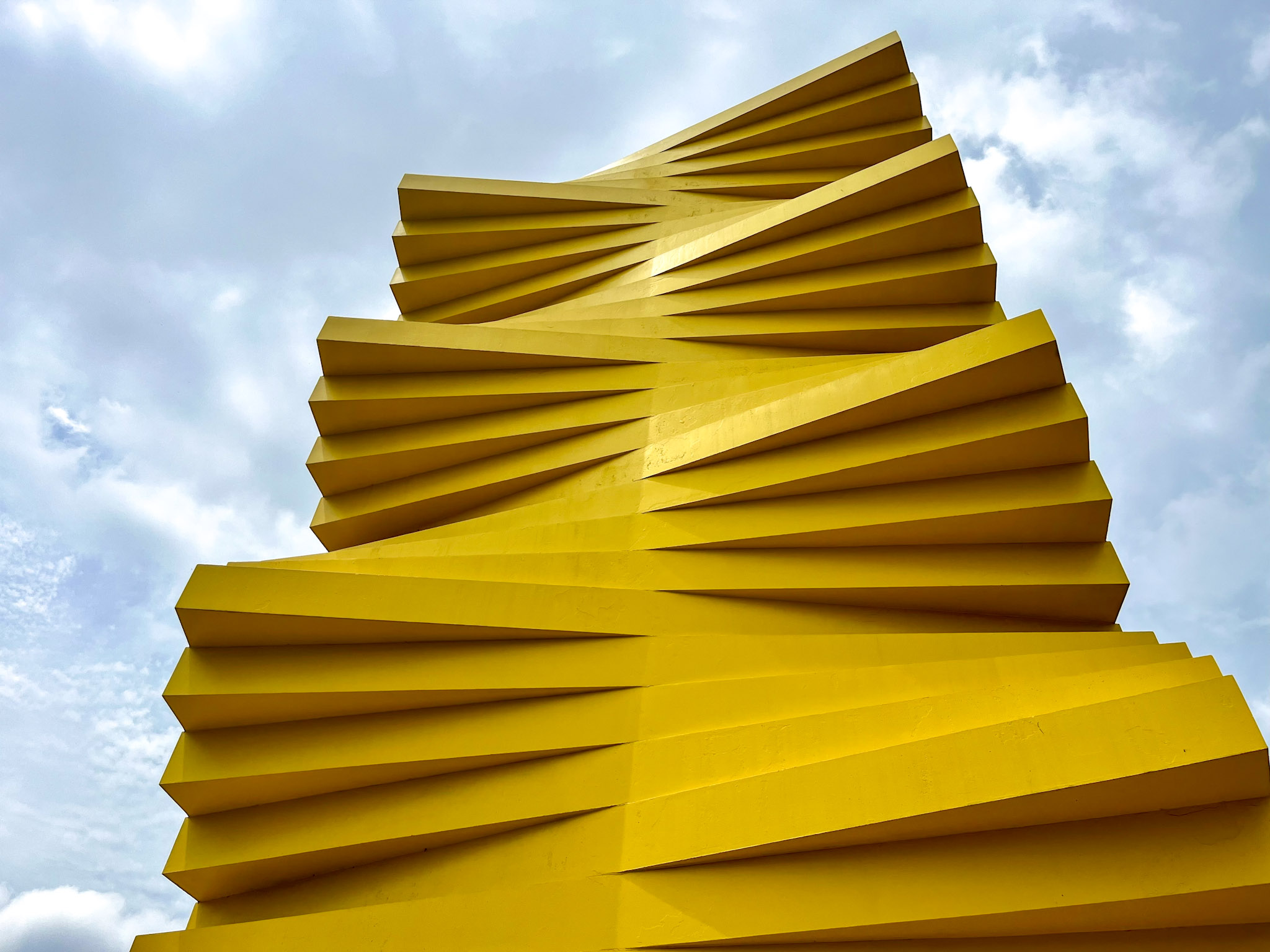
The Resnick Center for Herbert Bayer Studies in Aspen has opened a new exhibition titled "Sculpting the Environment," the first-ever show dedicated to the site-specific outdoor sculptures and land art of Bauhaus artist Herbert Bayer. Bayer, who moved to Aspen in 1945 at the invitation of industrialist Walter Paepcke, lived there for nearly 30 years and created Denver's iconic "Articulated Wall" sculpture in 1985, the year of his death. The exhibition, co-curated by Koko Bayer (his step-granddaughter) and Adam Thomas, highlights his three-dimensional process and his role in shaping Colorado's cultural landscape.
This exhibition matters because it sheds light on a lesser-known aspect of Herbert Bayer's multidisciplinary practice, emphasizing his contributions to land art and public sculpture beyond his better-known painting and graphic design. It also underscores the enduring influence of the Bauhaus movement in Colorado, particularly through the Aspen Institute, which Bayer helped shape and which later inspired figures like Steve Jobs. By focusing on Bayer's site-specific works, the show recontextualizes his legacy within contemporary environmental and sculptural art discourse.