
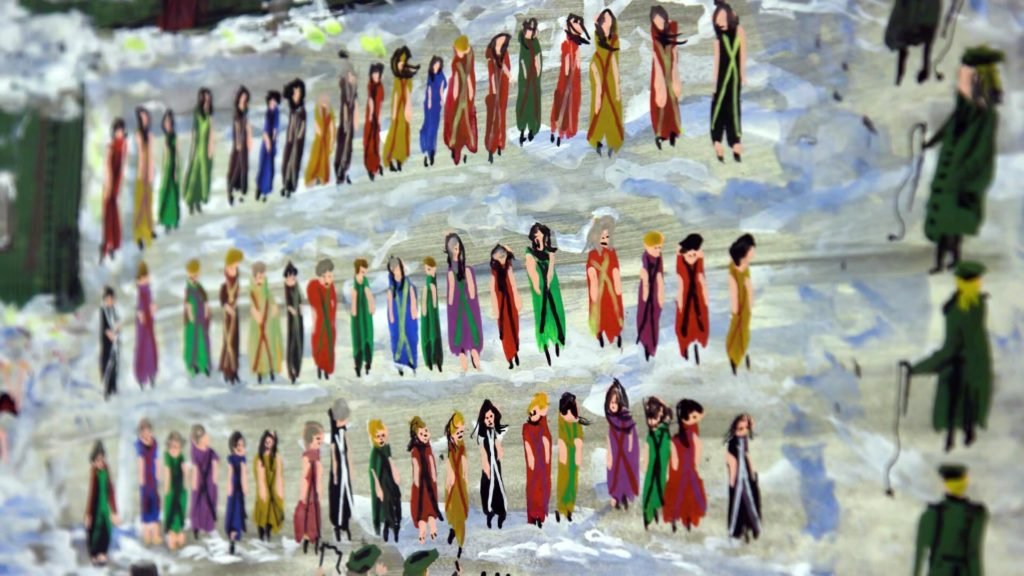
An exhibition titled "Ceija Stojka: Making Visible" at The Drawing Center in New York City highlights the persecution of Roma and Sinti people during the Holocaust, a lesser-known chapter of Nazi atrocities. The show features paintings and drawings by Ceija Stojka, a Romani artist, writer, and activist who survived the genocide and died in 2013 at age 79. Her works, described as acts of memory and imagination rather than documentary, depict her experiences and stories passed down to her, with the exhibition also including documentary films by Karin Berger and Stojka's writings, such as her 1988 memoir "We Live in Secrecy."
This exhibition matters because it brings visibility to a marginalized community's history and the ongoing struggle against racism and right-wing nationalism. Stojka's art serves as both a historical record and a warning, using emotional resonance to convey the suffering and resilience of the Roma people. By centering a Romani artist's perspective, the show challenges dominant Holocaust narratives and underscores the power of art as advocacy and storytelling, especially relevant in a time of resurgent extremism.