
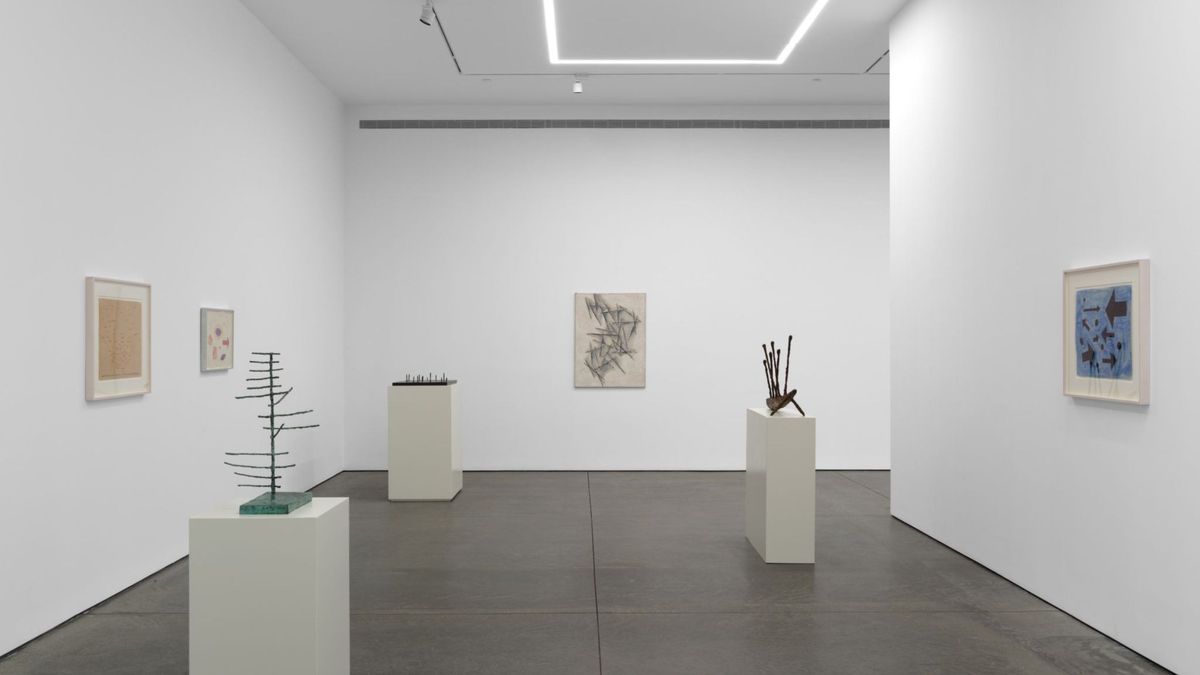
Scottish artist William Turnbull (1922–2012) is the subject of a new exhibition titled 'Origins (1946–1959)' at Karma gallery in Chelsea, New York. The show surveys Turnbull's early career, focusing on the transformative period after World War II when he moved between Surrealist Paris and Abstract Expressionist New York. It features key works such as the sculpture 'Horse' (1946), inspired by a Parthenon marble at the British Museum, and 'Playground (Game)' (1949), reflecting his interest in phenomenology and movement. The exhibition traces his evolution from an illustrator and Slade School student to a sculptor and painter who engaged elemental forms like the horse, standing figure, and human head.
This exhibition matters because it reexamines a pivotal but often overlooked figure in modern British art, highlighting how Turnbull bridged European modernism and postwar abstraction. By focusing on his early years, 'Origins' underscores his role in connecting prehistoric symbolism with contemporary art, challenging the prevailing neo-romanticism of his time. The show also brings attention to Turnbull's enduring motifs and his influence on the dialogue between painting and sculpture, offering fresh context for understanding mid-20th-century art movements.