
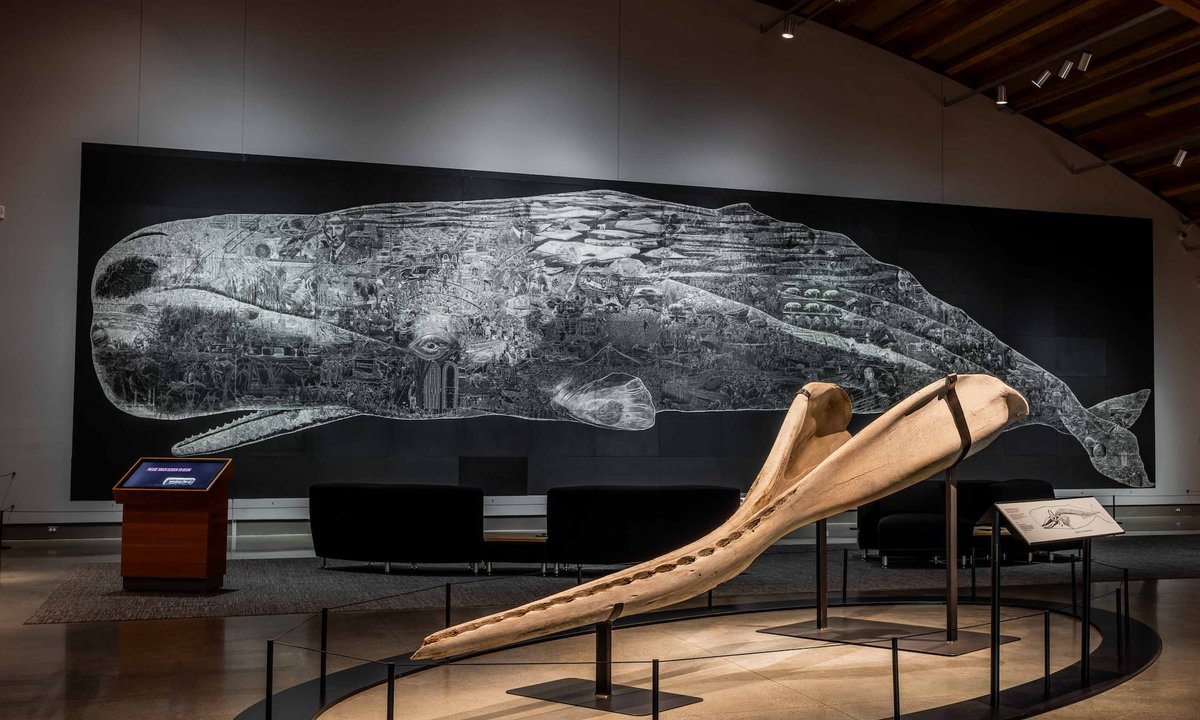
The Mystic Seaport Museum in Connecticut has opened a new exhibition titled "Monstrous: Whaling and Its Colossal Impact," which explores the deep connection between the US whaling industry and capitalism. Featuring objects from the museum's permanent collection—including 19th-century photographs, blubber hooks, ship models, captain's logbooks, a sperm whale jawbone, a jar of blue whale fetuses, and whale oil products—the show illustrates how whale oil lit lamps and greased machines for over a century. A giant scratchboard mural by contemporary artist Jos Sances, titled "Or, The Whale" (2019-20), dominates the space, while references to Herman Melville's "Moby-Dick" permeate the exhibition, which also includes a copy of a 1930 illustrated three-volume edition.
The exhibition matters because it reframes whaling not just as a historical industry but as an early example of America's "addiction to oil," drawing a direct line to modern environmental and economic issues. By highlighting the monstrous scale of the enterprise—both in terms of the near-extinction of sperm whales and the industrial processes involved—the show prompts visitors to consider the lasting ramifications of resource extraction. The inclusion of scrimshaw, a captain's vial collection, and the Melville Society conference further enriches the narrative, making it a timely cultural commentary on capitalism, consumption, and ecological impact.