
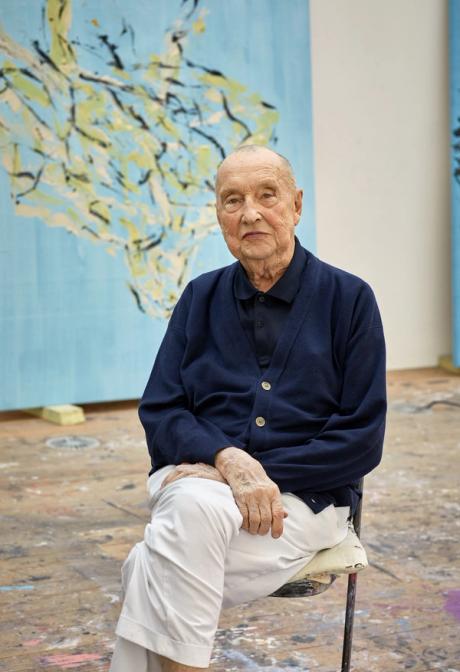
Georg Baselitz, the influential German painter and sculptor, died on 30 April at age 88. Born Hans-Georg Kern in 1938 in Deutschbaselitz, he grew up amid the ruins of Nazi Germany and later adopted his surname from his birthplace. Expelled from the East Berlin Academy for "sociopolitical immaturity," he moved to West Berlin, where he rejected both gestural abstraction and Expressionism. His first solo exhibition in 1963 was shut down for obscenity. In 1969 he pioneered his signature inverted paintings, turning subjects upside down to sever image from representation. He also created large carved sculptures using axes and chainsaws. His later series, from 2014 onward, are considered his most astonishing work, culminating in a sustained focus on his wife, artist Elke Kretzschmar.
Baselitz's death marks the end of a six-decade career that fundamentally reshaped figurative painting in the post-war era. By refusing political and aesthetic conformity, he reasserted the centrality of the figure at a time when abstraction and conceptualism dominated. His inverted paintings became an emblem of painterly autonomy, influencing the Neo-Expressionist generation of the 1980s and countless German artists grappling with national history. His late work, praised as a "greater masterpiece," cemented his legacy as one of Germany's most consequential painters.