
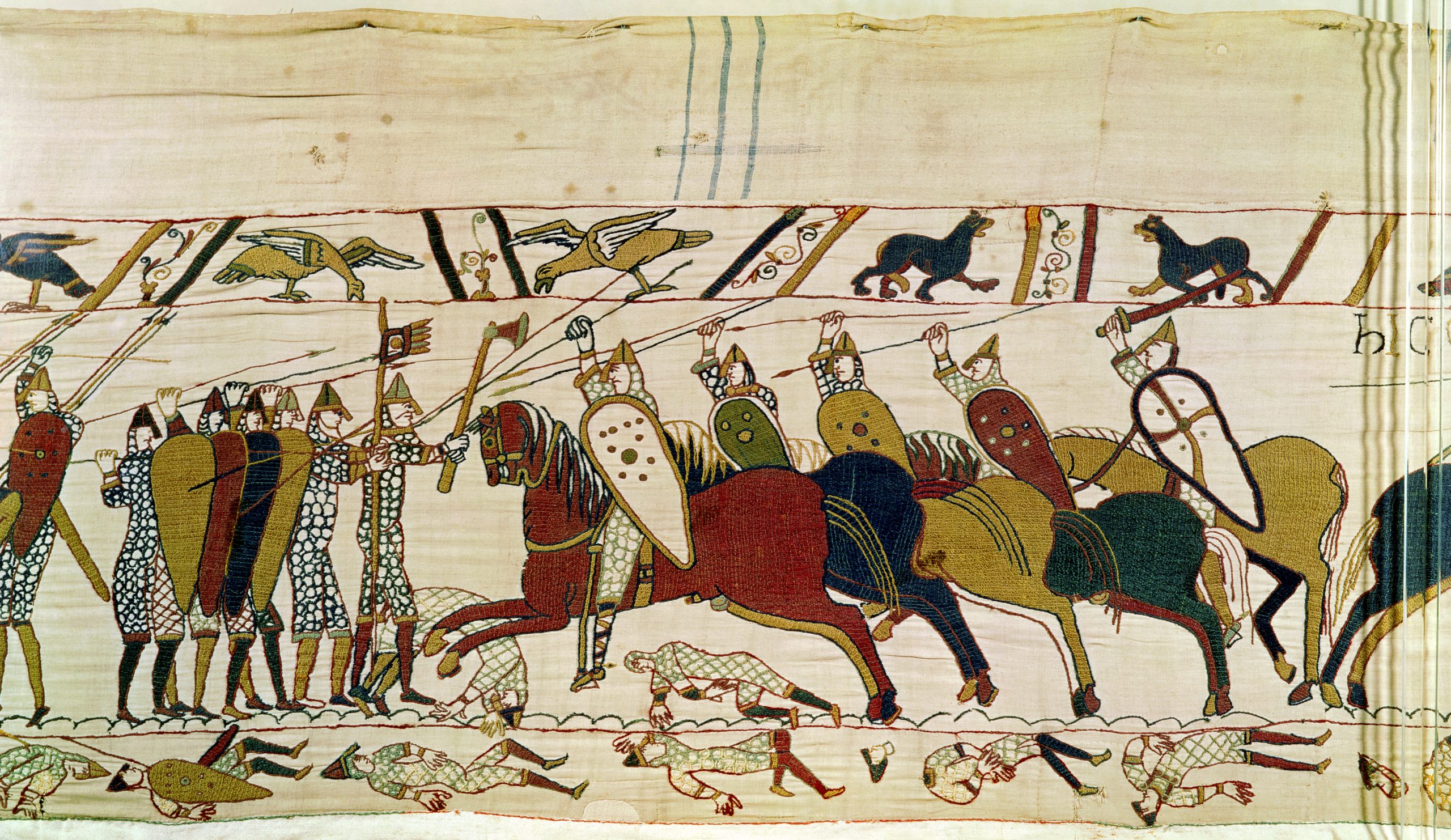
The article examines historian George Garnett's analysis of the 93 penises depicted in the Bayeux Tapestry, a 225-foot-long embroidery chronicling the Norman conquest of England in 1066. Garnett, a professor of Medieval history at Oxford University, argues that the size and placement of these genitalia—88 on horses and five on men—offer clues about the tapestry's meaning. He notes that the largest equine phallus belongs to Duke William's stallion, followed by those of Harold Godwinson and Odo of Bayeux, suggesting a hierarchy of importance. More significantly, Garnett interprets four penises attached to men in the tapestry's border as references to Aesop's fables, indicating themes of deceit, shame, and illicit sex, which he believes challenge the traditional attribution of the tapestry's commission to Odo of Bayeux.
This matters because it demonstrates how overlooked details in a canonical historical artifact can reshape scholarly understanding. Garnett's research suggests the Bayeux Tapestry is not merely a straightforward narrative but a coded document that uses subtle visual cues to comment on morality and power. By linking the imagery to classical fables, the study opens new avenues for interpreting medieval art and underscores the importance of interdisciplinary approaches in art history. The findings also highlight ongoing debates about the tapestry's origins and purpose, keeping a 950-year-old object at the center of academic inquiry.