
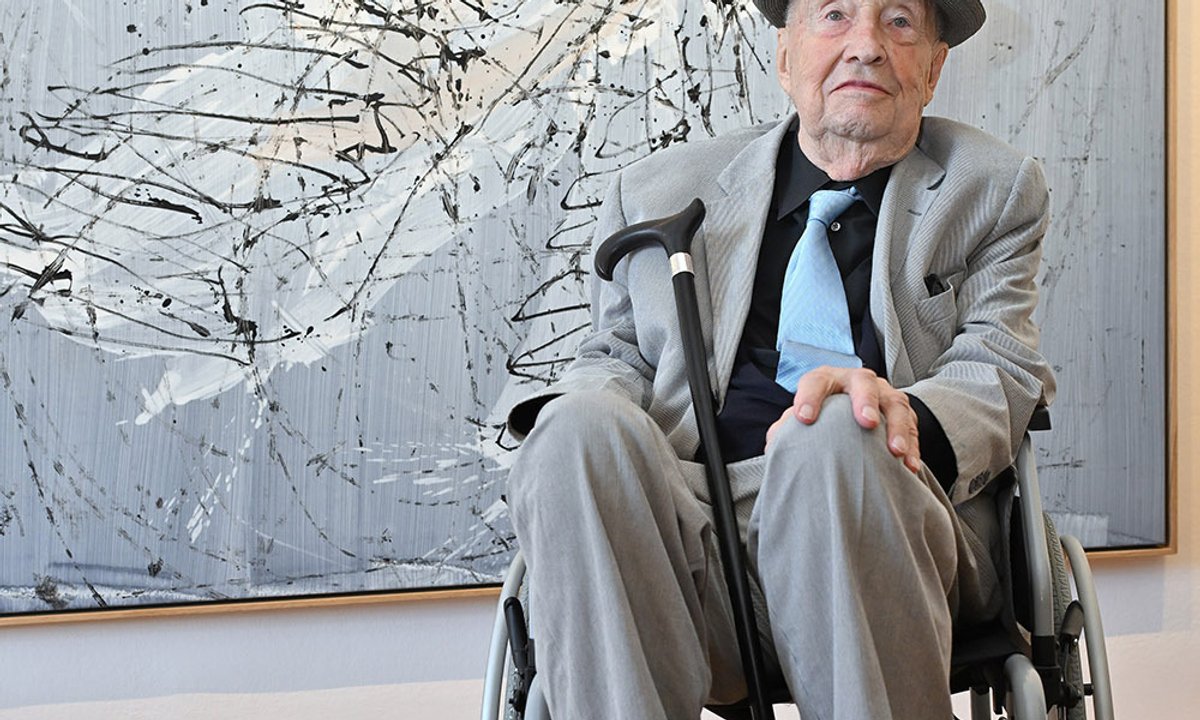
Georg Baselitz, the 87-year-old German painter, has incorporated his wheelchair into his artistic process for a new series of 22 large-format paintings, 14 ink-on-paper drawings, and his first sculpture in over a decade. The works, made by spreading canvases on the floor and using the wheelchair's tracks to create swirling parallel lines, are on view at Thaddaeus Ropac in Pantin, Paris, in an exhibition titled 'Ein Bein von Manet aus Paris' (until 26 July). The show continues Baselitz's long exploration of the human figure, particularly his wife Elke, while introducing a novel technique that turns his mobility aid into a mark-making tool.
This matters because Baselitz, a titan of postwar German art, demonstrates how physical limitation can drive creative innovation, echoing historical precedents like Henri Matisse's use of an elongated cane. The exhibition also underscores the enduring centrality of his wife Elke as a subject and his ongoing dialogue with art history, from cave paintings to Manet. At 87, Baselitz proves he remains a vital force, pushing the boundaries of painting and sculpture while confronting themes of bodily fallibility and mortality.