
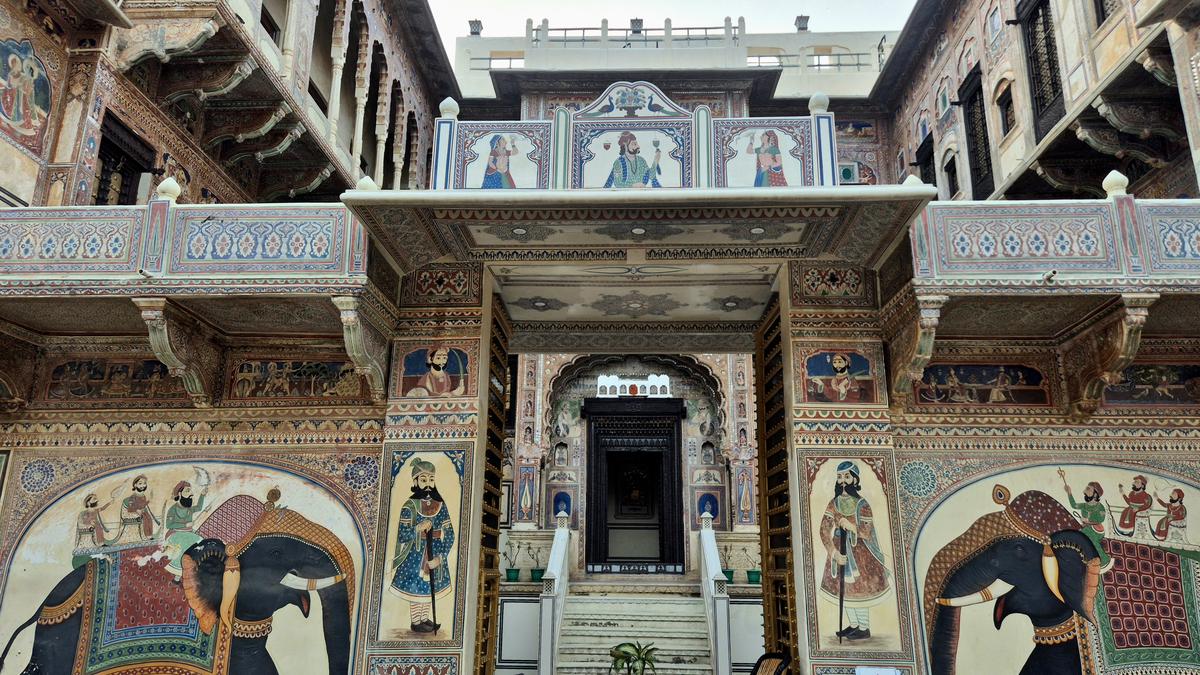
The article explores the Shekhawati region of northern Rajasthan, India, known as the world's largest open-air art gallery. It focuses on the 18th–20th century merchant havelis (mansions) hand-painted with intricate frescoes, many of which are now being restored as heritage hotels. The author recounts a personal stay at Malji Ka Kamra, a restored haveli in Mandawa, describing its blend of Italianate and Rajput architecture and the overwhelming frescoes covering every surface, depicting portraits, floral motifs, and scenes of daily life.
This story matters because it highlights the fragile state of India's unique vernacular fresco tradition and the growing trend of adaptive reuse through heritage hospitality. By transforming decaying havelis into hotels, local communities and entrepreneurs are preserving a vital chapter of Rajasthani cultural history while making it accessible to travelers. The article underscores the tension between conservation and tourism, and the urgent need to protect these irreplaceable artworks from further deterioration.