
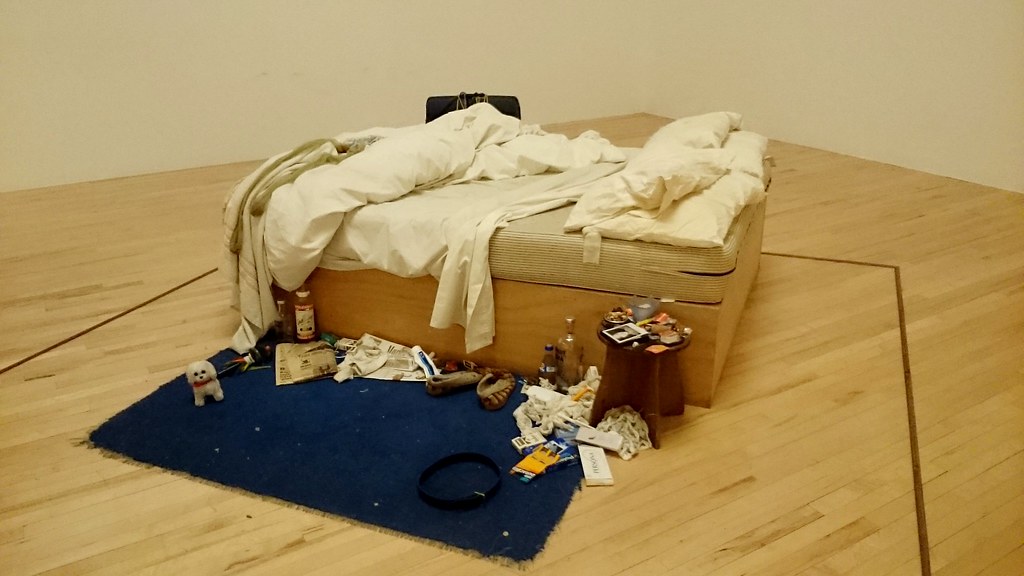
The article reviews Tracey Emin's exhibition "A Second Life" at Tate Modern, describing the author's initial lack of aesthetic connection to the artworks—finding the paintings derivative and neon signs tacky—but ultimately being moved by the exhibition's emotional force and the artist's refusal to disguise pain, humiliation, and grief. The author notes the crowded galleries, the predominantly female audience responding with visceral emotion, and highlights the film "How It Feels" as the most impactful piece, in which Emin discusses her traumatic abortion and its effect on her self-perception.
The exhibition matters because it marks a cultural shift in how female emotional experience is treated in art: Emin's once-scandalized confessional work is now celebrated with seriousness by a major institution like Tate Modern. The show's success—measured by crowds, emotional responses, and the transformation of Emin from "enfant terrible" of the Young British Artists to an inspiration—demonstrates a broader acceptance of raw, personal subject matter as legitimate and powerful art.